

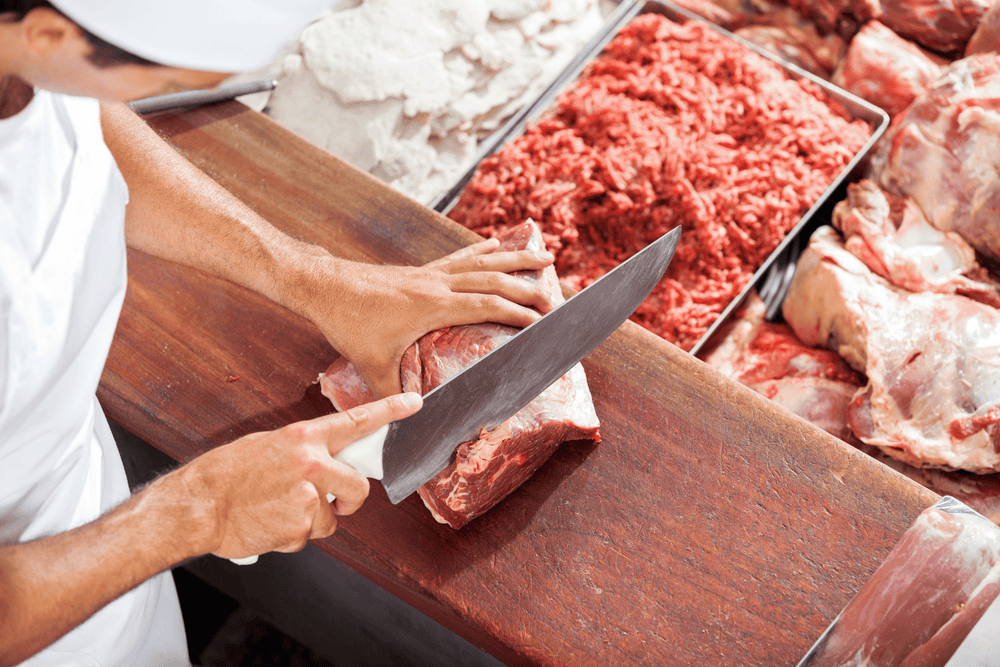
What is the best knife for cutting meat?
Have you ever tried carving a beautiful roast with a dull knife? A real nightmare, isn't it? Nothing is more frustrating than watching a superb piece of meat tear instead of being sliced cleanly. Whether you're a weekend cook or a budding chef, finding the best knife for cutting meat is essential.
When I think back to my early days in the kitchen, I can still picture that old knife I inherited from my grandmother. Charming, certainly, but every time I cut something… it was like something out of a horror movie! Fortunately, with a little experience (and a few cuts later…), I realized that a good knife can truly make all the difference.
So, how do you choose the right one for you without getting lost in the jungle of models? Hang on, we'll break it all down together!
Why is it crucial to choose the right knife for meat?
Imagine this: you've simmered a leg of lamb for three hours. The meat is meltingly tender… and then, just as you're about to serve it, bam! You tear it with an unsuitable knife. Total disappointment.
A good knife ensures:
- A clean cut (without butchering your meat);
- Effortless efficiency (your arm will thank you);
- A better presentation (because the eye eats too!);
- More safety (yes, a bad knife is more dangerous than a good one!).
As my former culinary workshop leader used to say: "A poorly chosen knife is like running a marathon in flip-flops." You get the idea…


The different types of knives for meat
There isn't just ONE best knife for meat, but several depending on what you're cutting. Each knife has its own little character, a bit like the members of a large family.
1. The chef's knife
The classic! This versatile knife is perfect for cutting raw or cooked meat. Its wide, curved blade makes rocking motions easy. It's the chef's "Swiss Army knife"!
My advice: choose a blade of 20 to 25 cm to be comfortable on all sizes of meat.
2. The carving knife
Longer and thinner than a chef's knife, it's ideal for slicing roasts, legs of lamb, or even hams. Its straight blade glides through the meat without shredding it.
A little tidbit: last Christmas, I finally invested in a large kitchen knife … The result? My roast was transformed into a work of art on the plate.
3. The boning knife
With its thin, flexible blade, it allows you to effortlessly follow the contours of bones. Perfect for cleanly separating flesh from bone.
Warning: Don't confuse it with a simple kitchen knife. A good boning knife can make the difference between a huge waste of meat and a precise cut.
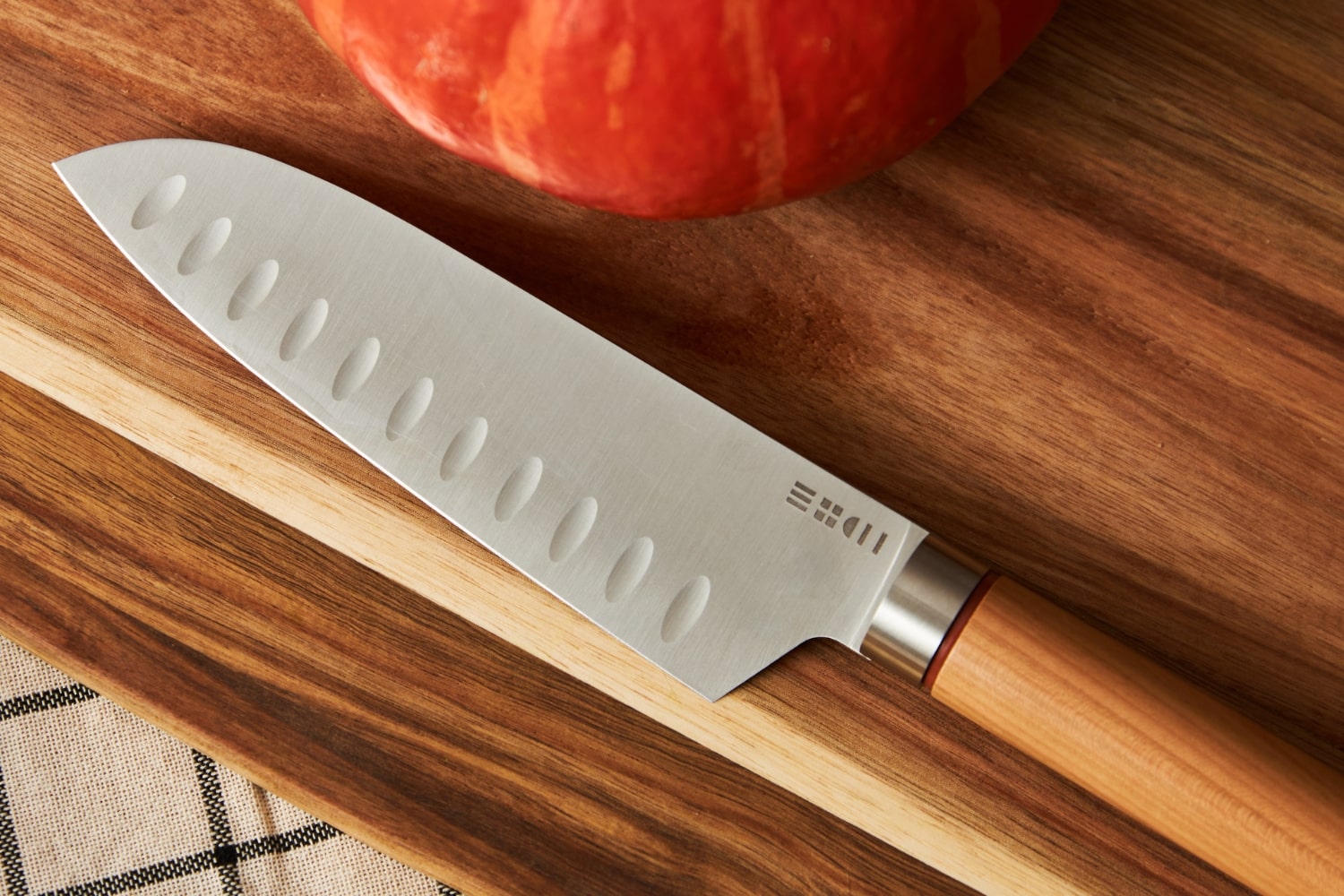
4. The Santoku knife
Originating in Japan, it's somewhat equivalent to a chef's knife. Its shorter, wider blade excels at slicing thin pieces of meat. Ideal if you enjoy carpaccio or thinly sliced meat!
By the way, did you know that " Santoku " means "three virtues"? Cutting, slicing, chopping. Quite a program…
The essential criteria for choosing the best knife for cutting meat
Okay, now that you know the types, how do you choose THE right one?
1. The quality of the blade
Stainless steel or carbon steel? Carbon steel cuts better but rusts easily. Stainless steel requires less maintenance but can dull more quickly. Personally, I use Nitrox : the perfect balance between strength and precision!
2. The length of the blade
For a carving knife, aim for a blade of at least 20 cm. For boning, a shorter blade (15 cm) offers greater maneuverability.
3. The handle
Hold it in your hand: it should be comfortable, non-slip, and well-balanced. A bad handle, and you're guaranteed tendonitis…
A little anecdote: I had a magnificent knife… but with a slippery handle. The result? Every time I cut, I was playing "catch me if you can." Not ideal for keeping your fingers intact!
4. The weight
Not too heavy, not too light. You should feel the knife guiding you, without feeling like you're lifting weights.
5. The price
You can find excellent knives between €50 and €150. Beware of models that are too cheap. As they say, "Buy cheap, buy twice!"
How to care for your knife so that it lasts a long time
A good knife is like a good friendship: it needs to be nurtured. Here are a few tips:
- Wash it by hand (never in the dishwasher!);
- Wipe it dry immediately after washing;
- Sharpen it regularly with a sharpening steel or whetstone;
- Store it in a block or on a magnetic strip (not just thrown loose in a drawer…).
Believe me, a well-maintained knife will last you for years. Like my Global, which has been faithfully serving me for 8 years!
In summary: how to choose your best knife for cutting meat
If I had to sum it all up in a few words, I would say this:
Choose a knife suited to your needs , with a quality blade, a comfortable handle, and good balance. Invest wisely. Take care of it.
And above all… enjoy yourself ! Because in cooking, as in life, the tools we love make every moment even more delicious.
So tell me: what type of knife are you planning to adopt for your next culinary adventures?


This site is protected by hCaptcha and the hCaptcha Privacy Policy and Terms of Service apply.