

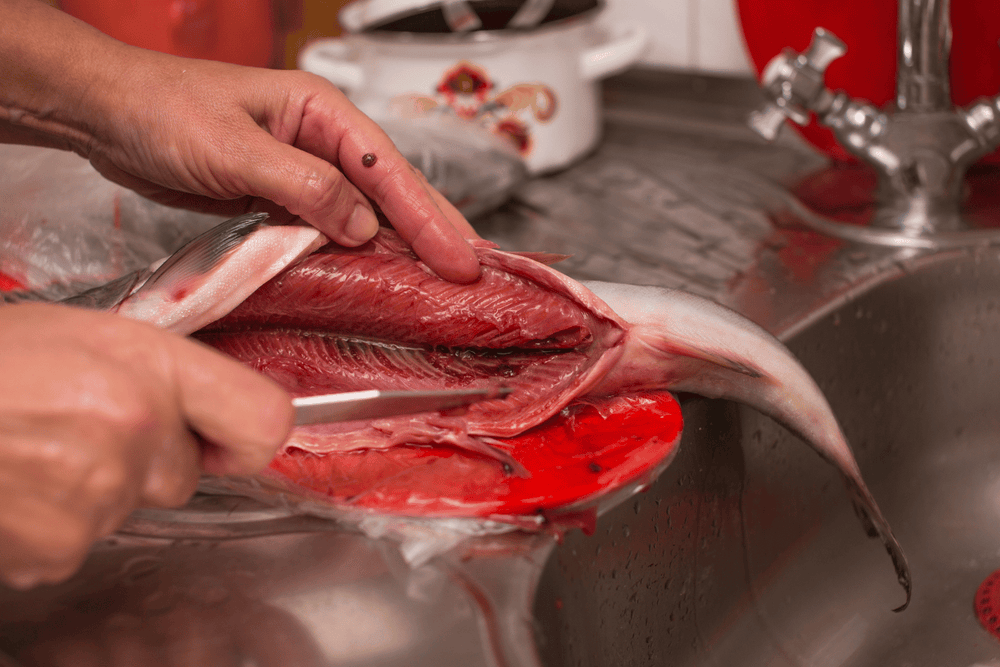
Which knife should I choose to fillet fish?
Filleting fish… what a delicate art! If you're here, it's surely because you dream of a fillet worthy of a Michelin-starred chef, without battling stubborn bones or mutilating delicate flesh. So, sit back, relax, and let me guide you through this fascinating world where theright knife makes all the difference! Imagine: a Sunday morning, a sea bream on the cutting board, your apron around your waist… and that darn knife that catches more than it cuts. Frustrating, isn't it? Yet, with the right tool, filleting becomes child's play (almost as easy as buttering toast!). Ready to discover how to choose the perfect knife for filleting your fish? Let's go!
Why choose a specific knife for filleting fish?
You might be wondering: "Isn't a simple kitchen knife enough?" Well, not really. Filleting fish is like painting a masterpiece: it requires precision, finesse, and above all... the right tool.
A standard knife is often too rigid, too thick, or poorly shaped. The result? You risk wasting precious flesh, tearing the fillet, or worse, slipping and injuring yourself. Believe me, I speak from experience… Once, with an unsuitable knife, I turned a beautiful sea bass into a shapeless mush – a real disaster!
The moral of the story: it's better to invest in a specific knife . And to find your way around, follow the guide!


The essential characteristics of a fish fillet knife
When choosing a filleting knife, a few criteria are absolutely essential. Here they are:
- The thin and flexible blade : that's the key to success! Flexibility allows you to follow the curves of the fish with precision.
- Blade length : generally, between 15 and 20 cm is ideal. The larger the fish, the longer the blade should be.
- A razor-sharp edge : not just sharp… razor-sharp! For a clean cut without pulling.
- An ergonomic handle : for a comfortable grip, even if your hands are wet.
- High-quality stainless steel : essential to resist moisture and prevent rust.
In fact, an old fishmonger once told me: "The knife should glide through the flesh like a sailboat on the water." A beautiful image, isn't it?
The different types of knives for filleting
There are several styles of knives suitable for filleting fish. Let's take a look!
1. The flexible fillet knife
This is the essential classic. Lightweight, easy to handle, with a long, flexible blade, it perfectly follows the shape of the fish. It allows for precise cuts, even on delicate species like sole or turbot.
👉 When to use it? To lift thin or medium fillets.
2. The pin-boning knife
Shorter and more rigid, this knife is specialized for removing small bones. Its tapered tip acts like ultra-precise tweezers.
👉 When to use it? After lifting the fillets, for a goldsmith's work.
3. The Japanese "Deba" knife
Heavy, thick, and ultra-sharp, the Deba is traditionally used in Japan to cut up whole fish, including small bones.
👉 When to use it? To prepare large fish or to fillet with precision and strength.
4. The electric fillet knife
Yes, you read that right! For those who fillet a lot of fish quickly (hello weekend anglers!), an electric knife is a handy option. Just be careful not to sacrifice precision.
👉 When to use it? When you need to do series threading without spending all day on it.
How to choose your knife according to your needs?
So, how do you know which one is right for you? Ask yourself the right questions:
- What size fish do you cook most often?
- Do you need a versatile or highly specialized knife?
- Do you prioritize accuracy or speed?
- Are you ready to take good care of your blade?
For example, if you love cooking trout or sea bass, a simple flexible filleting knife will suffice. If you enjoy working with larger fish like salmon or monkfish, a more robust model is necessary.
A little friendly advice: always try holding the knife before buying it. It's like choosing a magic wand (yes, really!) – it should feel natural to your hand.
Some recommended brands and models
At this point, you're probably wondering: "But which one should I buy then?" Here are a few reliable options:
- Victorinox – Flexible fillet knife : top Swiss quality, very affordable.
- Wüsthof – Classic Ikon : for those who want a professional edge.
- Global – G-30 flexible knife : Japanese design, lightweight and ultra-efficient.
- Opinel – Fillet knife : French charm, perfect for beginners.
A fisherman I know swears by his Global: "It flies like a dolphin!" he told me, laughing.
Tips for properly maintaining your filleting knife
Because even Excalibur would rust without maintenance , follow these few golden rules:
- Wash by hand with lukewarm water and dry immediately.
- Sharpen regularly with a honing steel or a whetstone.
- Store your knife in a sheath or magnetic holder to avoid damaging the blade.
Believe me, a well-maintained knife is a joy to use… and a successful fillet every time!
Mistakes to absolutely avoid
And because we often learn best from our mistakes (I know what I'm talking about…), here's what you should NEVER do:
- Using a blunt knife (that's a guaranteed way to get injured).
- Put the blade in the dishwasher (goodbye steel!).
- Cutting on a hard board like glass or stone (hello splintering…).
Always keep in mind: a good knife deserves to be cherished like a treasure.
In short: find your fishing buddy
Choosing the right knife for filleting your fish is, above all, choosing a faithful companion. One that will respect your technique, enhance your fish, and save you a lot of hassle. So, take the time to choose it carefully, test it if possible, and above all, have fun! Because after all, cooking should remain a pleasure, shouldn't it? As they say, "You don't need to be a chef to cook, but you have to love what you do." And filleting with the right knife is already an art in itself!



This site is protected by hCaptcha and the hCaptcha Privacy Policy and Terms of Service apply.