

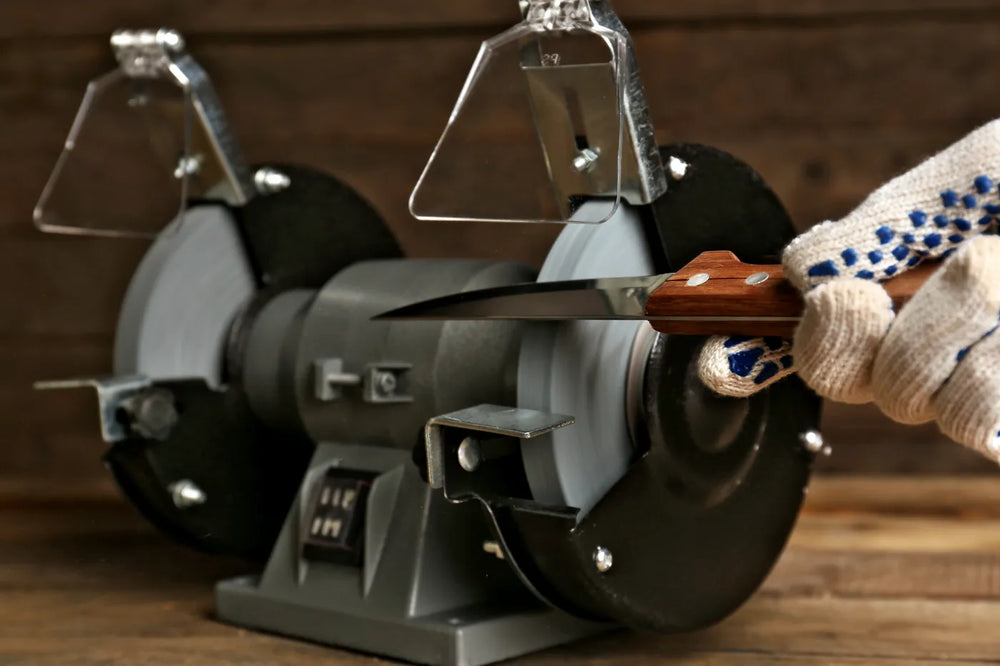
The best tools for sharpening knives: 5 solutions
Have you ever found yourself with a knife that refuses to cut a perfectly ripe tomato without completely squashing it? Frustrating, isn't it? That's where sharpening comes in. A sharp knife is essential for safe and efficient cooking. To achieve this, there are many knife sharpening tools available, each with its own specific characteristics. In this article, we'll explore the best tools to restore your knives to their optimal sharpness. You'll discover how to use them, as well as how to maintain them so your blades always remain razor-sharp.
So, what is your favorite tool for sharpening your knives? Whether you are a fan of whetstones , a die-hard honing steel user, or prefer the simplicity of manual sharpeners , there is bound to be a knife sharpening tool that will suit your needs.
Sharpening stones: a traditional and effective method
Ah, whetstones … It doesn't get more classic than that. If you've ever seen a blacksmith sharpening a blade in an old movie, chances are he was using a whetstone. This method, while a bit more technical, remains one of the most effective for restoring the edge to your blades.
Materials and characteristics of sharpening stones
Sharpening stones come in a variety of grits, from very coarse for repairing damaged blades to ultra-fine for a chef's-quality finish. You might be wondering, "Should I use a water stone or an oil stone?" Well, it depends. Water stones, like those found in Japan, are very popular and easy to maintain. They simply need to be soaked in water before use. Oil stones, on the other hand, are better suited for heavy-duty work and require a bit more preparation, but they deliver excellent results.
Types of sharpening stones
Whether you're a beginner or a seasoned chef, you'll find a sharpening stone to suit your needs. Japanese water stones are ideal for those seeking exceptional precision. They are often used to sharpen Japanese knives , renowned for their impeccable edge. If you use your knives frequently and want a simple method for sharpening a kitchen knife , oil stones will do the job perfectly. In fact, at ETCH , we recommend using a fine stone to sharpen our Nitrox steel knives to maintain their legendary edge.
How to properly maintain a sharpening stone
Just like your knives, your sharpening stones require regular maintenance. After each use, remember to rinse them under running water to remove any metal particles that have accumulated during sharpening. A well-maintained stone guarantees a perfectly sharp blade, stroke after stroke.
| Stone type | Recommended Grain | Main use |
|---|---|---|
| Water stone | 1000 to 3000 | Daily sharpening |
| Oil stone | 200 to 600 | Repairing dull blades |
| Finishing stone | 6000 and more | Polishing and finishing |


Sharpening steels: quick and easy maintenance
Imagine you're preparing a delicious meal. You reach for your favorite knife, but it seems to have lost some of its edge. Don't panic! A sharpening steel is here to save the day. It's probably one of the easiest knife sharpening tools to use every day.
Materials and characteristics of sharpening steels
A sharpening steel is a bit like a magic tool for maintaining your knives on a daily basis. It straightens the blade's edge without removing any material like a sharpening stone would. Conveniently, sharpening steels are often made of steel , ceramic , or even coated with diamond . If you own steel knives, a classic steel sharpening steel will do the job. For those with ceramic knives , a ceramic sharpening steel is more suitable.
Types and uses of sharpening steels
You might be wondering how to use a sharpening steel? It's very simple! Hold it vertically and run the blade of your knife along each side of the steel, maintaining an angle of approximately 20 degrees. If you really want to pamper your knives, use a ceramic steel for a delicate blade, or opt for a diamond steel for very dull blades.
Sharpening steel maintenance
A speargun requires minimal maintenance. Simply wipe it with a dry cloth after each use, and avoid dropping it. Ceramic or diamond spearguns are particularly fragile.
| Type of rifle | Material | Main use |
|---|---|---|
| classic rifle | Steel | Daily maintenance |
| Ceramic rifle | Ceramic | Fine sharpening of fragile knives |
| Diamond rifle | Diamond | Intensive sharpening |
Manual sharpeners: for easy and quick sharpening
Ah, manual knife sharpeners ... If you don't want to spend hours sharpening your knives, these little gadgets are for you. In the blink of an eye, your blade regains its edge effortlessly. Convenient, isn't it?
Materials and characteristics of manual sharpeners
Manual sharpeners work using two slots: one for rough sharpening the blade, the other for polishing. Easy to use, they are equipped with ceramic or tungsten blades. This duo allows you to restore your knives to their former glory in just a few strokes.
Different types of manual sharpeners
If you're looking for simplicity, manual sharpeners are an excellent option for sharpening a kitchen knife . They're perfect for everyday sharpening. However, for specific knives, such as a Santoku or Japanese knife , it's best to use more precise tools, as the sharpening angle of manual sharpeners is fixed and not always suitable for these types of blades.
Maintenance of a manual sharpener
Maintaining a manual sharpener is quite simple. Be sure to clean the slots regularly to prevent residue buildup. This will guarantee a perfect edge every time you use it.
| Sharpener type | Material | Main use |
|---|---|---|
| Ceramic sharpener | Ceramic | Light polishing and finishing |
| Tungsten sharpener | Tungsten | Coarse sharpening |
| Multi-stage sharpener | Ceramic and tungsten | Sharpening and polishing |
Electric sharpeners: the fast and automated solution
Got a busy day of cooking ahead and not a minute to spare sharpening your knives? An electric knife sharpener is the answer. Quick, simple, and above all, effortless. It's perhaps one of the most popular knife sharpening tools for busy people!
Materials and characteristics of electric sharpeners
These devices work with diamond or ceramic abrasive discs. They rotate at high speed and quickly restore the edge to your blades. Some models even offer several sharpening stages, from coarse grinding to polishing.
Types of electric sharpeners
Electric knife sharpeners are perfect for standard kitchen knives. However, if you have Japanese or ceramic knives , be careful. These types of knives require a specific sharpening angle, which not all electric sharpeners can provide. So, always check if your knife is compatible before using it.
Maintenance of an electric sharpener
To ensure optimal lifespan, clean the discs regularly and follow the manufacturer's instructions. Regular maintenance will keep your blades in pristine condition.
| Electric Sharpener Model | Material | Recommended use |
|---|---|---|
| Chef's Choice | Diamond | Fast sharpening |
| Wüsthof | Ceramic | Polishing and finishing |
| Victorinox | Diamond and ceramic | Multi-step solution |
Guided sharpening systems: guaranteed precision
Are you a perfectionist? Do you like everything to be done perfectly, down to the millimeter? Then you'll love guided sharpening systems . They offer complete control over the blade angle for precise and consistent sharpening. If you're looking for tools to sharpen knives to a professional level, this type of tool is perfect for you.
Materials and characteristics of guided sharpening systems
With these systems, you can adjust the sharpening angle to achieve a perfect edge . They are often used by professionals or enthusiasts seeking ultimate precision.
Types of guided sharpening systems
The Edge Pro system, for example, is a favorite among Japanese knife enthusiasts. It allows you to sharpen a Japanese knife with exceptional precision, by adjusting the sharpening angle to each type of blade.
Maintenance of guided sharpening systems
Like any precision tool, these systems require careful maintenance. After each use, thoroughly clean the abrasive bars to ensure optimal sharpening every time.
| Sharpening system | Material | Precision and control |
|---|---|---|
| Edge Pro System | Ceramics and diamonds | High-precision sharpening |
| Lansky System | Diamond | Adjustable angle for all types |
Conclusion
Now that you know the best tools for sharpening knives , all you have to do is choose the one that suits you best. If you're looking for a quick and efficient solution, manual or electric sharpeners are perfect for everyday use. For those who appreciate precision, sharpening stones and guided systems will allow you to achieve results worthy of top chefs.
At ETCH , we know how much a sharp knife makes all the difference. Our Nitrox steel knives, meticulously crafted in Thiers, are designed for durability and exceptional performance. Whether you choose our large chef's knife or our Santoku knife , you'll always get a cutting edge worthy of the finest kitchens. Because with ETCH , you deserve the best for every cut.



This site is protected by hCaptcha and the hCaptcha Privacy Policy and Terms of Service apply.