

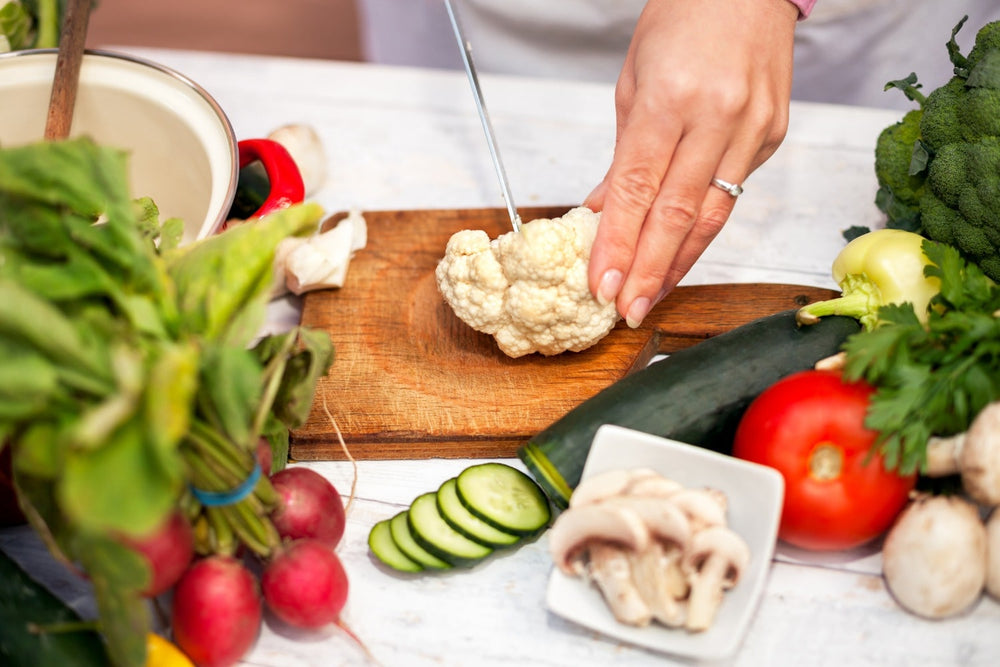
How to easily slice cauliflower
Slicing cauliflower easily allows for a variety of preparations: roasting, grilling, or vegetarian dishes. With the right technique, you'll get clean slices, without crumbs or unnecessary waste.
Why cut cauliflower into slices instead of florets?
Slicing cauliflower allows for even cooking, a better presentation, and more creative recipes. The slices offer more surface area for grilling or roasting and hold their shape better on the plate.
Advantages of the slices:
- Even cooking
- Aesthetics for vegetarian dishes
- Less texture loss
- Ideal for cauliflower steak
This format is a departure from classic florets and opens the door to more creative recipes.


Which part of the cauliflower makes nice slices?
The central core, with its bouquets still attached to the trunk, is the ideal area for slicing. The outer edges crumble more easily and produce irregular pieces.
Preferred area:
- Center of the cauliflower
- Bouquets close to the core
- Avoid the side edges
By targeting the central part, you get whole slices that are stable and easy to handle.
Which variety of cauliflower is best suited for slicing?
Compact varieties, such as classic white cauliflower or Romanesco, are the most suitable. Avoid varieties that are too open or have loose heads that fall apart when cut.
Good varieties:
- Firm white cauliflower
- Romanesco
- Orange or purple cauliflower (farms)
A dense and homogeneous cauliflower guarantees clean slices without scattering.
Should it be cooked before slicing it easily?
No, cauliflower is cleaner when raw. Cooking it first softens it, making it harder to handle and more fragile. Cut it first, then cook it according to your recipe.
Recommended order:
- Wash
- Cut raw
- Cook (oven, steam, grill)
Always cut raw cauliflower for clean, even and easy-to-handle slices.
How to properly wash cauliflower before cutting it
Remove the leaves, rinse the whole cauliflower under cold water and dry it with a tea towel. You can also soak it for 5 minutes in vinegar water to remove impurities.
Quick steps:
- Remove the leaves
- Rinse under cold water
- Optional: Soak in mild vinegar
- Dry thoroughly
A clean cauliflower ensures hygienic cutting and clean slices without residual moisture.
Should all the leaves be removed before slicing it?
Yes. The leaves make it difficult for the cauliflower to stand upright on the cutting board. Remove them completely with a small knife by making a small incision at the base. This allows the cauliflower to lie flat for slicing.
Trick :
- Remove all outer leaves
- Save the tender leaves for soup or pesto
- Clean the visible trunk
A well-defined vegetable ensures a straight cut, without unwanted movement.
How to cut the core without damaging the bouquets
Turn the cauliflower over and make a V-shaped incision in the central stem to detach part of the core. Don't remove it all: keeping a solid base helps hold the florets together when cutting.
Steps:
- Turn the cauliflower over
- Cut the heart at an angle
- Leave a solid base
- Do not detach the bouquets.
A partially preserved trunk ensures the cohesion of the slices during and after cutting.
What tools should I use to slice cauliflower?
Use a chef's knife with a wide, sharp blade. A non-slip board is also essential. Avoid serrated knives or thin blades that will tear the bouquets.
Ideal kit:
- Chef's knife (20–25 cm)
- Smooth, well-sharpened blade
- Stable, wide board
- Container for scraps
With a good knife, the cut is clean, precise and without excessive crumbs.
How to stabilize cauliflower on the cutting board before slicing
Place the cauliflower flat on the base of the core. If it rolls, cut a small flattened section at the base to create a stable support. This secures the cut and prevents it from slipping.
Method :
- Base down
- Cut off a flat section if necessary
- Slice while maintaining stability
- Move forward slowly, with your hand in the correct position.
Stabilizing the cauliflower makes cutting safer, straighter, and more even.
How to cut a whole cauliflower into even slices
Place the cauliflower vertically, then slice from top to bottom in parallel cuts, from the outside towards the center. Use constant pressure and a straight blade.
Step-by-step cutting:
- Position vertically
- Cut from the flowery part
- Cut into 1-2 cm slices
- Reserve the brittle ends
This method gives you whole slices that can be used for several recipes.
What is the ideal thickness for cauliflower slices?
Aim for a thickness of 1 to 1.5 cm for even cooking. For steaming or pan-frying, choose thinner slices. For roasting or grilling, opt for a maximum thickness of 2 cm.
Recommended thickness:
| Cooking | Ideal thickness |
|---|---|
| Steam | 0.8–1.2 cm |
| Stove | 1–1.5 cm |
| Oven / Grill | 1.5–2 cm |
Adjusting the thickness to the intended use improves texture, consistency and even cooking.
How to prevent the slices from crumbling when cutting
Keep the trunk partially intact, cut with a sharp blade, and avoid handling the slices too much once cut. Don't press down; let the blade do the work.
Anti-crumbling tips:
- Sharp blade
- Constant pressure
- Clean cut, no going back
- Gentle handling after cutting
With these simple steps, the slices remain whole, ready for use or cooking.
Can a mandoline be used to cut cauliflower?
Only for very thin slices. A mandoline is not suitable for cutting a whole cauliflower. It is only useful for individual florets or for chips.
Mandolin:
- ✅ For chips or thin salads
- ❌ Not suitable for whole slices
- ❌ Too many structural losses
Reserved for specific preparations, but not for cutting into wide slices.
Which blade should I choose for a clean, crumb-free cut?
A smooth, well-sharpened stainless steel blade is ideal. Avoid serrated or micro-serrated blades, which break the bouquets. A wide blade provides more stability.
Recommended blades:
- Chef's knife
- Santoku knife
- Rigid vegetable knife
- Smooth, sharp blade
A good, well-maintained blade is the key to a clean and even cut.
What slice shape should I use for baking?
Whole slices with a central core are perfect. They hold their shape during cooking, brown nicely, and retain their form. Avoid pieces that are too small, as they dry out.
Ideal for oven use:
- Slices of 1.5 to 2 cm
- Intact center
- Placement on an oiled plate
- Time: 25 min at 200 °C
The cut directly influences the final texture after roasting.
How to slice cauliflower for a salad
Choose thin slices (0.5 to 1 cm) from the outer florets. Use a knife or a mandoline and toss them raw with a tangy vinaigrette.
Salad tip:
- Thin, crispy slices
- Use the outside of the cabbage
- Season just before serving
A thin cut makes cauliflower crunchy and pleasant in raw salads.
Are cauliflower slices suitable for grilling?
Yes, provided they are well oiled and handled with care. The thick, central slices are best suited for grilling without falling apart.
Grilling tips:
- Thick slices (2 cm)
- Light marinade
- Grill nice and hot
- Time: 4–5 min per side
Grilling reveals the sweet and nutty taste of the cauliflower, while preserving its texture.
What cut is best for vegetarian cauliflower steaks?
Cut the cauliflower into 2 cm slices, starting from the center. Keep the stem intact to hold everything together. These "steaks" can be roasted, grilled, or pan-fried.
Plant-based steak:
- Cut in the center
- Leave the core
- Thickness: 2 cm
- Marinade or spices before cooking
A simple, healthy and visually impressive dish with a well-executed cut.
What are some common mistakes when cutting cauliflower?
Common mistakes include: cutting too thin, removing the entire core, using a dull knife, or cutting without stabilizing the vegetable. This causes crumbling or unevenness.
To avoid:
- Toothed blade
- Unstable cabbage on the board
- Excessive pressure
- Cut without a slicing plan
By correcting these errors, you gain in accuracy, speed and visual result.
How to store raw slices before cooking
Store them in an airtight container in the refrigerator with a damp paper towel. Use them within 24 to 48 hours. Avoid exposure to air to prevent drying out.
Storage tip:
- Airtight container
- Film or damp cloth
- Immediate refrigeration
- Quick use
Proper storage protects the texture and prevents surface oxidation.
Can sliced cauliflower be frozen?
Yes, after a quick blanching (2–3 minutes in boiling water), then drying. Place the slices flat on a tray before freezing to prevent them from sticking together.
Procedure :
- Blanch for 2–3 minutes
- Cool in ice water
- Dry completely
- Freeze flat, then regroup.
This method preserves the texture for future cooking in the oven or in a wok.
What to do with the offcuts or irregular pieces after cutting
Use them in soup, mashed potatoes, a gratin, or vegetable broth. Nothing goes to waste: even crumbs can enrich a homemade dish.
Anti-waste ideas:
- Cauliflower puree
- Homemade broth
- Roasted cauliflower in breadcrumbs
- Vegetarian croquettes
Optimize every piece for zero-waste and tasty cooking.
Can cauliflower be cut in advance without losing texture?
Yes, if you store it properly. Cut it up, then store it in a cool place in an airtight container with a damp paper towel. Avoid prolonged exposure to air.
Recommendations:
- Cut 12 to 24 hours max before cooking
- Immediate refrigeration
- Cook immediately after removing from the oven to retain the crispness.
Preparing in advance saves you time while preserving freshness and texture.
Conclusion
Slicing cauliflower easily requires a bit of technique, but becomes quick with the right movements. With careful preparation and a suitable knife, you'll get clean slices, ready to cook, grill, or serve.
You now know the ideal cut for each use: roasting, salting, grilling or serving cold.
Adopt these techniques and transform an everyday vegetable into a true culinary asset.



This site is protected by hCaptcha and the hCaptcha Privacy Policy and Terms of Service apply.