

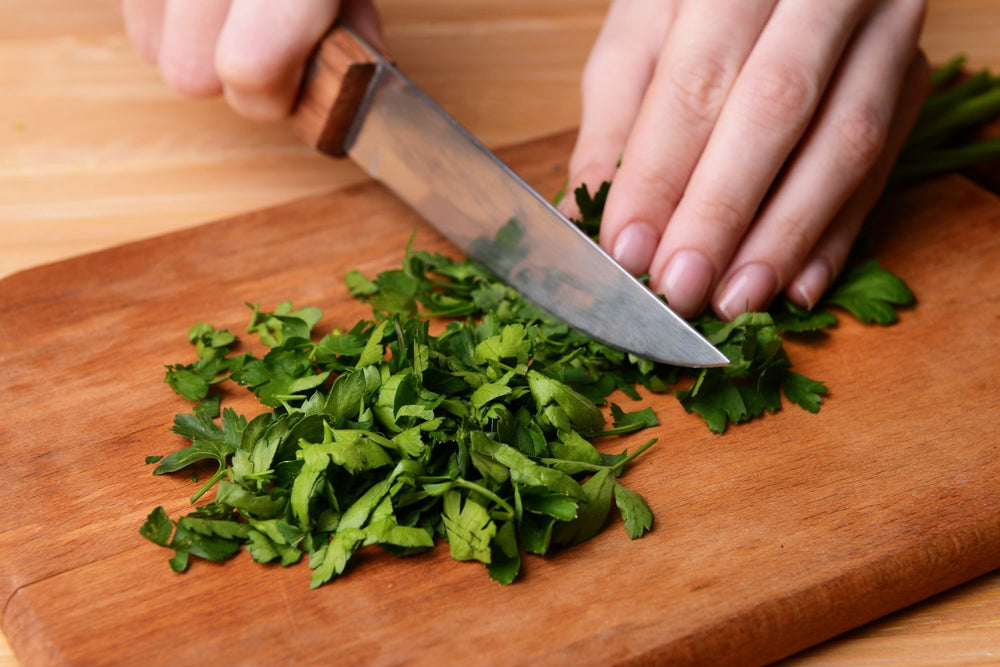
How to chop, mince, and cut parsley with a knife
Knowing how to chop, mince, and slice parsley with a knife enhances your dishes, presentations, and precision in the kitchen. This comprehensive guide shows you each technique step by step, without crushing the leaves or losing freshness.
What is the difference between chopping, mincing, and slicing parsley?
To chisel means to cut into very thin strips. To chop involves cutting more coarsely into small pieces. To cut is the generic term that encompasses both techniques. Each method results in a different texture.
Comparison:
| Term | Final size | Common use |
|---|---|---|
| Chisel | Very thin threads | Finish, trim |
| Chop | Small pieces | Sauces, stuffings, tabbouleh |
| Cut | Generic term | All preparations |
Understanding these nuances allows you to adapt the cut to the intended use and to better balance the flavors.


Why you should avoid crushing parsley when cutting it
Crushing parsley releases its water, flavor, and aroma before cooking. This also causes rapid oxidation, blackening of the leaves, and a visible loss of freshness.
Risks associated with crushing:
- Brown leaves
- Metallic taste
- Loss of essential oil
- Pasty texture
A clean cut preserves the aesthetics, aroma and stability of the parsley on the plate.
Which cut to choose according to the recipe
Dice for an elegant finish (omelets, steamed potatoes). Chop for sauces, tabbouleh , stuffings. Use a medium cut for long cooking times or rustic garnishes.
Usage table:
| Recipe | Recommended haircut |
|---|---|
| Omelette | Chop finely |
| Tabbouleh | Chop medium |
| Soup / broth | Rough cut |
| Stuffing, sauce | Chop finely |
Adjusting the cut improves the integration of parsley into each recipe, without dominating the dish.
Should you cut the parsley stems or just the leaves?
The leaves are used for their tenderness and aroma. The tougher stems are sometimes finely chopped and included, or reserved to flavor broths and sauces.
What to do:
- Leaves: yes, always
- Thin stems: yes, chopped
- Thick stems: no, except when used in infusions
Remove the main stems if you are looking for finesse and elegance in the final result.
How to wash parsley without damaging it
Rinse it in a colander under cold water, or soak it in a bowl with a little white vinegar. Then drain it carefully so as not to make the leaves soggy.
Steps:
- Gently immerse or rinse
- Drain in a colander
- Dry gently
- Then remove the stems.
Washing gently preserves the integrity of the parsley and prepares it for a clean cut.
How to properly dry parsley before chopping it
Use a clean tea towel or a salad spinner. Moisture makes cutting slippery and imprecise. Well-dried parsley allows for a clean cut, without any mushy effect.
Tips:
- Salad spinner = quick
- Folded dish towels = effective
- Air dry if needed
When properly dried, parsley retains its shape and taste, and makes all cutting movements easier.
Should you remove the stems from the parsley before chopping it?
Yes, to get a more even and tender cut. Remove the thick stems by running your finger along the stem. Keep the thin stems if you are chopping them finely.
Tip for trimming:
- Pinch at the top of the stem
- Pull towards the base
- Do not throw away the stems: use them to infuse or chop them.
Proper trimming facilitates a quick cut, without fibrous pieces.
How to trim parsley for a clean cut
Remove any wilted leaves, damaged or yellowed stems before cutting. Keep only green, whole, and supple leaves for a clean and fresh look.
Sorting efficiently:
- Remove wilted leaves
- Remove any overly thick stems
- Keep the leaves bright green
Rigorous sorting improves the final texture and prevents residues in the dish.
How to finely chop parsley with a knife
Form a small ball of leaves, hold them with your non-dominant hand, and make a back-and-forth motion with a sharp knife, without crushing the leaves.
Technique:
- Gather the sheets
- Hold gently
- Cut in a fluid motion
- Repeat if necessary
Chopping is the finest cut, which respects both the aroma and the aesthetics of the parsley.
What knife should I use to chop parsley?
A chef's knife with a smooth, sharp blade is ideal. Avoid serrated or dull knives, which crush and oxidize the leaves.
Knife selection:
- Wide blade = stability
- Smooth blade = precision
- Length 18–20 cm = fluid movement
A good knife makes chopping quick, clean and without loss of juice.
What hand position should I adopt for proper chiseling?
Place your free hand in a "claw" position on the parsley, with your fingers curled and knuckles pointing towards the blade. This allows you to guide the knife without risk of cutting yourself while holding the parsley in place.
Safety tip:
- Folded fingers
- Knife against the knuckles
- Controlled movements
This position gives you precision, comfort and safety when chiseling.
How to prevent parsley from slipping on the cutting board
Dry the parsley thoroughly. Use a non-slip board or place a damp cloth underneath. Gather the leaves into small bundles for easier handling.
Anti-slip tips:
- stable board
- Dried parsley
- Hands positioned firmly
Good support ensures a quick, clean and controlled cut with every stroke.
How to quickly chop parsley with a knife
Gather the parsley into a pile, then use the knife with a rocking motion on its tip. Chop back and forth without lifting the blade completely.
Steps:
- Gather into a pile
- Anchor the tip
- Rocking back and forth
- Repeat over the entire mass
Chopping is quick and efficient once you adopt this fluid and grounded motion.
What is the difference in texture between chopped and minced?
Chopped parsley is finer, airier, and more decorative. Chopped parsley is denser, moister, and often blends better into a dish. The choice depends on the dish.
Summary :
| Texture | Cut | Typical use |
|---|---|---|
| Light, dry | Chisel | Finishing touch: salad |
| Compact, dense | Chop | Sauce, cooking |
Depending on the desired result, texture plays as important a role as cut in the final taste.
How much pressure should be applied with the knife when chopping?
Apply moderate, consistent pressure without crushing the leaves. Let the weight of the knife do the work. Too much pressure releases too much moisture.
Key points to remember:
- Moderate pressure
- Continuous movements
- No crude hashing
Controlling the pressure ensures a clean cut, a balanced texture and a pleasing appearance.
Can you chop parsley with a serrated knife?
Not recommended. The serrated knife tears and crushes the leaves instead of cutting them. This causes rapid oxidation and a mushy or blackened result.
Why avoid:
- Irregular cut
- Accelerated oxidation
- Degraded presentation
Always use a smooth, sharp blade for any cutting of fresh grass.
How to prevent parsley from oxidizing after cutting
Chop just before serving. Keep refrigerated in a damp cloth if necessary. Avoid handling or chopping too far in advance.
Anti-oxidation tips:
- Cut at the last moment
- Keep refrigerated
- Do not expose to air
The less you handle parsley after cutting, the greener, fresher, and tastier it remains.
Can parsley be cut in advance?
Yes, up to 1 hour before serving. Store it in the refrigerator in an airtight container with a damp paper towel. Do not keep it for more than 24 hours to avoid loss of aroma.
Best practices:
- Cut off 1 hour max before
- Box + wet paper towel
- Fridge at 4°C
A well-stored, pre-cut cut allows for quick service without loss of quality.
How long does chopped parsley keep?
It will keep for up to 24 hours in the refrigerator, if well protected from air. After this time, it will darken and lose its aroma. For freezing, it is best to chop it finely and freeze it immediately.
Duration :
- Refrigerator: 24 hours max
- Freezer: 2–3 months
- In the open air: 20 minutes before wilting
Cutting at the right time guarantees maximum flavor when serving.
What to do with parsley stems after cutting
Use them to flavor broths, stocks, marinades, or sauces. The stems are very flavorful but tougher. Avoid using them in raw dishes.
Reuse:
- Broth
- Tomato sauce
- Cooking water
- Pesto with a strong mix
Make the most of the stems for a zero-waste kitchen full of flavour.
Can chopped or minced parsley be frozen?
Yes, after chopping. Put it in an ice cube tray with a little water or oil, then transfer to a bag. It loses some texture but retains its aroma.
Method :
- Chop finely
- Freeze in portions (water/oil)
- Transfer into bags
Perfect for flavoring hot dishes without wasting anything.
What dishes use chopped or minced parsley?
Chopped parsley is ideal for finishing dishes (meat, fish, potatoes). Minced parsley can be used in cooking, sauces, tabbouleh, omelets, or in vegetable stuffings.
Some examples:
- Chopped parsley: omelet, grilled fish
- Chopped parsley: tabbouleh, parsley sauce
- Coarse parsley: broth, soup
Mastering these techniques allows you to vary your recipes while optimizing the taste.
What mistakes should you avoid when cutting parsley with a knife?
Avoid dull blades, damp surfaces, and chopping too roughly or too far in advance. Do not chop for too long to avoid a mushy, oxidized result.
To avoid:
- A poorly sharpened knife
- Too much pressure
- Cutting too early
- Stems that were too thick were left
Correcting these mistakes guarantees you perfect parsley, both beautiful, fresh and tasty.
Conclusion
Chopping, mincing, and slicing parsley with a knife is a simple yet essential step. It impacts the texture, aroma, and presentation of your dishes. Mastering these techniques optimizes your preparations, preventing waste and preserving freshness.
Thanks to this guide, you will know the precise techniques, the ideal tools and the mistakes to avoid to successfully complete each cut.
Incorporate these methods into your routine, and your cooking will gain in precision, aroma, and elegance.



This site is protected by hCaptcha and the hCaptcha Privacy Policy and Terms of Service apply.