

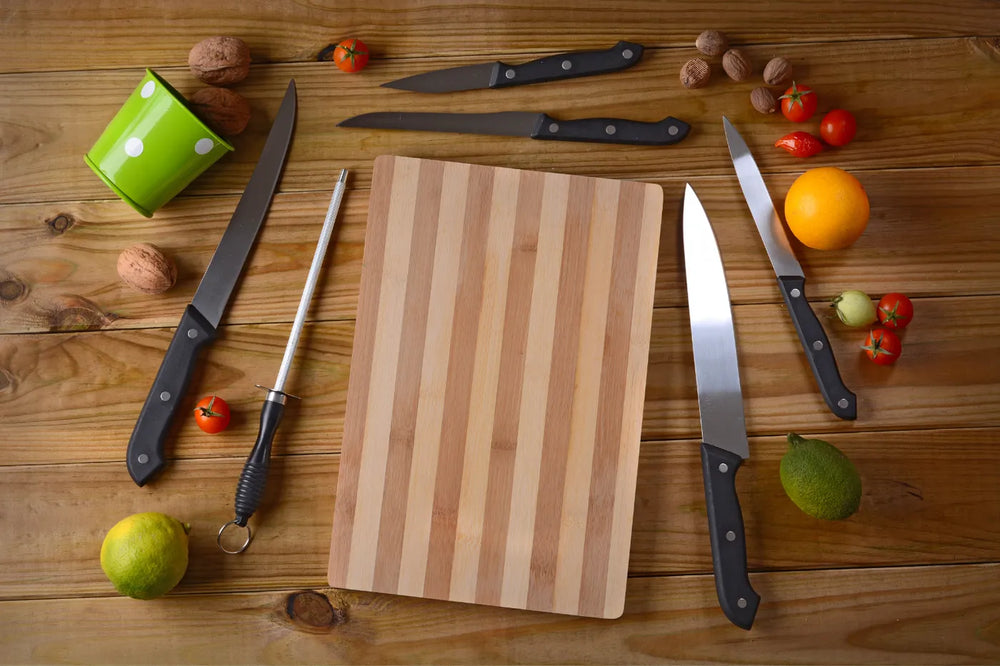
The different types of kitchen knives
In your kitchen, a good knife makes all the difference. You've surely experienced that frustrating moment when a dull blade crushes a tomato instead of slicing it cleanly. Choosing the right knife means gaining precision, speed, and enjoyment. But with so many models available, how do you know which one to use? Today, we'll explore 40 different types of kitchen knives and their uses , so that every cut becomes child's play.
Versatile kitchen knives

In the kitchen, having good knives makes all the difference. The different types of versatile kitchen knives and their uses allow you to save time and cook more efficiently. Whether for slicing, chopping, or mincing, these knives adapt to all preparations. Thanks to them, every movement becomes smoother, more precise, and above all, more enjoyable.
1. Chef's knife
The chef's knife is the undisputed king of your kitchen, and for good reason. With its wide blade, ranging from 15 to 30 cm, it allows you to chop herbs, slice meat, dice vegetables, and even crush a garlic clove in the blink of an eye. Its secret? A slightly curved blade that facilitates a rocking motion, making every movement smoother and more precise. Whether you're preparing a simple dinner or a meal worthy of a Michelin-starred chef, it's there to handle everything from start to finish.
2. Santoku knife
The Santoku knife is the Japanese knife that rivals the chef's knife, but with an added touch of elegance. Unlike its Western counterpart, it has a shorter, dimpled blade that prevents food from sticking. The result? You can slice your vegetables, fish, or meat with remarkable precision, without any pieces ever catching on the blade. Furthermore, its straight design promotes quick and efficient cutting, perfect for cooking enthusiasts who want to combine speed and finesse.
3. Utility knife
Don't let its small size fool you, because this paring knife is a true marvel of efficiency. With its thin, pointed blade measuring 8 to 12 cm, it excels at delicate tasks. Whether you're peeling an apple with precision, finely chopping basil, or removing the seeds from a chili pepper without making a mess, it guarantees clean and quick results. But that's not all! What makes it truly indispensable is its exceptional maneuverability, giving you complete control over your movements. So, whether you're making precise cuts or achieving professional-quality finishes, it's always within easy reach, ready to deliver with efficiency.
4. Utility knife
The utility knife is a bit like the chameleon of your kitchen. Not too big, not too small, it sits between a chef's knife and a paring knife, with a 10 to 18 cm blade that adapts to just about anything. Need to slice a generously filled sandwich, cut cheese, or slice fruit effortlessly? It's the perfect tool for the job. Thanks to its intermediate size, it's easy to handle and quickly becomes the knife you reach for without even thinking. A true all-rounder that simplifies your daily life!


Specialized kitchen knives

Sometimes, a regular knife isn't enough. That's why different types of specialized kitchen knives and their uses are essential for specific tasks. With these appropriate tools, it becomes easier to cut cleanly, avoid waste, and work with each ingredient under optimal conditions. This way, every cut is clean and effortless.
5. Bread knife
The bread knife is the essential tool for lovers of good loaves and crusty baguettes. Thanks to its long, serrated blade, it slices through thick crusts without crushing the soft crumb. But its talents don't stop there! It also excels at cutting light cakes, melt-in-your-mouth brioches, and even juicy tomatoes. In a single stroke, it glides through delicate textures without damaging them, making every cut as clean as it is efficient.
6. Cheese knife
The cheese knife is the perfect tool for any cheese lover, from the creamiest to the most aged. Its secret? A perforated blade that prevents soft cheeses from sticking and a fork-shaped end for easy serving. Some models have a thin, sharp blade for cutting hard cheeses like Comté, while others have a wide, flexible blade for Brie or Camembert. With it, no more crushed or misshapen pieces; you'll serve your cheeses with style and precision.
7. Truffle knife
The truffle knife has only one mission: to transform this gastronomic treasure into thin, flavorful slices. Thanks to its ultra-sharp, often adjustable blade, it allows you to slice the truffle with pinpoint precision. Too thick a slice? The aroma doesn't disperse properly. Too thin? It loses its texture. With this knife, each slice fully reveals its fragrance, enhancing your dishes with a simple gesture. An essential tool for lovers of refined cuisine.
8. Salmon knife
The salmon knife, recognizable by its long, flexible blade, is specially designed to effortlessly slice thin, even pieces. Thanks to its flexibility, it glides perfectly over the flesh without damaging it. But that's not all! Its unique feature? A slightly dimpled blade that reduces resistance and prevents the fish from sticking, making slicing even easier. The result: flawless slices that melt in your mouth.
9. Oyster knife
The oyster knife is small, but remarkably efficient. With its short, sturdy blade, it fits precisely between the shells to open them in a flash. Its pointed, slightly curved tip allows you to detach the mollusk without damaging it, thus avoiding any loss of that precious briny liquid. No more struggles or accidents with an ill-fitting knife; this tool guarantees a serene and elegant oyster tasting experience.
10. Foie gras knife
The foie gras knife is specially designed to achieve perfect slices without crushing its delicate texture. Thanks to its thin, often double-edged blade, it cuts cleanly without snagging, thus preserving the product's finesse. Some models even have a perforated blade to reduce friction and ensure an even cleaner cut. With it, your slices will be sublime, ready to be placed on crisp toast with a touch of fig jam. A must-have for lovers of exceptional cuisine.
11. Sushi knife
The sushi knife, or Yanagiba, is essential for achieving surgically precise slices of fish. With its long, thin blade sharpened on one side only, it makes clean cuts in a single motion, preventing the delicate flesh from being crushed. Unlike regular knives, it glides over the fish instead of chopping it, ensuring sashimi and nigiri as beautiful as those from a Japanese restaurant. If you enjoy making your own sushi, this knife will provide an experience worthy of the greatest sushi masters.
12. Paring knife
The paring knife is your best ally for precise and meticulous cuts. With its thin, curved blade, it's perfect for removing sinew, fat, or skin from meat and fish without wasting a single bite. Its compact size offers exceptional maneuverability, allowing you to work with extreme precision around bones and joints. Whether you're preparing a chicken breast or a steak, this knife ensures a clean and neat finish, worthy of a professional butcher.
13. Asparagus knife
The asparagus knife, as original as it is practical, is designed to peel asparagus without breaking it. Its semi-circular blade perfectly follows the shape of the stalks, allowing you to remove the fibrous skin in a single motion. Unlike a traditional peeler, it offers greater control over the thickness of the cut, thus preserving the vegetable's tenderness. Whether you enjoy green or white asparagus, this knife will simplify the task while ensuring even cooking and a flawless presentation.
14. Pastry knife
The pastry knife, often featuring a long, serrated blade, is essential for cutting sponge cakes, tarts, or entremets without damaging them. Its secret lies in its ability to slice delicately without compressing light textures. Some models have a slightly flexible blade, ideal for smoothing creams and precisely spreading glazes. Whether you're preparing a homemade strawberry cake or a Yule log, this knife guarantees a clean and elegant cut, worthy of a professional pastry chef.
15. Pizza knife
Unlike a pizza cutter, a pizza knife has a hatchet-shaped or slightly curved blade for clean, quick cuts. Its powerful edge slices through the crispy crust without crushing the toppings, guaranteeing perfect slices every time. Some models feature a dimpled blade to prevent melted cheese from sticking, making each cut even smoother. If you're a fan of homemade pizza nights, this knife will quickly become your go-to tool for serving delicious, flawless slices.
Kitchen knives for meat and fish

Meat and fish must be cut precisely to avoid damaging the texture. Different types of kitchen knives for meat and fish, and their proper use, ensure a clean and even cut. With the right tools, it's easier to obtain neat pieces, work effortlessly, and preserve the tenderness of the food.
16. Slicer
The slicing knife , also called a carving knife, is designed to cut beautiful, thin, and even slices of meat or fish. Its long, tapered blade reduces resistance and ensures a clean cut, perfect for a juicy roast, a salmon fillet, or a turkey breast. Unlike a regular knife, it glides over the meat without damaging it, guaranteeing uniform pieces and an impeccable presentation. An essential for anyone who appreciates a beautifully presented plate!
17. Steak knife
A steak knife transforms every bite into pure pleasure. With its sharp, smooth, or serrated blade, it cuts through meat without shredding it, preserving its tenderness. Unlike ordinary knives, it slices precisely through the grain, preventing the meat from being crushed. A good, sharp steak knife elevates a meal, whether in a restaurant or at home, guaranteeing a clean and effortless cut.
18. Ham knife
The ham knife, recognizable by its long, flexible blade, is designed for slicing thin slices of dry-cured ham or roast. Its flexibility allows it to follow the shape of the meat without wasting any, while its sharp edge ensures precise and elegant cuts. Unlike a regular knife, it doesn't crush the texture and preserves all the flavor of the ham. A must-have for charcuterie enthusiasts and those who appreciate perfect slicing!
19. Skinning knife
The sire is the ultimate precision tool for preparing flawless cuts of meat. Its thin, rigid, and pointed blade allows you to remove sinews, membranes, and excess fat with extreme precision. Unlike traditional knives, it glides under connective tissue without tearing the flesh, guaranteeing a clean cut and perfectly prepared meat. Ideal for achieving a melt-in-your-mouth texture and enhanced flavor after cooking!
20. Boning knife
The boning knife is designed to separate meat from bones with remarkable precision. Its thin, curved blade easily fits into joints, allowing you to extract the bone without damaging the meat. Unlike a regular knife, it is either rigid or flexible, depending on the model, making it suitable for both thick cuts of meat and more delicate cuts. A must-have for preparing poultry, beef, or lamb like a true professional!
21. Sole fillet knife
The sole fillet knife is specially designed for filleting fish with exceptional precision. Its thin, flexible, and ultra-sharp blade effortlessly follows the curve of the bone, ensuring maximum flesh is recovered. Unlike traditional knives, it prevents waste and preserves the delicate texture of the fish. Essential for perfect fillets and flawless preparation!
22. Deba Knife
The Deba knife, traditionally used in Japanese cuisine, is designed to work with fish and poultry with unparalleled power. Its thick, robust blade allows you to cut through bones and heads without dulling the edge. Unlike Western knives, it combines strength and precision, guaranteeing a clean and efficient cut without excessive effort. A must-have for lovers of whole fish.
23. Yanagiba Knife
The Yanagiba knife, with its long, asymmetrical blade, is the ideal tool for creating ultra-thin slices of raw fish. Its unique shape reduces friction and allows for a clean cut in a single motion, preventing damage to the flesh. Unlike traditional knives, it doesn't chop, but glides effortlessly over the fish, guaranteeing perfect sashimi and carpaccio. A must-have for Japanese cuisine enthusiasts!
24. Unagisaki Knife
The Unagisaki knife , used for preparing eel (unagi), has a thin, curved blade that makes opening the fish easy and gentle. Unlike traditional knives, it's designed to penetrate the skin effortlessly, ensuring a clean and precise cut. Ideal for gently filleting and preserving the fish's delicate texture, it's a must-have for cooks who have mastered the art of grilled fish.
25. Sashimi Knife
The sashimi knife, similar to the yanagiba but often longer, is designed to create ultra-thin slices of raw fish with extreme precision. Its single-edged blade allows for clean cuts without crushing the texture, thus preserving the elegance of the sashimi. Unlike traditional knives, it offers a smooth and even cut, essential for a presentation worthy of the finest Japanese chefs.
Kitchen knives for vegetables and fruit

Fruits and vegetables require precise cutting to avoid crushing them or wasting flesh. The different types of kitchen knives for fruits and vegetables, and their proper use, make peeling, cutting, and even carving easier. Thanks to the right blades, every preparation is faster, neater, and above all, more enjoyable.
26. Nakiri Knife
The Nakiri knife, with its thin, rectangular blade, is the champion of vegetables. Designed for effortless chopping, slicing, and mincing, it delivers clean cuts thanks to its straight edge, which allows for a vertical, rocking motion. Unlike a chef's knife, it prevents crushing delicate vegetables like herbs or eggplants. If you value precision and speed, this Japanese knife will quickly become your best friend.
27. Usuba Knife
The Usuba knife, highly prized by Japanese chefs, excels at ultra-thin slicing vegetables. Its asymmetrical edge allows for clean cuts without tearing the flesh, perfect for artistic cuts and refined presentations. Unlike the Nakiri knife, it requires some skill but offers unparalleled precision for slicing thin strips of carrots, cucumbers, or radishes. An ideal tool for those seeking excellence in slicing.
28. Tournier Knife
The Tournier knife is designed for shaping vegetables into precise and elegant forms. Its short, curved blade perfectly follows the contours of vegetables, making it ideal for creating expertly turned potatoes or carrots. Unlike a straight knife, it facilitates circular motions, ensuring a consistent and even cut. If you enjoy perfecting your presentations, this knife is essential.
29. Paring knife
The paring knife is the essential tool for precisely peeling fruits and vegetables. Its short, maneuverable blade ensures complete control, preventing unnecessary waste while preserving as much flesh as possible. Unlike traditional peelers, it also allows for small, precise cuts, such as removing potato eyes or carving fruit for original decorations. A simple yet indispensable knife in any kitchen.
30. Cabbage knife
The cabbage knife, much less well-known but remarkably effective, is specially designed to effortlessly remove the core from cabbages. Its short, sturdy blade, often serrated, allows you to easily slice through thick leaves without damaging the heart of the vegetable. Unlike regular knives that struggle with these dense textures, it offers a clean and quick cut. A must-have for lovers of stuffed cabbage or homemade sauerkraut.
31. Bird's beak knife
The bird's beak knife, with its small, curved, claw-like blade, is perfect for precision tasks. It excels at peeling round fruits and vegetables like apples, pears, or potatoes. Thanks to its ergonomic shape, it allows for precise scoring without waste, ensuring a clean and controlled cut. Unlike straight knives, it naturally follows the curves, thus preventing clumsy movements.
32. Melon and watermelon knife
The melon and watermelon knife, often equipped with a long, serrated blade, is designed to cut these large fruits without crushing them. Its efficient edge slices through the tough rind in a single motion, making it easy to then cut into wedges or cubes. Unlike regular knives that struggle with these massive fruits, it ensures a clean and quick cut. No more crushed pieces and juice spills everywhere—just a controlled slice!
33. Tomato knife
The tomato knife, with its fine, serrated blade, is designed to slice tomatoes without crushing them. Its secret lies in its sharp edge, which slices through the thin skin without applying pressure, ensuring clean, elegant slices. Unlike traditional knives that glide over the smooth skin, it cuts directly into the flesh, preventing juice from spilling everywhere. Ideal for salads, sandwiches, and elegant presentations.
Butcher's knives

Working with meat requires strength, but also precision. The different types of butcher's knives and their use in the kitchen allow you to cut thick pieces, separate bones, and debone easily. With these powerful and suitable tools, cutting becomes faster, safer, and more efficient, even with the toughest cuts.
34. Butcher's cleaver
The butcher's cleaver is the ultimate tool for powerfully and efficiently cutting large cuts of meat. With its wide, thick, and ultra-robust blade, it slices effortlessly through tendons, bones, and even the densest cuts. Unlike conventional knives, it's designed to withstand repeated impacts while remaining perfectly balanced. Ideal for preparing large cuts of meat, it's an essential tool in any butcher shop or professional kitchen.
35. Cleaver knife
The cleaver , often confused with a meat grinder, is distinguished by its rectangular blade and substantial weight. It excels at cutting bones, cartilage, and large portions of meat thanks to its powerful impact. Unlike sharp knives that require controlled pressure, it is used with a quick, decisive motion, guaranteeing clean and rapid cuts. A valuable tool for preparing meat like a professional.
36. Saw knife
The serrated knife, with its serrated blade, is designed to cut through thick, fibrous meats without tearing them. Its sawing motion effortlessly cuts through tough textures, providing a smooth and precise cut. Unlike smooth knives that require brute force, it uses progressive leverage to optimize each movement. Ideal for slow-cooked cuts of meat or roasts with long fibers.
37. Splitting knife
The cleaver, with its ultra-heavy and rigid blade, is designed to sever bones and joints in a single stroke. Its substantial weight maximizes the applied force, allowing it to split even the toughest pieces without dulling the blade's edge. Unlike traditional knives that prioritize finesse, it relies on raw power for efficient and rapid cutting. Essential for working with carcasses and preparing large cuts of meat.
38. Bleeding knife
The bleeding knife is a precision tool used in butchery to slaughter and bleed animals with maximum efficiency. Its thin, pointed blade allows for rapid penetration, minimizing suffering and ensuring optimal blood extraction. Unlike other butcher's knives, it is not used for cutting but for executing a precise and controlled movement. An essential instrument in slaughterhouses and professional butcher shops.
39. Chopping knife
The rib knife, specially designed for working with bone-in meats, has a robust and sharp blade that makes it easy to cleanly cut chops and ribs. Its balanced design ensures a stable grip, reducing the effort required to separate the meat from the bone. Unlike heavy cleavers, it offers greater precision for achieving even and aesthetically pleasing portions. A must-have for grilling enthusiasts and lovers of well-prepared meat.
40. Bowie Knife
The Bowie knife , inspired by famous American hunting knives, also finds its place in the butcher's shop thanks to its wide, tapered blade. Its exceptional sharpness and robustness allow for clean, precise cuts, whether on meat, tendons, or thick fat. Unlike traditional butcher's knives, it combines power and maneuverability, offering a versatile alternative for demanding cuts.
Conclusion
As you've seen, there are many types of kitchen knives, each with a specific use. On the one hand, some are essential for everyday tasks, like slicing vegetables or cutting meat. On the other hand, others are designed for more specialized uses, such as precisely filleting fish or slicing bread without crushing it. Therefore, the better you know about the different types of kitchen knives, the more precise, faster, and more enjoyable your cooking will be. With the right tools, every movement becomes smoother, every cut cleaner, and every dish more delightful!
So, do you already have all the essential knives in your drawer? Perhaps a Santoku knife is missing from your collection for clean cuts, or a foie gras knife could elevate your festive meals. In any case, choosing and caring for your knives makes cooking easier and more efficient. Now that you know the different types of kitchen knives and their uses, all that's left is to try them out and find your everyday essentials!
FAQs
What are the different types of kitchen knives and their uses?
Types of kitchen knives include the chef's knife for chopping, the Santoku knife for precise cuts, the bread knife for hard-crusted foods, the boning knife for separating meat from bones, and the paring knife for small tasks. Each knife has a specific use for optimal cutting.
What is the difference between a chef's knife and a Santoku knife?
The difference between a chef's knife and a Santoku knife lies in their shape and use. The chef's knife has a curved blade for a rocking motion, while the Santoku, shorter and dimpled, allows for clean and precise cuts, particularly for vegetables and fish.
What are the different shapes of knife blades?
The different shapes of knife blades include the straight blade for clean cuts, the serrated blade for bread, the dimpled blade to prevent sticking, the curved blade for smooth movement, the flexible blade for filleting, and the rigid blade for powerful cuts. Each blade is suited to a specific use.


This site is protected by hCaptcha and the hCaptcha Privacy Policy and Terms of Service apply.