

How to use a Japanese Nakiri vegetable knife
The Nakiri, literally "vegetable cutter" in Japanese, is a knife with a thin, rectangular blade (usually 16-18 cm), an ultra-straight edge, and a flat back. Unlike the versatile santoku or the Western gyuto, it is designed specifically for vegetables: its shape prevents pieces from sticking, and its light weight allows for surgical precision on cabbage, carrots, onions, or herbs. The rigid, thin blade slices cleanly without crushing tender flesh, preserving textures and nutrients—perfect for salads, stir-fries, or griddles.
Basic technique: the "push cut" for perfect cuts
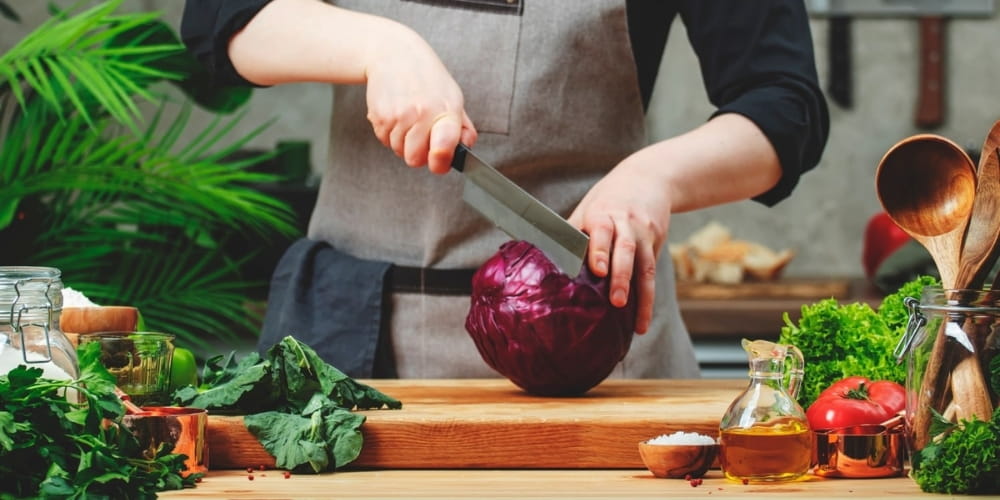
Forget the haphazard sawing technique of a French chef! Adopt the vertical " push cut " motion: place the entire blade flat on the board, gently advance the ingredient with your non-dominant hand in a "claw" grip (fingers curled, knuckles guiding the blade safely), then press down with a firm, smooth downward motion. Maintain constant blade-board contact for uniform slices. For fine chopping (herbs, garlic), a slight rocking motion of the rounded tip effortlessly speeds up the process.
Key steps:
- Position: Protective claw, flat blade on the vegetable.
- Push: Vertical support, minimal forward movement – no back and forth motion.
- Transfer: Slide the large flat side under the pieces to pour them into the pan.


Versatile uses and limitations
- Firm vegetables: Shred cabbage, peppers or celery in a flash – ideal for ratatouille.
- Herbs and spices: Finely chop coriander, mint or ginger in 10 seconds.
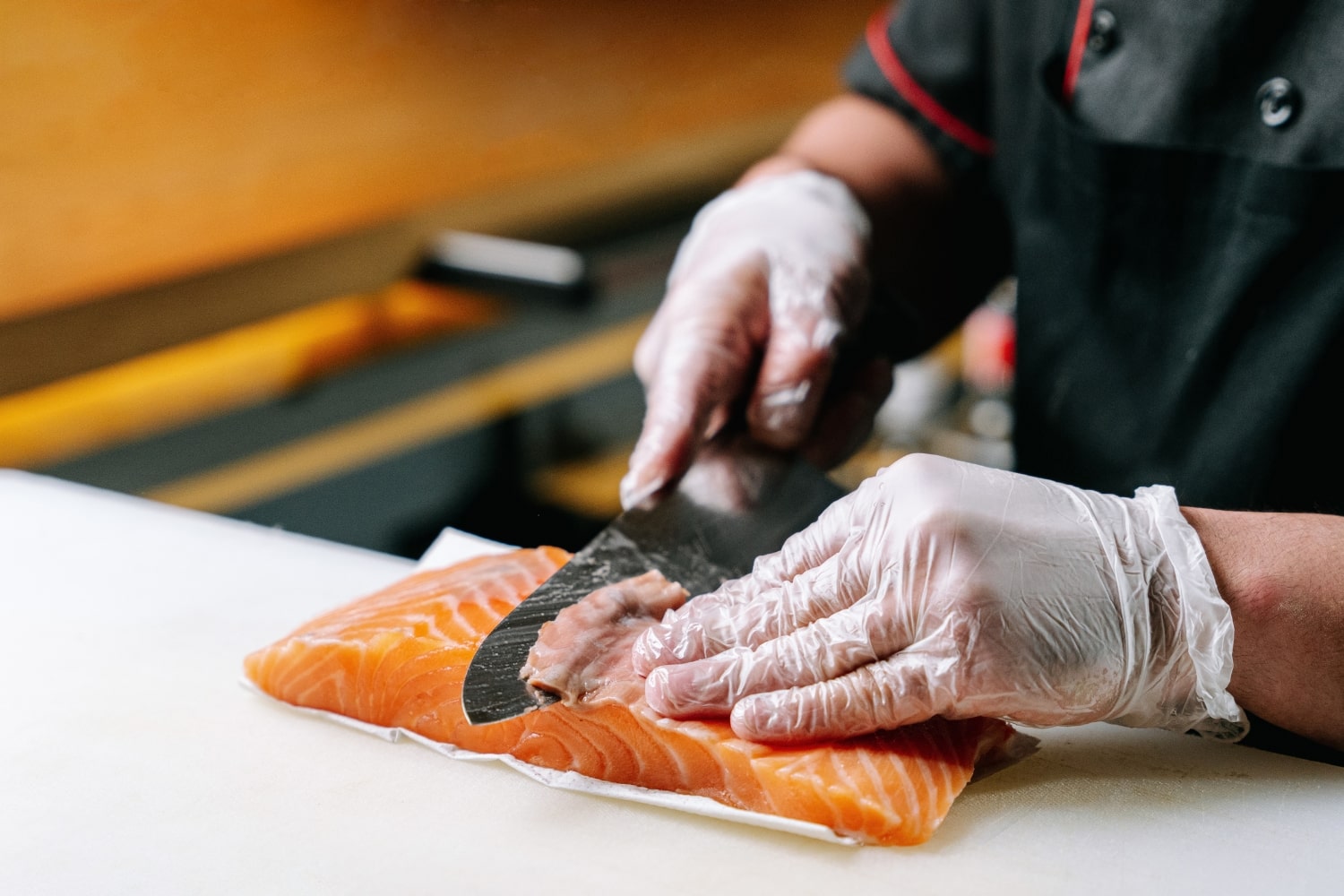
- Bonus: Its surface acts as a spatula for scraping and transferring. Versatile for soft fruits (kiwi, mango) or boneless fish.
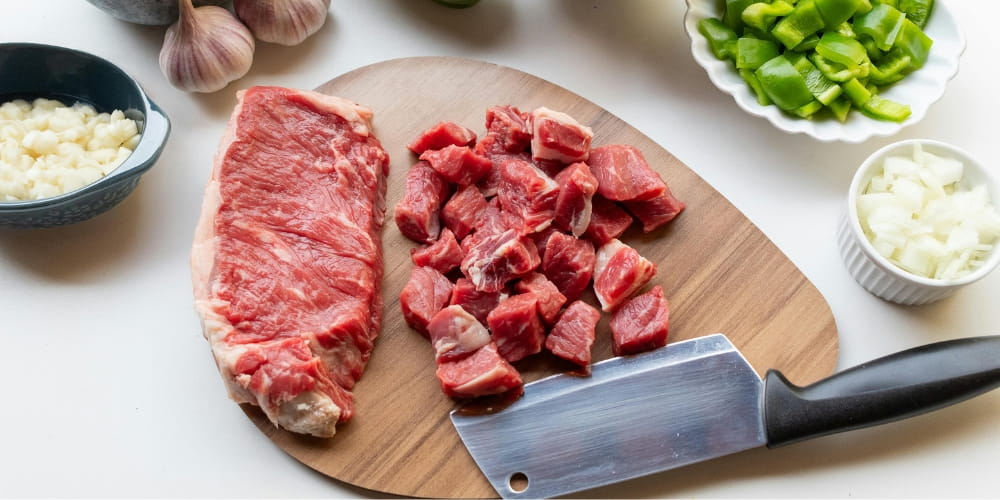
- Avoid: bones, tough or frozen meats: the thin blade may chip. A deba is preferable for this.
Safety, maintenance and professional sharpening
- Safety first: Always use a claw to protect your fingers; use a wooden (haya or birch) or flexible plastic cutting board to avoid dulling the edge. Slice at shoulder height, with your elbows still.
- Daily maintenance: Wash with warm soapy water immediately after use, dry meticulously (carbon steel rusts quickly). Store in a block or sheath.
- Sharpening: To a 12-15° angle per side on a waterstone (1000/3000 grit). Test: the paper should cut cleanly. Sharpen every 1-2 months depending on use.
With a well-executed Nakiri, your vegetables gain elegance and precision – a revolution for Franco-Japanese fusion cuisine!

,%20an%20ultra-straight%20edge,%20and%20a%20flat%20back.%20Unlike%20the%20versatile%20santoku%20or%20the%20West...)
This site is protected by hCaptcha and the hCaptcha Privacy Policy and Terms of Service apply.