

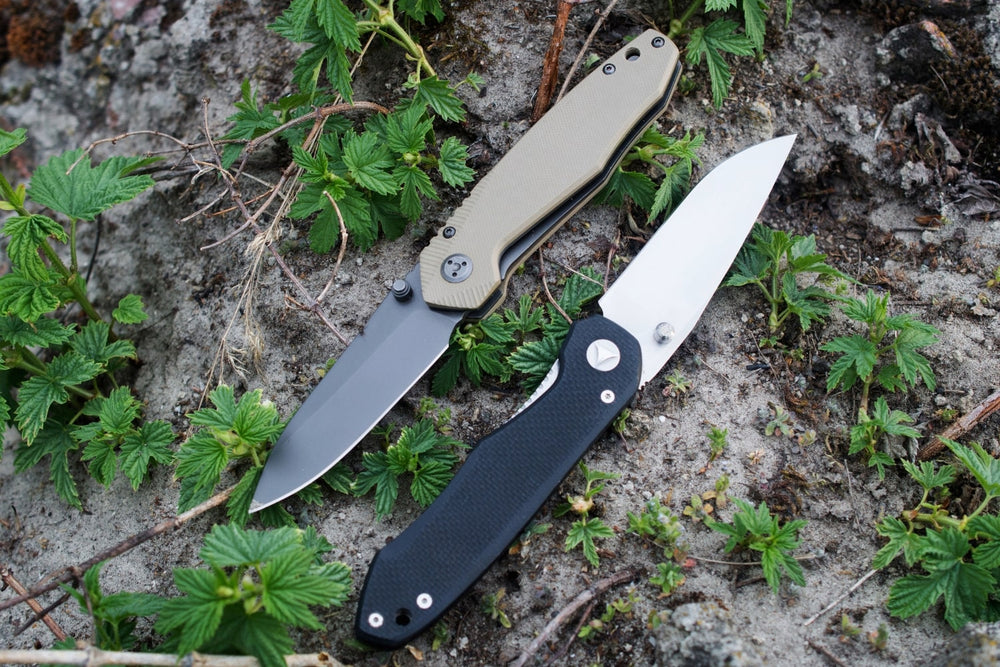
List of 22 French regional handcrafted knives
The list of regional French handcrafted knives testifies to a know-how passed down from generation to generation. Each blade tells the story of a terroir, a culture, and a specific use. In France, each region has crafted its emblematic knife: a shepherd's companion, a sailor's tool, a source of pride for local artisans.
Let us discover together the knives that best embody this diversity, classified by major regions, without seeking exhaustiveness but paying tribute to the most emblematic.
Auvergne-Rhône-Alpes, the heart of cutlery
The Auvergne-Rhône-Alpes region is the historical cradle of French cutlery. Thiers, in particular, is known as its world capital.
- The Laguiole : Originating from Aveyron, this knife is undoubtedly the most famous. It is recognizable by its elegance, its sculpted bee, and its hallmark.
- The Thiers: Created in 1994, it symbolizes the entire city of Thiers. Its double wave shape and engraved "T." make it a modern landmark.
- The Saint-Martin: A specialty of Puy-de-Dôme, this knife is distinguished by its " Sheep's Foot " blade.
- The Barrel: Made in Thiers, it accompanies wine culture and is distinguished by its rounded design.
- The Chignore: A simple and robust knife, representative of the rustic models of the region.


Aquitaine and Périgord traditions
New Aquitaine is home to some of the oldest and most iconic models in France.
- The Nontron : Dating from the 15th century, this knife from Dordogne has a pyrography boxwood handle and a rotating ferrule.
- The Basque Yatagan: Inspired by the Turkish saber, it features a curved blade and a handle often made of horn .
- The Garonnais: Also called "Pyrenean" or "Girondin", it is small, maneuverable and popular in the Southwest.
Brittany and sea waves
Brittany has forged knives adapted to the lives of sailors and fishermen.
- The Armor (or London): Its square-tipped blade prevents damage to the ropes.
- The Kenavo: A Breton knife often decorated, sometimes with motifs reminiscent of the sea.
- The Stylver: More contemporary, it remains appreciated for its elegant style.
Provence and Mediterranean heritage
In the south, knives accompany herdsmen, winemakers and artisans of Provence.
- The Camargue knife: A symbol of the herdsmen, with a thin blade and an olive wood handle.
- Lou Cigalou: “The little cicada” in Provençal, a nod to local culture.
- The Sorgues Knife: Linked to the Sorgues region, it retains a strong and local identity.
Corsica and island identity
The Isle of Beauty has a proud and renowned cutlery tradition.
- The Vendetta : Long blade, richly decorated handle: this knife has become a quintessential Corsican symbol.
- The Shepherd: Simpler, used daily by Corsican shepherds.
- The Corsica: Another iconic variant, often sought after by collectors.
Burgundy-Franche-Comté and terroir highlights
This wine-growing and forestry region also has its own cutlery tradition.
- The Charollais: Pocket knife from the Charolais region.
- The Morézien: Originating from the Jura, it bears the mark of a discreet but solid craftsmanship.
Normandy and coastal knives
Normandy developed simple knives, often linked to the table and maritime uses.
- The Camembert: A small pocket knife, practical for enjoying regional cheeses.
- The Pradel Yatagan: Yatagan type knife, often with a horn handle.
- The Dieppois: Typical of Dieppe, it reflects the local maritime tradition.
Comparative table of regional knives
| Region | Iconic knives | Key features |
|---|---|---|
| Auvergne-Rhône-Alpes | Laguiole, Thiers, Saint-Martin | Carved bee, sheep's foot blade, double wave |
| Aquitaine | Nontron, Yatagan Basque, Garonnais | Pyrographed boxwood handle, curved blade |
| Brittany | Armor, Kenavo, Stylver | Sea waves, fish shapes, nautical uses |
| Provence | Camargue, Lou Cigalou, Sorgues | Olive wood handle, Mediterranean symbols |
| Corsica | Vendetta, Berger, Corsica | Long blade, strong island identity |
| Burgundy-Franche-Comté | Charollais, Morézien | Simplicity, local tradition |
| Normandy | Camembert, Pradel Yatagan, Dieppe | Table knives, marine and rustic use |
Why does this diversity persist?
The list of regional French handcrafted knives is so vast because each region has crafted a knife to meet its specific needs. Hunting, fishing, livestock farming, winemaking: each activity has inspired a tailored blade.
Today, these knives are more than just tools. They are collector's items, symbols of identity, and testaments to know-how passed down with pride.
Conclusion: a treasure to be preserved
The list of French regional handcrafted knives showcases the incredible diversity of a living heritage. From Laguiole to Vendetta, from Nontron to Thiers, each knife embodies a story, a terroir, and a culture.
If you're looking for a knife with a story to tell, explore these models. Buying a regional knife means supporting unique craftsmanship and preserving an authentic French tradition.
FAQs about regional knives
What is the oldest French regional knife?
The Nontron, originating from Périgord, is considered the oldest French knife, documented as early as the 15th century and still manufactured today.
What is the most famous French knife?
The Laguiole is undoubtedly the most famous in the world. Its sculpted bee and its elegance make it an essential symbol.
Is there a knife for every region?
Not exactly, but almost every region has an iconic knife, linked to their history and traditions.
Are regional knives still handmade?
Yes, most are still handcrafted. Each knife retains its authenticity thanks to the cutler artisans.
Why collect French regional knives?
Collecting these knives means discovering the richness of local regions, supporting craftsmanship and preserving a unique heritage.



This site is protected by hCaptcha and the hCaptcha Privacy Policy and Terms of Service apply.