

How to repair a broken knife like a pro
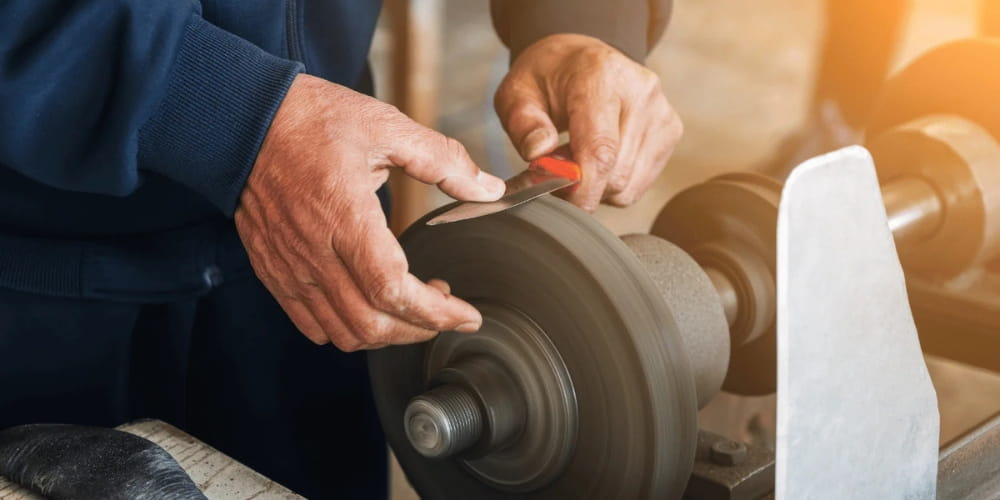
Repairing a broken knife depends on the damage: a broken tip can be repaired by grinding the spine of the blade with a diamond sharpener to recreate a point. Dull blades are repaired with a sharpening stone, while a bent blade can be straightened. For broken handles, use two-part epoxy glue.
Methodology for Repairing a Broken Tip
Repairing a broken tip requires structural modification of the blade's spine. Use a diamond sharpener to abrade the spine towards the tip, gradually recreating the original curve without altering the cutting edge. If the break is deep, use a grinder to section the blade before final profiling.


Restoration of Bent and Chipped Blades
A bent blade requires careful straightening, ideally performed with a hammer on an anvil or stake to avoid breaking the tempered steel. For chips, file the damaged area to eliminate micro-cracks, then perform a complete sharpening on a stone to restore a consistent cutting line.
Handle Repair and Assembly
Restoring a broken handle requires high-performance structural adhesion. Two-part epoxy glue is the optimal solution for durably bonding various materials such as wood, G10, or Micarta. Ensure constant pressure during polymerization to guarantee the mechanical and aesthetic integrity of the final assembly.
Treatment of Stubborn Corrosion
Rust affecting steel can be neutralized by a simple and effective chemical reaction. A mixture combining white vinegar and baking soda can dissolve surface oxides. Apply the solution, let it act, then brush gently to sanitize the metal without damaging its structure or cutting edge.



This site is protected by hCaptcha and the hCaptcha Privacy Policy and Terms of Service apply.