

How to polish a knife blade for a smooth finish
Over time and with use, a knife blade can lose its shine, develop micro-scratches, or oxidize slightly. However, proper polishing not only restores its appearance but also improves its cutting performance by reducing friction. Wondering how to polish a knife blade for a smooth, glossy finish? Follow this guide to get a brilliant, high-performing blade without damaging it.
Why polish a knife blade?
Polishing a knife is not just about aesthetics. This action offers several advantages:
- Reduced friction: a smooth blade glides better through food.
- Corrosion prevention: good polishing limits the adhesion of residues and moisture.
- Micro-scratch removal: the surface is evened out and more resistant.
- Improved cutting edge: a polished finish optimizes cutting efficiency.
Polishing is therefore an essential step to maintain your knives and prolong their lifespan.


1. Prepare the blade before polishing
Before you start polishing a blade, it is crucial to clean it properly.
- Wash the blade with hot water and soap to remove grease and impurities.
- Dry immediately with a clean cloth to avoid any trace of moisture.
- If the blade is oxidized, use a mixture of white vinegar and baking soda to remove the stains before polishing.
💡 Tip: A good cleaning ensures more effective and even polishing.
2. Manual polishing with polishing paste
Manual polishing is a gentle method accessible to everyone.
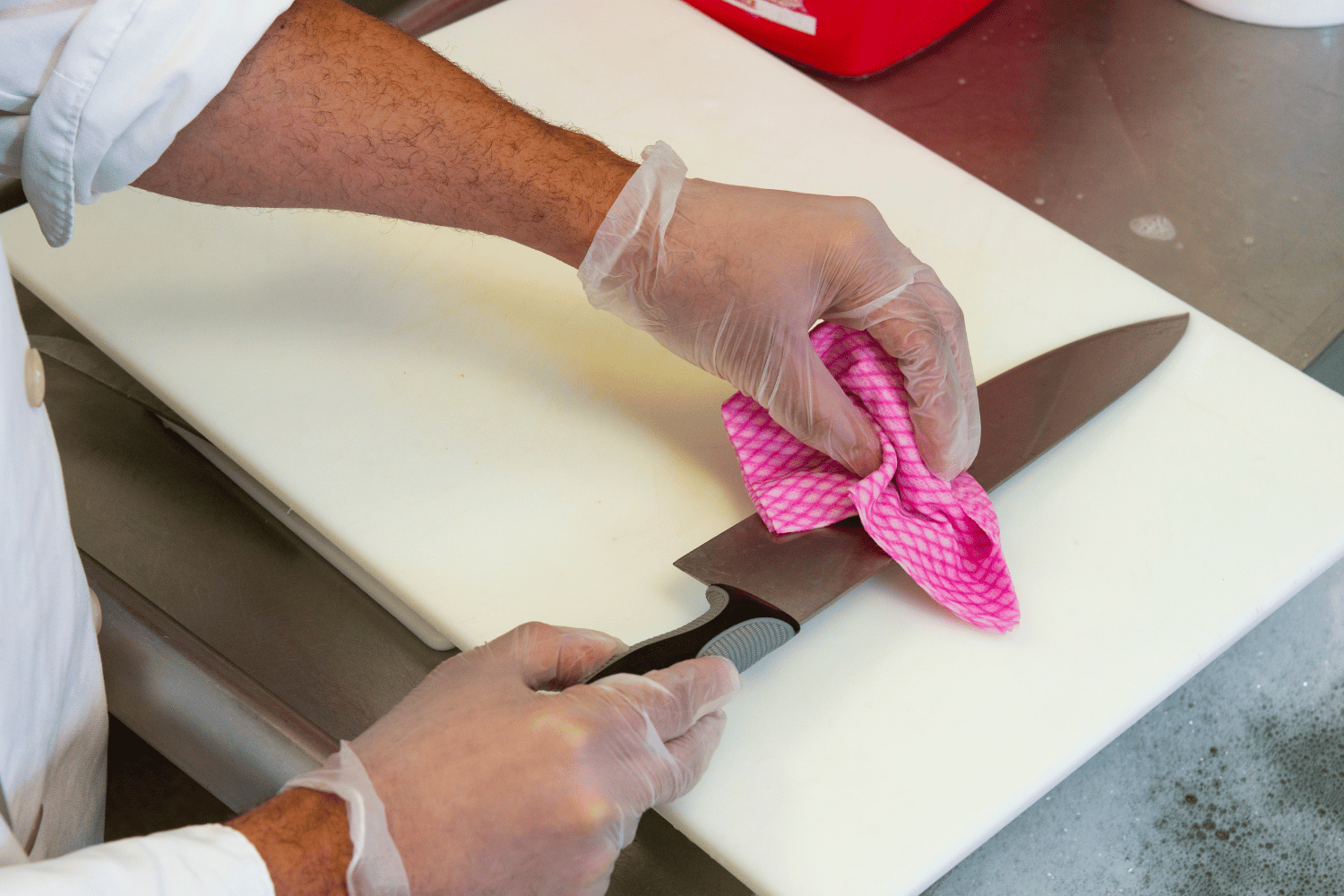
- Apply a small amount of special metal polishing paste to a soft cloth or microfiber cloth.
- Rub the blade using regular, circular motions.
- Emphasize the dull or scratched areas until you achieve a uniform finish.
Wipe the blade with a clean cloth to remove any paste residue.
💡 Why does it work? The polishing paste contains micro-abrasives that remove imperfections while restoring shine.
3. Polishing with an ultra-fine sharpening stone
If your blade has more pronounced scratches, you can use a very fine grit sharpening stone (5000-8000).
- Lightly moisten the stone with water or sharpening oil.
- Run the blade over it using slow, steady movements.
- Alternate sides to achieve even polishing.
- Wipe and dry immediately to prevent oxidation.
💡 Good to know: This method is ideal for high-end knives or carbon steel blades.
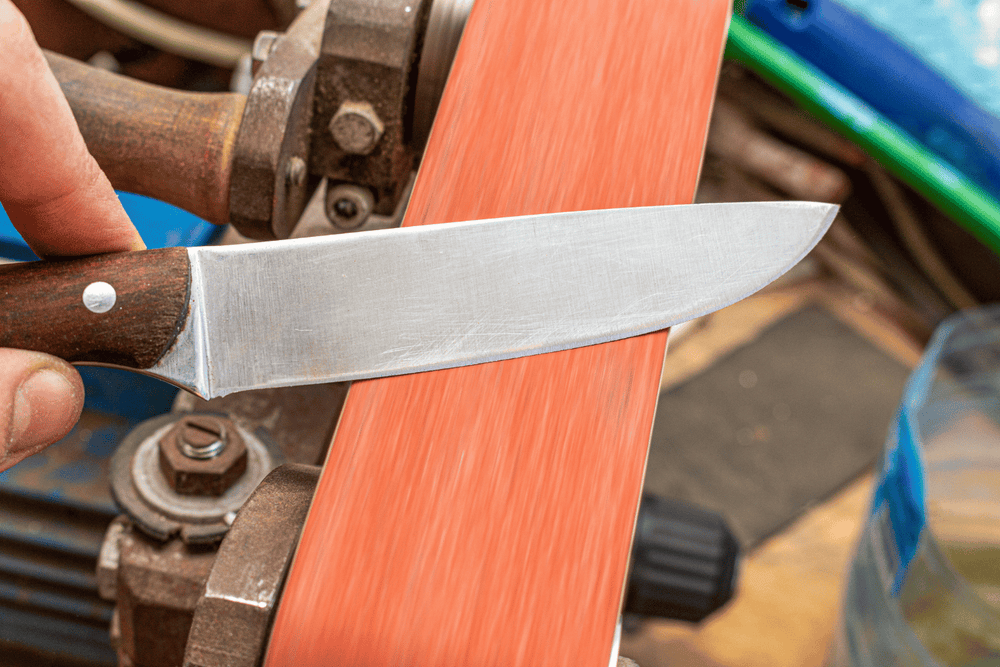
4. Use a polishing disc for a professional result
If you want to achieve a mirror polish, a polishing disc mounted on a drill or grinder is the best option.
- Attach a felt or cotton disc to your drill.
- Apply a polishing paste to the disc.
- Rotate the disc at medium speed and gently apply the blade to it.
- Polish evenly until you achieve a glossy finish.
💡 Caution: Do not leave the blade on the disc for too long to avoid overheating which could damage the steel.
5. Polishing with ultra-fine sandpaper
If you don't have polishing compound or a disc, ultra-fine sandpaper can be a good alternative.
- Use sandpaper with a grit of 1000 to 3000.
- Gently run it along the blade, following the direction of the cutting edge.
- Make smooth, even movements without pressing too hard.
- Clean the blade after polishing with a clean cloth.
💡 Why does it work? The ultra-fine abrasive paper removes surface defects without scratching the blade.
6. Maintain the blade after polishing
Once the blade is polished, it is important to take care of it to prolong its shine.
- Apply a thin layer of cooking oil (camellia, olive, sunflower) to protect the steel.
- Store your knives in a dry place, away from moisture.
- Avoid the dishwasher, which can dull and corrode the blade.
💡 Tip: Regular maintenance allows you to space out polishing sessions and keep your knife always impeccable.
7. How often should a knife blade be polished?
The frequency of polishing depends on how often you use your knife:
- Every 3 to 6 months if you use your knife daily.
- Once a year for collector knives or utility knives.
- As soon as scratches or visible tarnish appear, to prevent further damage to the blade.
💡 Good to know: Over-polishing can prematurely wear down the metal. Only do it when necessary.
Conclusion
Polishing a knife blade not only restores its shine but also improves its cutting performance. Whether you use polishing paste, an ultra-fine grit stone, a polishing wheel, or sandpaper, each method delivers effective results for a smooth, glossy finish.
By regularly maintaining your knives and adopting good storage practices, you will extend their lifespan and always enjoy a flawless and efficient blade.
FAQs
How to polish a knife blade?
Polishing a knife blade involves applying polishing compound to a soft cloth and then rubbing the blade in a circular motion. For best results, use a polishing wheel mounted on a drill and finish by wiping with a clean cloth.
How can I remove scratches from a knife blade?
Removing scratches from a knife blade is done with ultra-fine sandpaper (1000 to 3000 grit), gently rubbing in the direction of the cutting edge. Then apply a polishing compound and use a microfiber cloth or polishing disc to smooth the surface.
What type of polishing paste is best for knives?
The best polishing compound for knives is a stainless steel or metal polishing compound, such as Dialux or Autosol. Apply it with a soft cloth or polishing disc to restore shine and smooth the surface.
How can I make my blade shiny?
To make a blade shine, you need to apply polishing compound with a microfiber cloth. Rub in circular motions, then buff with a dry cloth. For a mirror finish, use a polishing disc on a drill with a metal-specific compound.


This site is protected by hCaptcha and the hCaptcha Privacy Policy and Terms of Service apply.