

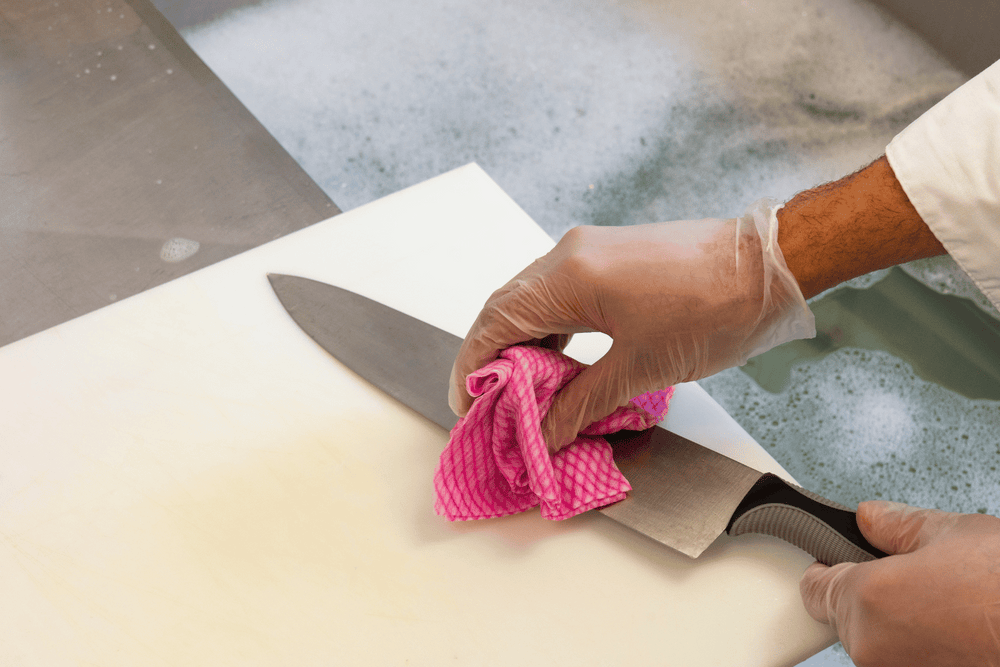
How to disinfect a knife after each use
A clean knife isn't enough: it must also be disinfected to eliminate bacteria and prevent cross-contamination, especially in the kitchen. Whether you're cutting raw meat, vegetables, or fish, food residue can promote the growth of germs invisible to the naked eye. So, how do you properly disinfect a knife after each use to guarantee impeccable hygiene without damaging the blade? Here are the best methods and tips for effective and safe disinfection.
Why disinfecting a knife is essential
A knife used daily can become a breeding ground for bacteria if it is not properly cleaned and disinfected. The risks are numerous:
- Avoid food contamination: bacteria such as salmonella or E. coli can spread from one food to another.
- Protecting your health: a poorly cleaned knife can cause food poisoning.
- Extending the life of the blade: proper disinfection prevents the accumulation of residues that can damage the steel.
A simple rinse is not always enough. To guarantee perfect hygiene, adopt disinfection techniques adapted to the materials of your knives.


1. Washing with hot water and soap: the basis of disinfection
Before any disinfection, always start with a thorough cleaning.
- Rinse the blade immediately after use to prevent food residue from drying.
- Use hot water and antibacterial soap to remove grease and impurities.
- Scrub with a soft sponge or brush to reach all the nooks and crannies of the knife.
- Dry immediately with a clean cloth to prevent rust formation, especially on carbon steel blades.
💡 Tip: Never leave a knife soaking in water for too long, especially if it has a wooden handle, as this can damage it.
2. Disinfection with white vinegar: a natural and effective solution
White vinegar is an excellent natural disinfectant that effectively eliminates bacteria without damaging the blade.
- Fill a container with pure white vinegar.
- Immerse the blade for 5 to 10 minutes.
- Rinse with clean water and dry immediately.
💡 Why does it work? The acidity of vinegar dissolves residues and destroys germs without leaving chemicals on the blade.
3. 70% alcohol: a quick and effective disinfection
If you are looking for immediate disinfection, 70% alcohol is a quick and effective option.
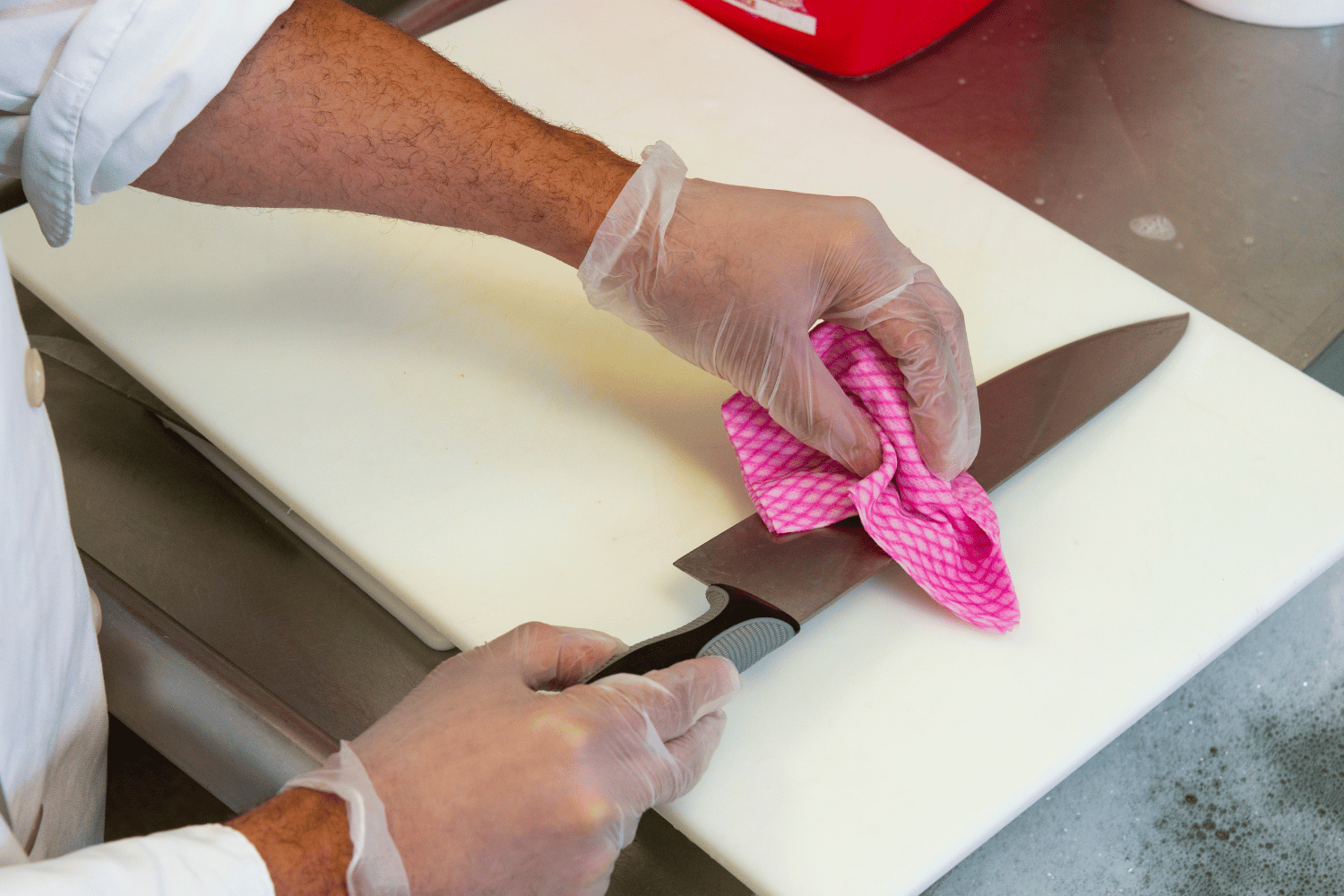
- Soak a clean cloth or paper towel with 70% alcohol.
- Carefully run it over the entire surface of the blade.
- Allow to air dry (the alcohol evaporates quickly).
💡 Good to know: Alcohol disinfects without leaving residue and prevents oxidation of stainless steel blades.
4. Diluted bleach: for deep disinfection
Bleach is a powerful disinfectant that effectively eliminates bacteria and viruses. However, it must be used with caution to avoid damaging knives.
- Dilute one tablespoon of bleach in one liter of water.
- Immerse only the blade for 1 to 2 minutes (avoid the wooden handle).
- Rinse thoroughly with clean water.
- Dry immediately with a clean cloth.
💡 Caution: Never use pure bleach, as it can attack the steel and cause discoloration of the blade.
5. Hydrogen peroxide (oxygenated water): a gentle alternative
Hydrogen peroxide (3%) is an effective and gentle alternative for disinfecting a knife without risk of corrosion.
- Apply the hydrogen peroxide directly to the blade with a clean cloth.
- Leave it to act for a few minutes.
- Rinse with clean water and dry immediately.
💡 Why use it? It destroys germs without leaving toxic residues and does not damage steel.
6. Can a knife be put in the dishwasher to disinfect it?
The dishwasher may seem like a convenient solution, but it is not recommended for most quality knives.
- Harsh detergents damage the blade edge and can cause premature corrosion.
- High temperatures and prolonged humidity deteriorate wooden handles.
- Friction with other utensils can dull the cutting edge.
If you absolutely must use the dishwasher, place the knives with the blades facing down in a separate compartment and use a gentle program.
7. How to properly store a knife after disinfection?
A poorly stored knife can quickly become contaminated again. After disinfection, be sure to store it properly.
- Always dry the blade immediately with a clean cloth.
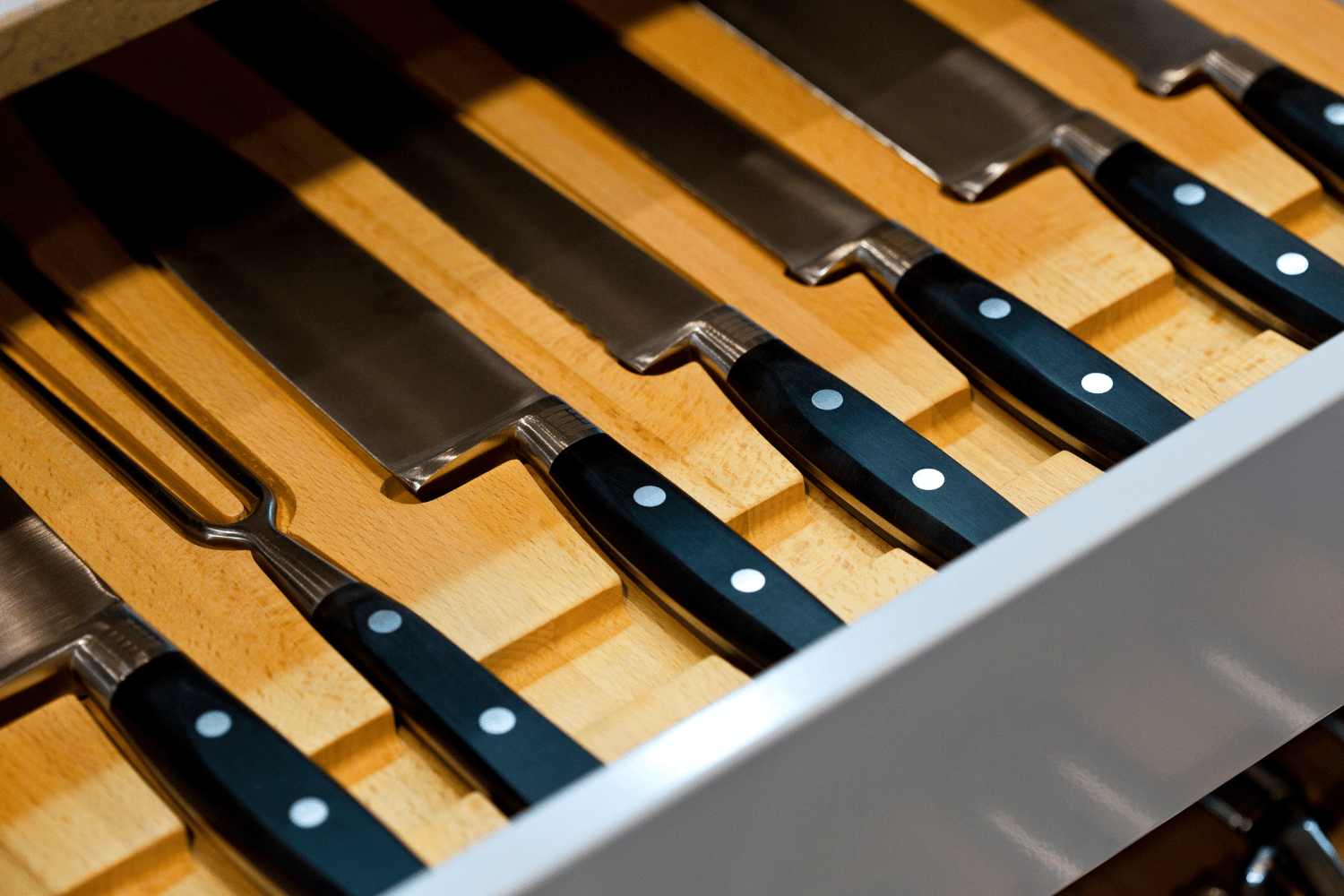
- Store your knives in a knife block, a magnetic bar or a drawer with inserts.
- Avoid storing them loose in a drawer, as they may become dull and contaminate each other.
💡 Tip: If you are using blade guards, make sure they are also clean and dry before sliding your knife into them.
Conclusion
Disinfecting a knife effectively after each use is essential to ensure impeccable hygiene and prolong the life of your blade. From white vinegar and 70% alcohol to diluted bleach and hydrogen peroxide, several solutions exist depending on your needs.
By adopting these good practices and properly storing your knives after disinfection, you ensure a safer kitchen and a knife that is always ready to use.
FAQs
How do I disinfect a knife?
Disinfecting a knife involves cleaning it with hot water and soap, then rinsing it in white vinegar or wiping it with a cloth soaked in 70% alcohol. Rinse and dry immediately to prevent oxidation.
How to wash and degrease knives?
Washing and degreasing knives involves cleaning them in warm soapy water, then rinsing them under clean water. To remove impurities, soak them for a few minutes in vinegar water before drying them thoroughly.
When should you clean and disinfect the knife?
The knife must be cleaned and disinfected after each use, especially after cutting raw meat, fish, or dirty vegetables. Regular disinfection prevents cross-contamination and maintains hygiene in the kitchen.


This site is protected by hCaptcha and the hCaptcha Privacy Policy and Terms of Service apply.