

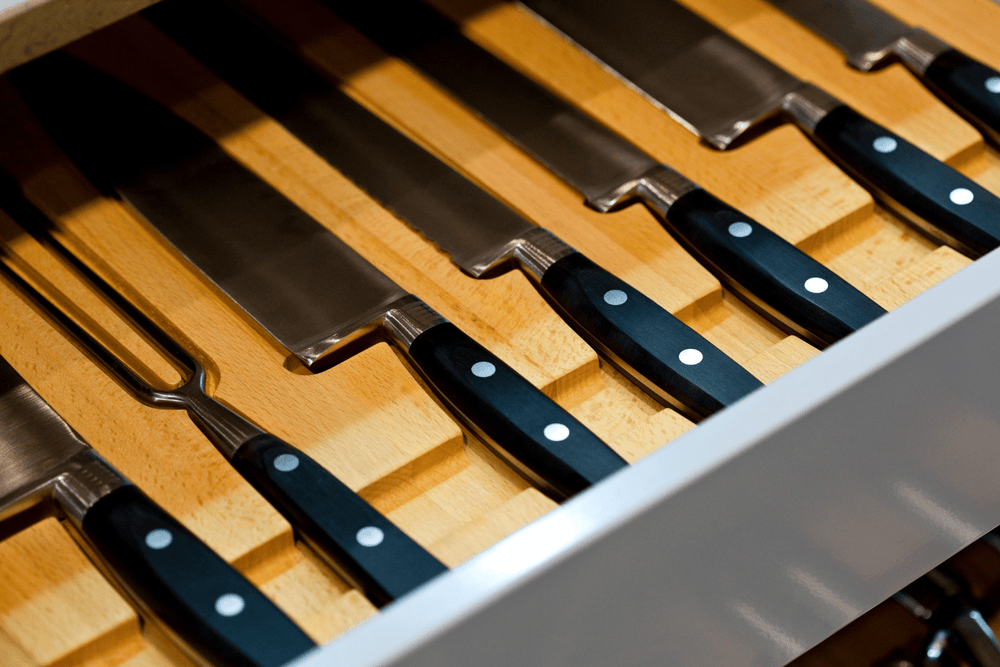
How to store your knives to prolong their lifespan
A good knife is an investment worth preserving. Yet, even the best blades will wear prematurely if not stored properly. Improper storage can not only dull the edge but also promote rust and damage the handle. So, how should you store your knives to extend their lifespan and maintain optimal sharpness? Here are the best practices to prevent premature wear and ensure the longevity of your blades.
Why storing your knives properly is essential
Storing knives is not simply a matter of organization. Improper storage can have direct consequences on their performance and lifespan.
Here's why proper storage is essential:
- Preserves the edge: friction with other objects dulls the blade.
- Protects against oxidation: moisture and air can alter steel, especially on carbon knives.
- Ensures safety: a poorly stored knife can be dangerous.
- Extends the lifespan of materials: some wooden or composite handles require specific conditions to prevent cracking.
Proper storage involves choosing the right location, the right support, and simple daily maintenance techniques for your knives .


1. Avoid storing loose items in a drawer
Storing your knives loose in a drawer is the worst thing you can do. The blades will knock against each other, dull, and risk being damaged. Not to mention the danger of cutting yourself while searching for a knife.
Solution: If you must use a drawer, equip it with a knife insert or use individual blade guards. These accessories prevent contact between the blades and ensure greater safety.
2. Opt for a knife block for secure storage
A knife block is a classic and effective solution for protecting blades. It allows knives to be stored vertically, preventing them from knocking against each other.
Tips for using it correctly:
- Insert the knives with the edge of the blade facing upwards to prevent them from rubbing against the inside of the block.
- Clean the block regularly to prevent the accumulation of dust and bacteria.
- Choose a model with slots adapted to the size of your knives.
3. Use a magnetic wall bar to save space
A magnetic wall bar is an excellent option for storing your knives while keeping them accessible.
Benefits :
- Avoids friction between the blades.
- Saves space on the worktop.
- Makes knives more accessible.
Tips for safe installation: Place the bar at a height out of reach of children and ensure it is securely fixed to the wall. Position the knives with the handles facing down to prevent them from falling in case of impact.
4. Protect the blades with individual knife guards
If you carry your knives or store them in a drawer, individual blade protectors are an excellent solution. They encase the blade and prevent impacts that can dull it.
Ideal for:
- Chef's knives and carbon steel knives require specific protection.
- Storage in a drawer or carrying case.
These protectors are available in plastic, silicone, or leather. Choose a model that fits your knife properly for optimal effectiveness.
5. Store the knives in a case or storage roll
Chefs and cooking enthusiasts often opt for a case or storage roll to safely store their knives.
- Ideal for transporting knives without damaging them.
- Protects the blades against moisture and impacts.
- Offers compact and organized storage.
If you do not use your knives daily, store them in a fabric roll with separate compartments to prevent any rubbing.
6. Store the knives in a suitable environment
The place where you store your knives plays a key role in their longevity.
Avoid:
- Damp places (near the sink or dishwasher).
- Heat sources (near the oven or a hob).
- Direct exposure to sunlight can damage some wooden handles.
Ideally, store your knives in a dry, temperate place to prevent corrosion and deterioration.
7. Maintain the knives before storage for maximum lifespan
Proper storage is useless if your knives aren't well cared for. Before putting them away, adopt these habits:
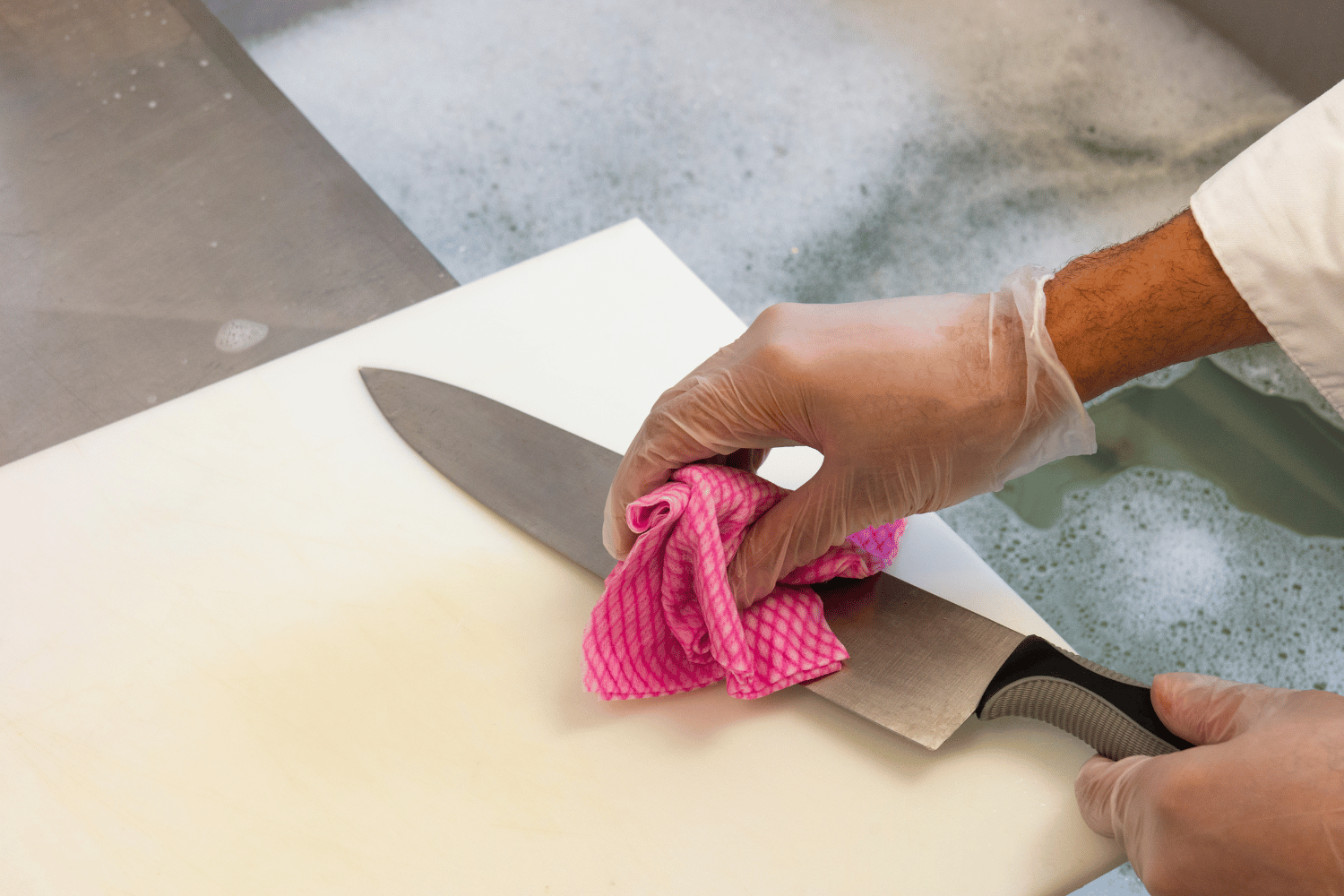
- Clean and dry the blade thoroughly after each use.
- Apply a thin layer of food-grade oil to the carbon steel blades to prevent rust.
- Sharpen your knives regularly to maintain their effectiveness and prevent them from dulling too quickly.
Conclusion
Storing your knives correctly is essential to prolong their lifespan and ensure safe use. Whether you opt for a knife block, a magnetic strip, blade guards, or a storage case, the important thing is to avoid contact between the blades and to keep them in a suitable environment.
By taking care of your knives and storing them properly, you guarantee their sharpness and longevity, while working safely in the kitchen.
FAQs
How to store knives?
Storing knives properly requires secure and appropriate storage. Use a knife block, magnetic strip, or blade protectors in a drawer to prevent wear, preserve sharpness, and avoid accidents.
How to properly store your knives?
Properly storing your knives involves placing them in a suitable holder, such as a wooden block, a magnetic strip, or a drawer with inserts. Avoid storing them loose to preserve the blade and ensure safe use.
How to store a knife?
Maintaining a knife involves cleaning and drying it after each use, applying a thin layer of oil to the blade if necessary, and storing it in a dry place, away from moisture and shocks.


This site is protected by hCaptcha and the hCaptcha Privacy Policy and Terms of Service apply.