

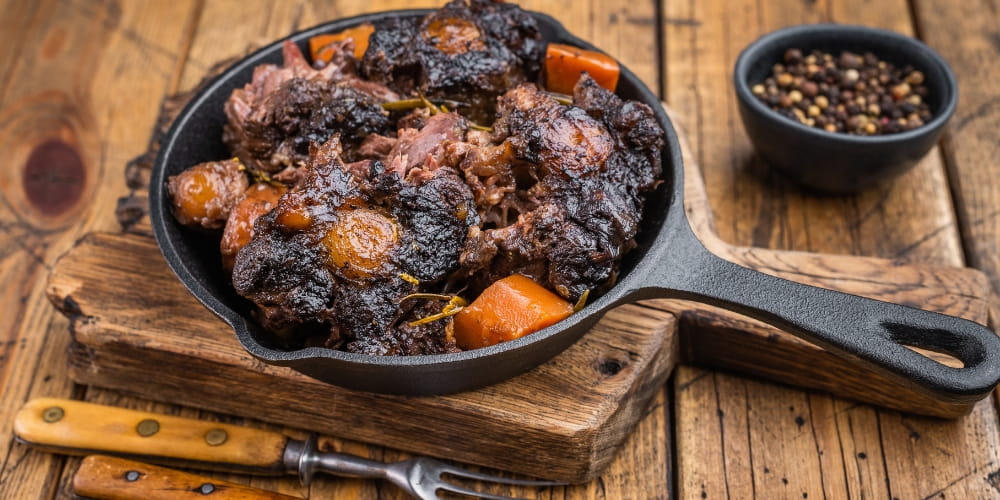
How to cut the meat for a veal stew
To achieve a tender and melting veal stew, the meat must be cut precisely to eliminate tough parts and allow for gentle simmering, preserving the whiteness and tenderness of the veal.
Song selection
Use lean, gelatinous cuts of veal such as shoulder, neck, brisket, belly, or flank, which contain just enough collagen to tenderize without drying out during a 1 to 1.5 hour braise. These economical cuts, often sold ready-made as "veal blanquette," come from the front of the animal and offer an ideal texture to absorb the creamy lemon and cream sauce. Avoid leaner or prime cuts, which would lack flavor.


Preparation before cutting
Remove the meat from the refrigerator 20-30 minutes beforehand for clean slicing, then rinse it quickly under cold water and pat it dry thoroughly to prevent moisture from affecting its final tenderness. Trim the meat by removing any membranes, aponeuroses (fibrous white tissue), sinews, and excess fat with a sharp knife: slide the blade under these parts and pull them out with a firm hand without tearing the meat. This meticulous trimming, typical of white dishes, prevents the pieces from shrinking and becoming tough during cooking.
How to cut
Cut the meat into even pieces, 4 to 5 cm square (about the size of a generous bite), following the muscle fibers for uniform cubes that cook evenly without falling apart. Cut perpendicular to the fibers to break their natural resistance, and aim for a consistent thickness so each piece absorbs the white broth equally. Do not flour before cooking, unlike with braising, as this will keep the blanquette pale.
Cook to maximize tenderness
Blanch the pieces for 5 minutes in cold water brought to a boil to remove impurities and tenderize the meat. Drain, rinse with cold water, then return to fresh stock with aromatic vegetables (carrot, studded onion, celery, leek). Simmer very gently for 1 to 1.5 hours in a light-colored enamel pot, without boiling or browning, to keep the meat white and gently dissolve the collagen. Finish with a cream-egg yolk-lemon mixture off the heat for a velvety sauce.
Additional tips
Never sear the meat to preserve its pristine color, and skim the broth regularly for a pure texture. Let it rest for 5-10 minutes after cooking so the juices redistribute, making the pieces even more tender when you slice them. Serve with rice or glazed carrots for a classic French stew that melts in your mouth.


This site is protected by hCaptcha and the hCaptcha Privacy Policy and Terms of Service apply.