

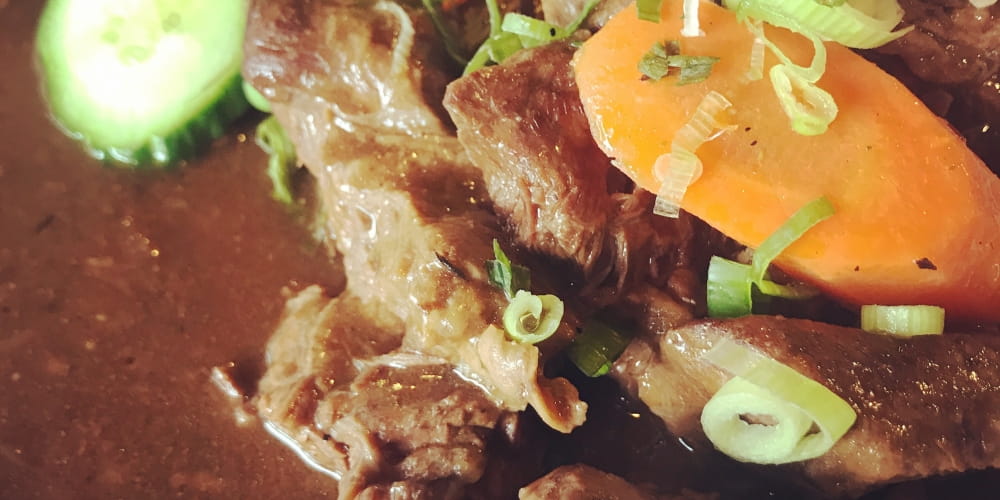
How to cut the meat for a Flemish carbonnade
To obtain a tender Flemish carbonnade, the cutting of the meat is essential as it allows for effective searing and even simmering, transforming the gelatinous pieces into a melting texture infused with beer.
Song selection
Choose marbled and fibrous cuts of beef such as chuck, brisket, round, shin, or cheek, which are rich in collagen that gelatinizes during slow cooking for 2 to 3 hours. These economical cuts hold up well to braising in dark beer, unlike leaner cuts that toughen up. Avoid prime cuts; opt for those with some fat and bones to intensify the flavors of the broth.


Preparation before cutting
Remove the meat from the refrigerator 30 minutes beforehand so it reaches room temperature, making it easier to slice cleanly and sear evenly without thermal shock. Rinse it briefly under cold water, pat it dry with paper towels to remove excess moisture that hinders caramelization, and season lightly with salt and pepper. Remove any large sinews or visible membranes, but leave a thin layer of fat that will render and lubricate the meat during cooking.
How to cut
Cut the meat into even cubes, 2 to 3 cm on each side (about the size of a walnut), ensuring the pieces are the same size for even cooking and uniform tenderness – if they're too small, they'll fall apart; if they're too large, the center will remain tough. Use a sharp knife on a stable board, slicing perpendicular to the muscle fibers to break down their structure and promote tenderization. Then, roll the cubes in flour to seal in the juices during searing, which also helps retain internal moisture.
Seared and cooked for tenderness
Brown the cubes in butter or hot oil over high heat, in small batches to avoid boiling the meat, for 1 to 2 minutes per side until a caramelized crust forms, sealing in the juices. Deglaze with vinegar or beer, then add sliced onions and gingerbread with mustard, and simmer over low heat for 2 1/2 to 3 hours until the meat is very tender and easily falls apart with a spoon. A cast-iron casserole dish maintains a consistent heat, essential for breaking down collagen without damaging the fibers.
Additional tips
Dredge the cubes in flour just before searing to prevent them from sticking, and don't stir too much during cooking so as not to break up the creamy sauce. Let them rest for 10 minutes after cooking so the juices redistribute, making each bite moist. Serve with fries or potatoes to soak up the rich sauce, typical of this Flemish specialty.


This site is protected by hCaptcha and the hCaptcha Privacy Policy and Terms of Service apply.