

How to cut a chiffonade
You've probably already heard the term "chiffonade" in cooking, and you might be wondering how to cut a chiffonade like a pro? Don't worry, you've come to the right place! Whether you're preparing fresh herbs or even vegetables like endives or lettuce, chiffonade is a simple yet impressive technique for adding a touch of sophistication to your dishes. I'll guide you step by step to master this art.
What is chiffonnade?
Let's start by clarifying what "chiffonade" means. This term comes from the word "chiffon" (cloth) and describes a technique that involves cutting leaves or vegetables into thin strips. It's often used for herbs like basil or leafy greens like endives, lettuce, or spinach. The result? Light and elegant strips that add volume and an airy texture to your dishes.


Step 1: Prepare the leaves
The first thing to do is prepare your leaves properly. Take the leaves you want to shred, for example, basil, spinach, or lettuce. Wash them thoroughly to remove any impurities, then dry them well using a paper towel or a salad spinner. If the leaves are damp, they will tend to stick together, making the shredding less precise.
Anecdote: I still remember the first time I tried to shred basil without drying it properly. It wasn't pretty! The leaves stuck to the knife and the strips were anything but even... Since then, I always make sure to dry it thoroughly.
Step 2: Stack the sheets
Next, stack your leaves on top of each other. The goal here is to have a neat little pile. For example, if you're working with basil, you can stack between 5 and 10 leaves at a time, depending on their size.
This step is important because it allows you to cut several leaves at once, saving you time. But be careful, make sure your leaves are flat to ensure an even cut.
Step 3: Roll the sheets
Once the leaves are stacked, it's time to roll them. You need to roll them firmly enough so they stay in place while you cut them, but not so tightly that you crush them. Imagine you're rolling a small cigar; that's exactly what you need to do!
This may seem like a small detail, but this rolling technique is what creates thin, elegant strips when you cut them. Don't skip this step; it's essential for successful chiffonade.
Step 4: Cut into thin strips
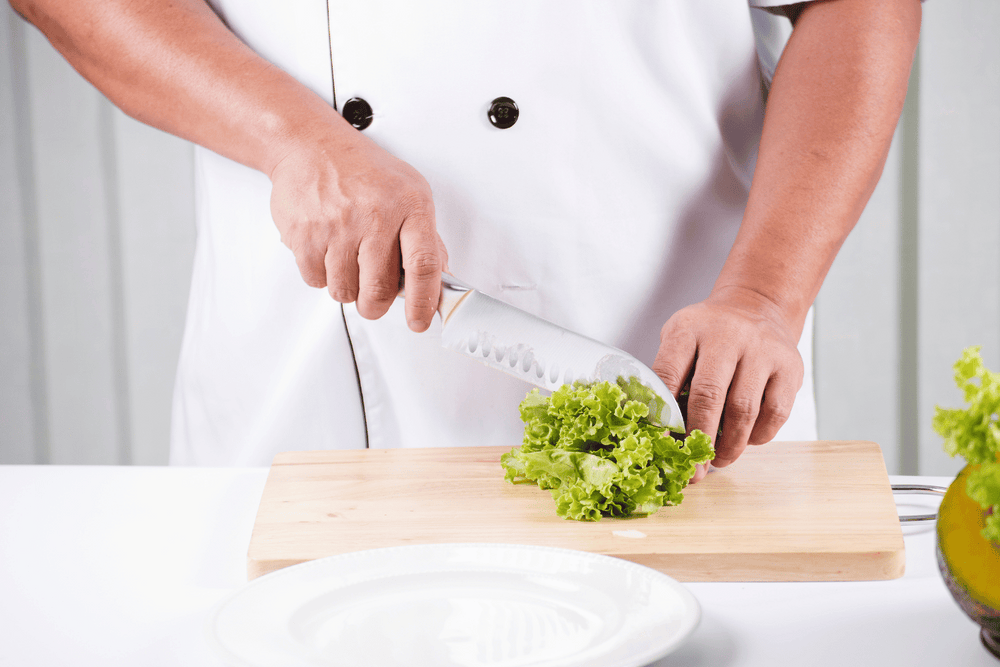
Now that your leaves are rolled up, it's time to cut them. Use a sharp knife – a dull one could crush the leaves instead of slicing them cleanly. Place the roll of leaves on a cutting board and cut it into thin strips, 2 to 3 millimeters wide, depending on the size of the strips you want.
Tip: Use a wide-bladed knife and be sure to use a rocking motion, keeping the tip on the board while slicing with the back of the blade. This will allow you to obtain even strips without damaging the leaves.
Step 5: Separate the strips
Once you've finished cutting, gently separate the strips so they regain their natural, light shape. This will give you airy ribbons that will add an elegant touch to any dish.
If you're preparing a chiffonade of herbs like basil, this technique is ideal for garnishing a Caprese salad or decorating a pasta dish. For leafy greens like lettuce or endive, a chiffonade adds light volume and a pleasant texture to your salads or sandwiches.
Additional tips
- For a chiffonade of herbs , be careful not to cut them too far in advance, as they can turn black quickly.
- If you are preparing a chiffonade of vegetables such as endives , you can lightly sprinkle them with lemon juice to prevent them from oxidizing.
And there you have it! Now you know how to slice a chiffonade elegantly and professionally! Whether you're adding a touch of elegance to a salad, garnishing a dish, or putting the finishing touches on a presentation, this slicing technique is sure to impress your guests. So, next time you're in the kitchen with your knives , why not give it a try? You'll see, it's much easier than it looks!


This site is protected by hCaptcha and the hCaptcha Privacy Policy and Terms of Service apply.