

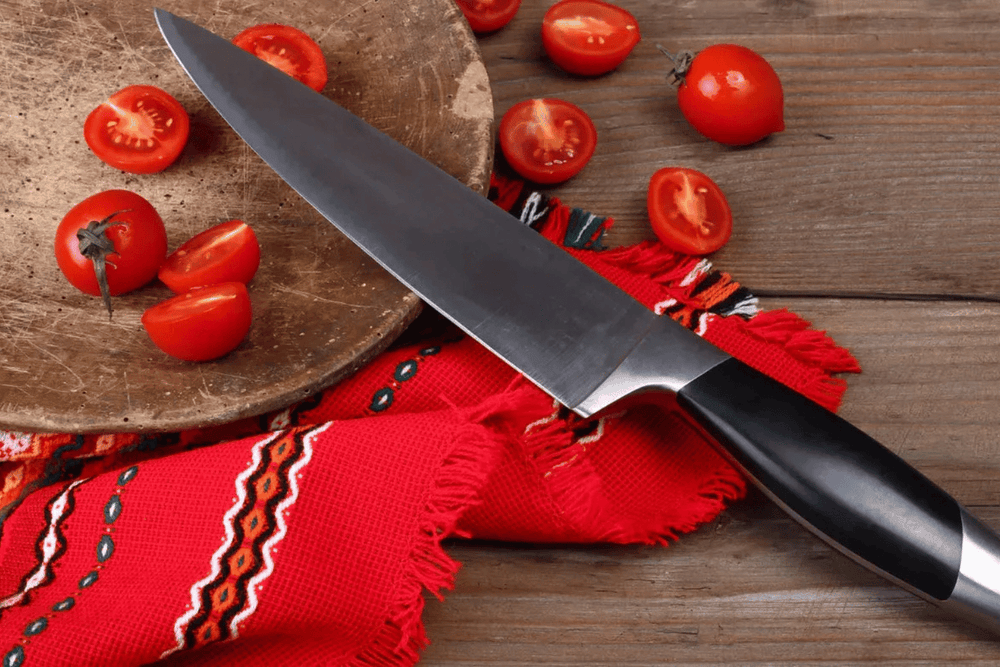
Giving a knife as a gift: meaning and superstition
In a world saturated with fleeting gadgets, giving a knife is a return to our roots: a raw, age-old gesture that says, "I trust you to face life." But beware, this sharp gift hides a superstitious undertone – offering a free blade could very well "cut" your friendship or love! Behind this popular belief lies a rich symbolism: respect, protection, and an eternal bond. Originating with the Vikings and the Middle Ages, this tradition still fascinates today, from the French Opinel knife to the saving ritual of the coin. Let's delve into its origins, meanings, and tips for making it an unforgettable gift without risking a curse.
An age-old symbol of respect and protection
Giving a knife transcends the simple material gesture, becoming an act imbued with profound meaning. For millennia, this tool—both practical and sharp—has symbolized respect and absolute trust. In many cultures, particularly in rural Europe and among Nordic peoples, giving a blade marks a solemn recognition. Imagine a craftsman bequeathing his knife to his apprentice: it's the equivalent of a baptism of fire, a sign that the recipient is ready to "cut" through life. Historically, among the Vikings, the knife (or seax) was an emblem of social status and virility, given during rites of passage into adulthood. Today, in France, brands like Opinel perpetuate this tradition by selling traditional models for occasions such as a young man's 18th birthday or the start of an apprenticeship.
Beyond respect, the knife embodies protection in the face of adversity. Its sharp blade evokes the ability to defend oneself, to prepare one's sustenance, or to overcome obstacles. For a hunter, it is an invisible guardian; for a cook, a daily ally against the vagaries of the profession. This protective dimension extends to relationships: giving a knife seals a lasting bond, because the object withstands the test of time, unlike a piece of jewelry or an ephemeral garment. Testimonials on forums and specialized websites report that families pass down knives from generation to generation, strengthening family heritage and unwavering friendship.
Finally, in a professional context, this gift encourages autonomy. A young chef often receives a knife from loved ones as a silent endorsement: "You're going to carve your own path." It's a symbol of empowerment, emphasizing that true strength lies in the tools one masters oneself.


The superstition of "cutting" ties: origins and mechanisms
Despite these positive aspects, a persistent superstition taints this gesture: offering a knife risks "cutting" the relationship between the giver and the recipient. This popular belief, widespread in the Western world and beyond, imagines that the blade, by its very nature, symbolically severs affection, friendship, or love. Why this irrational fear? It has its roots in Antiquity and the Middle Ages, where knives were weapons as much as tools. Among the Romans, a sharp gift could be perceived as a veiled threat; among the Vikings, offering a blade without ritual was tantamount to a potential challenge.
Over the centuries, this idea crystallized in medieval Europe, a time when superstitions protected fragile social bonds. Celtic and Germanic folklore added a magical layer: cold iron repels spirits, but a free gift unleashes a "curse" that severs ties. Texts like the Welsh Mabinogion or Viking tales evoke cursed blades that separate heroes from their loved ones. Today, this superstition survives in the French, Italian, and Spanish countryside, where people still hesitate to offer a knife without taking precautions.
The life-saving ritual: the exchange of the coin
Fortunately, a simple ritual can ward off bad luck: the recipient must give a coin in exchange, transforming the gift into a symbolic "purchase." The value doesn't matter—a one-euro coin is enough—the gesture is what counts. Why does this work? Symbolically, it balances the forces: the knife is no longer a "free" and dangerous gift, but a transaction that binds the parties through a commercial pact. Psychologically, it's a cultural safeguard that soothes collective anxieties, making the object a lucky charm.
This ritual dates back to the Middle Ages, when monetary exchange neutralized taboos surrounding weapons. Ethnological sources trace it back to the Vikings, who would "buy back" blades given as gifts to avoid quarrels. In practice: when handing over the knife, extend the hand and say, "Here's your gift, but give me a coin so our friendship lasts!" The recipient pays, and that's that. Without this, the superstition persists, even among the most rational.
| Appearance | Without ritual | With ritual (play) |
|---|---|---|
| Meaning | Risk of "breaking" links | Transformation into an eternal and protective bond |
| Origin | Medieval/Viking fear of free blades | Old trade balance |
| Symbolic effect | Potential threat | Good luck charm and confidence |
Cultural Variations and Modern Practices
The tradition isn't universal. In China and Japan, giving scissors or knives follows similar rules, while in Latin America, it's seen as an omen of a breakup. In France, Opinel popularizes the ritual through its packaging, with accessories included for tourists.
Today, for a successful gift:
- Choose a quality model (Opinel No. 8 for the authentic, or a Laguiole for luxury).
- Pair it with a card explaining the symbolism.
- Perform the ritual in front of witnesses to make it a memorable moment.
Culinary or survivalist influencers are modernizing this, linking the knife to post-pandemic self-sufficiency.
Conclusion: a strong gesture, to be handled with wisdom
Giving a knife as a gift remains a powerful act, combining protective heritage with superstitious warning. By respecting the ritual of the coin, you honor centuries of folk wisdom, transforming a simple tool into a symbol of lasting union. Whether for a friend, a child, or a spouse, it is an invitation to cut together in the future—without ever severing the bonds.


This site is protected by hCaptcha and the hCaptcha Privacy Policy and Terms of Service apply.