

The tang of a knife: role, types and importance
The tang of a kitchen knife, the part of the blade embedded in the handle, determines its strength, balance, and durability. There are three main types: a full tang, which is robust and well-balanced; a partial tang, which is lightweight and economical; and a hidden tang, which is aesthetically pleasing but less durable. Choosing the right tang, depending on whether you'll be using it at home or professionally, ensures comfort, precision, and a long lifespan for the tool.
Behind the apparent simplicity of a kitchen knife lies a precise design. Among the essential elements of knife anatomy , the tang plays a central role: it connects the blade to the handle and directly influences the tool's strength, balance, and durability. Understanding what the tang is and its different shapes allows you to choose your knife more effectively.
What is the tang of a knife?
The tang is the part of the blade that extends into the handle. It forms the invisible framework of the knife, ensuring that the blade and handle form a stable unit. The better the tang is designed, the more resistant the knife is to wear, repeated pressure, and powerful cutting motions.


The different types of knife tangs
1. Full tang silk
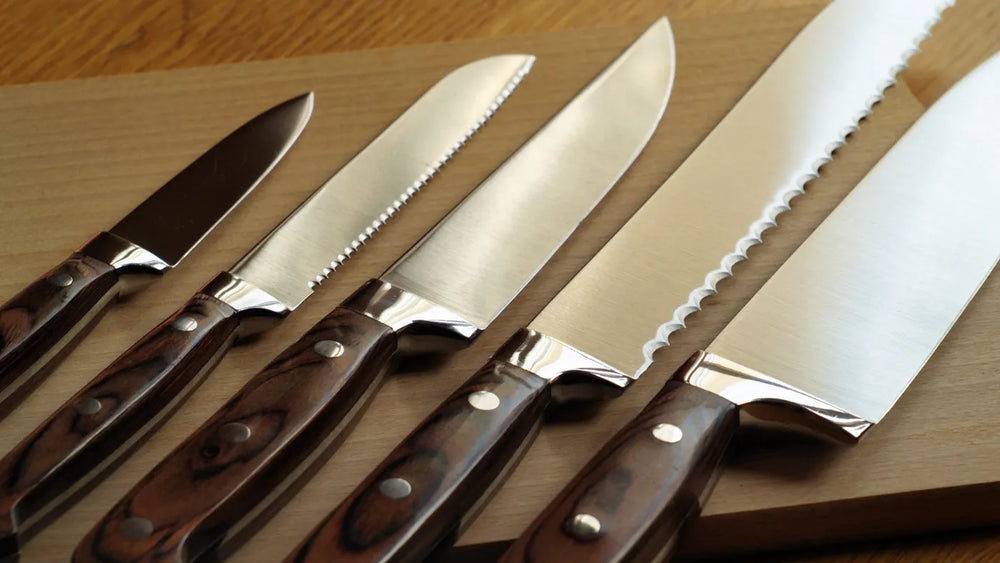
It runs the entire length and width of the handle. Recognizable by the visible rivets on the scales, it offers robustness, balance, and durability. It's the preferred choice of professionals.
2. Partial silk
It only covers part of the handle. Lighter and less expensive to produce, it is suitable for knives used in the home, but is less resistant to intense stress.
3. The Hidden Silk
It is concealed inside a molded handle, with no visible rivets. Often used in modern knives, it emphasizes aesthetics and a fluid design, but can limit robustness.
Advantages and disadvantages depending on the type of silk
Full tang silk
- Advantages : The sturdiest and most balanced. Excellent stability for difficult cuts, such as slicing a pumpkin or deboning a piece of meat. The distributed weight reduces fatigue during long cutting sessions.
- Disadvantages : higher weight which can tire some users and higher cost related to materials and manufacturing.
Partial silk
- Advantages : Lighter, it offers pleasant handling for quick cuts (fruits, soft vegetables). Less expensive, ideal for everyday home use.
- Disadvantages : less resistant to significant stress, risk of the handle becoming fragile over time if the silk is short.
Hidden Silk
- Advantages : modern and sleek design, easy to clean as there are no visible rivets. Appreciated lightness.
- Disadvantages : less robust under heavy use. In case of breakage or play between the blade and handle, repair is complex or even impossible.
How to recognize good silk
A well-balanced knife feels immediately in the hand: it doesn't lean excessively towards the blade or the handle. The presence of rivets on the handle often indicates a full tang. Testing the comfort, stability, and weight helps to identify the quality of the tang and therefore the knife as a whole.
The tang of a knife is a crucial, often overlooked but essential element. It influences the tool's strength, precision, and longevity. Whether you choose a full tang for professional use, or a partial or hidden tang for home use, understanding its role helps you select the knife best suited to your needs.


This site is protected by hCaptcha and the hCaptcha Privacy Policy and Terms of Service apply.