

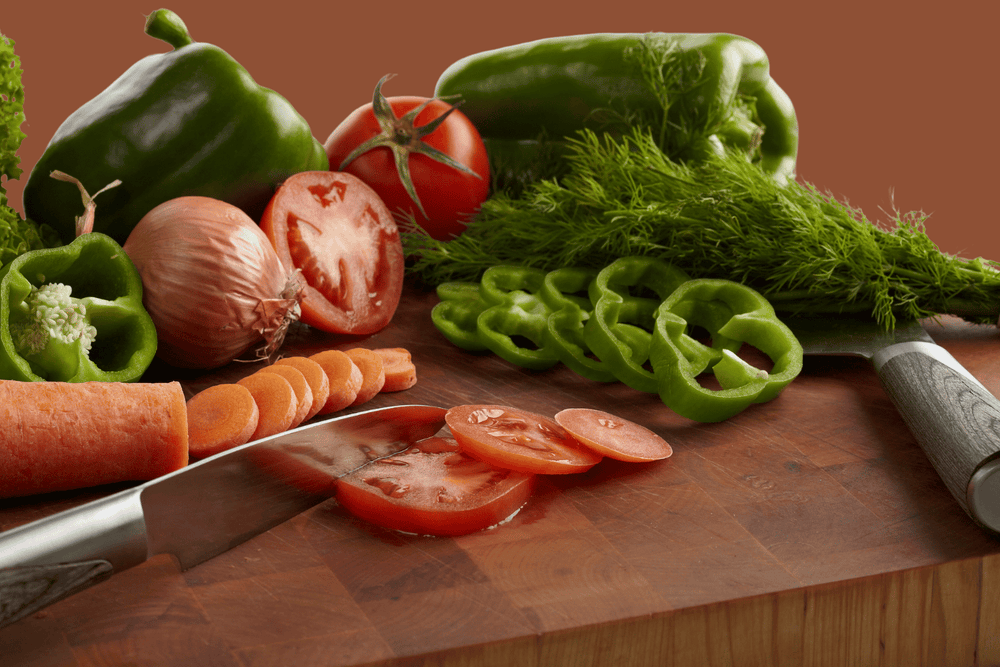
How to slice
Ah, slicing! Sounds simple, right? And yet, to get perfect slices, there are a few tricks to know. Whether it's for thin carrots, juicy tomatoes, or perfectly round potatoes, here's how to slice efficiently and safely. Grab a good knife, get comfortable, and let's go!
Choose the right knife
First and foremost, the foundation of any successful cut lies in choosing the right knife. For slicing, a sharp chef's knife is ideal, but you can also opt for a paring knife for small vegetables or fruits. On the other hand, for juicier foods like tomatoes, a serrated knife (or bread knife) can prevent crushing the flesh.
Tip : If your knife isn't sharp, it can make cutting more difficult and dangerous. A sharp knife is therefore essential!


Wash and prepare the food
Before chopping, make sure to wash your fruits and vegetables thoroughly. Remove any inedible parts, such as the ends of carrots or the stems of tomatoes. If you are working with potatoes or zucchini, you can also peel them as desired.
Good to know : Removing the ends makes the cut more stable and creates a flat base, especially for cylindrical vegetables like carrots or courgettes.
Stabilize your food on the board
To prevent slipping (and uneven slices), start by stabilizing the food. For long vegetables like cucumbers or zucchini, cut a thin slice lengthwise to create a flat base. Then place the food on this base: it won't roll anymore! You'll then have more control.
Chef's tip : Use a wooden or non-slip plastic cutting board for maximum stability.
Adopt the correct cutting technique
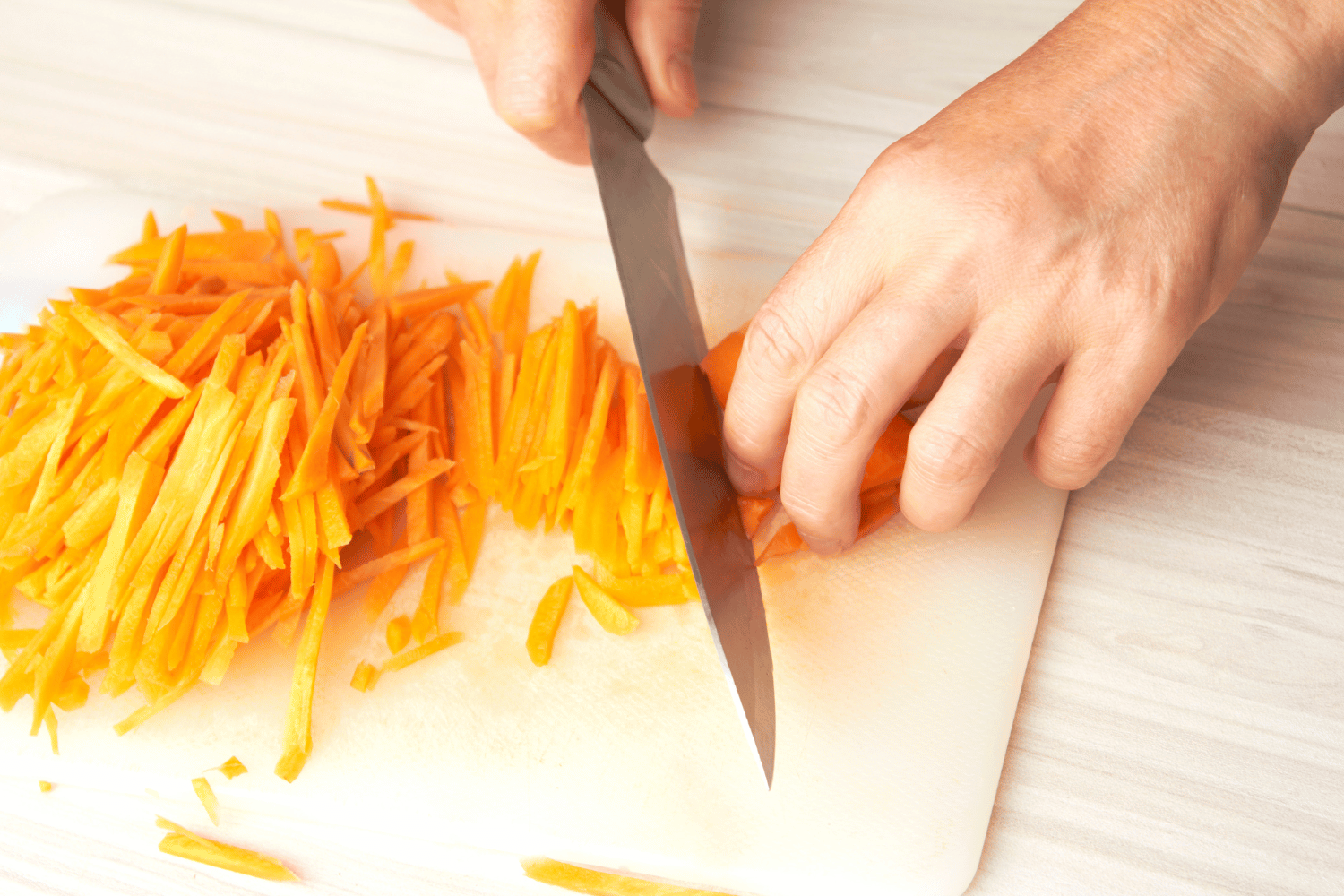
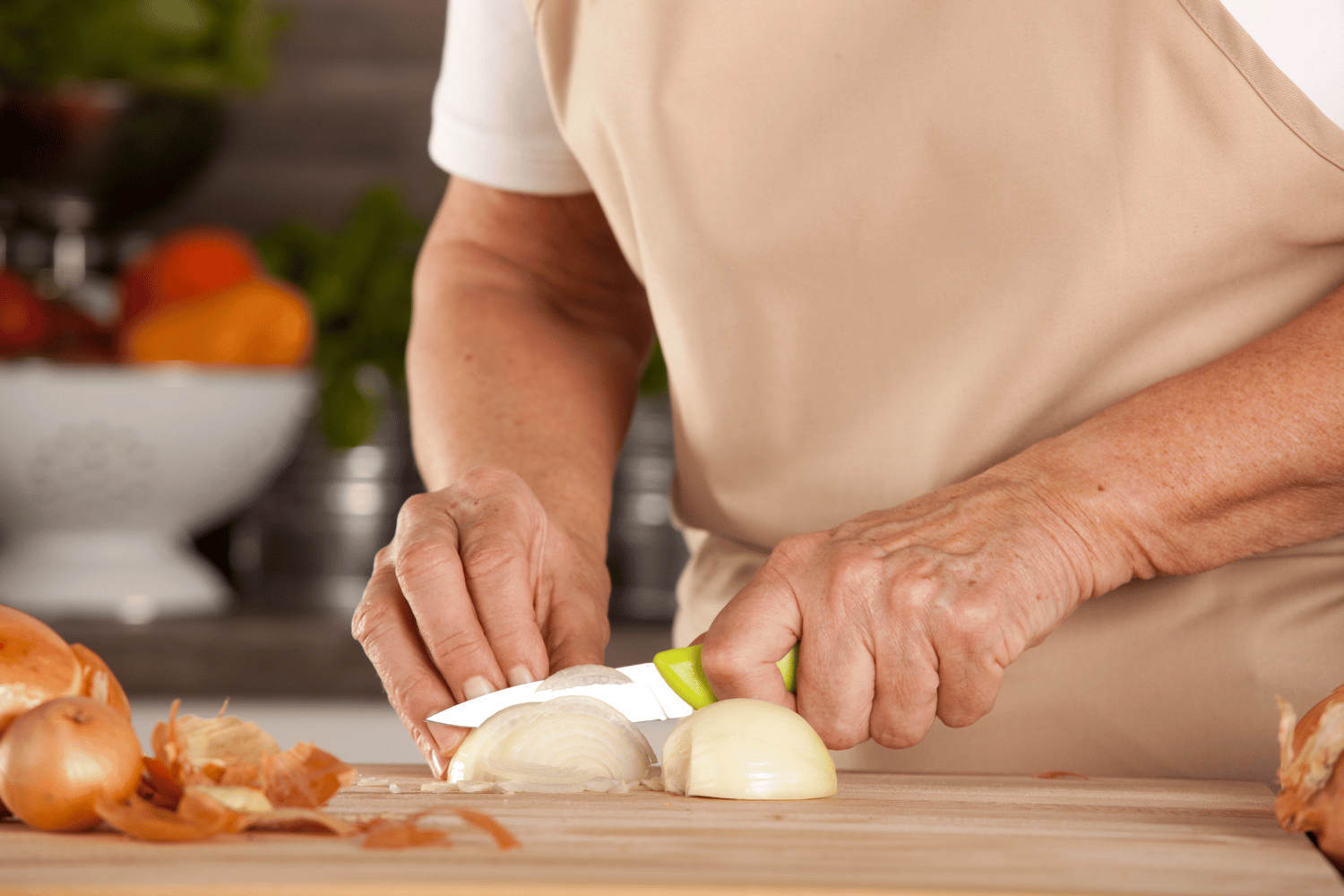
Hold your knife firmly in one hand and adopt a secure grip. With your other hand, hold the food in a "claw" shape: curl your fingers so that your nails touch the food. This helps protect your fingers and achieve a clean, even cut.
For thin or thick slices:
- Thin slices : Slowly slide the knife back and forth to create thin slices. Perfect for toppings or homemade chips!
- Thick slices : Cut directly without additional movement, pressing firmly for thicker, sturdier slices. Ideal for stews and casseroles.
Practice fluid movements
The key to a successful cut is a smooth motion! Don't press too hard on the knife; let it do the work. Use slow, steady movements to avoid breaking or crushing the food.
Did you know? In cooking, it's often said that the knife should "dance," not the food. Always maintain the same rhythm and angle for perfect slices!
Master the art of cutting difficult foods
Some fruits and vegetables can be temperamental. For example:
- Tomatoes : Use a serrated knife to avoid crushing the flesh. Cut slowly to prevent the juice from spreading everywhere.
- Potatoes and carrots : Being rather firm, they require more pressure. Place them on a stable base and slice them into rounds with a precise movement.
- Citrus fruits : Use a chef's knife for clean slices, and make sure to remove the ends for perfect rounds.
Take your time and pay attention.
Last but not least: don't rush! Taking your time allows for cleaner cuts and reduces the risk of injury. If you cook often, practice will naturally make you faster.
Bonus : And why not try cutting into half-moons? Simply cut the food in half lengthwise before slicing – perfect for soups or salads!
Conclusion
By following these steps and cutting techniques , slicing into rounds will become child's play. You'll see: with a little practice, your slices will be uniform, attractive, and ready to be showcased in all your recipes. So, ready to get started with your kitchen knives ? Go ahead, grab your knife and have fun in the kitchen!


This site is protected by hCaptcha and the hCaptcha Privacy Policy and Terms of Service apply.