

How to sharpen a knife like a razor
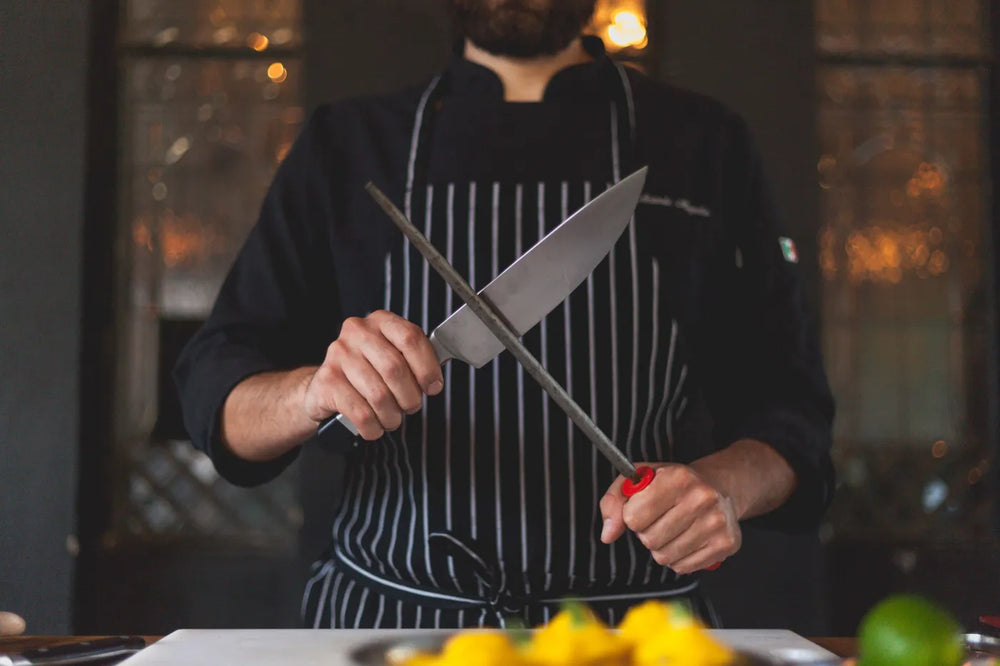
To sharpen a knife, hold the blade at a 15-20° angle, with the sharpening steel vertical on the board. Slide the knife from the heel to the tip, alternating sides. Repeat 5 to 10 times: prioritize consistency and gentleness over force.
Want to know how to sharpen a kitchen knife to a razor's edge? Good news: it's a simple technique that prolongs the life of your blades and keeps your cuts precise . Sharpening isn't the same as honing: here, we're talking about regular maintenance, the kind that restores the knife's edge rather than recreating it.
In this article, you will discover the tools, techniques and tips for properly sharpening your kitchen knives and maintaining a clean, razor-sharp edge.
Understanding the difference between sharpening and honing
To know how to properly sharpen a kitchen knife to a razor's edge, you need to distinguish between two concepts :
- Sharpening: straightening the edge that has bent or become microscopically dull from repeated cutting. It's a quick maintenance task that should be done regularly.
- Sharpening: removing material with an abrasive stone to create a new cutting edge. It takes longer and is less frequent.
A sharp knife retains its effectiveness longer before needing to be sharpened.


Why regularly sharpen your knives
Sharpening a kitchen knife to a razor-sharp edge has several advantages:
- You gain in safety: a sharp knife slips less and rarely slips.
- You work faster: the blade cuts cleanly without effort.
- You preserve the lifespan: less need for heavy sharpening.
- You improve the quality of the cuts: vegetables not crushed, meats not torn.
Tools for sharpening like a professional
Several tools exist for sharpening a kitchen knife:
- The steel sharpening steel: the most classic, grooved or smooth, ideal for everyday use.
- The ceramic cleaning gun: softer, perfect for fine and precise cleaning.
- The diamond steel: abrasive, between sharpening and honing, to be used sparingly.
How to choose the right rifle
Each type of rifle has its advantages. Here is a clear comparison table:
| Type of rifle | Benefits | Disadvantages | Ideal for… |
|---|---|---|---|
| Grooved steel | Solid, classic, fast | Can damage thin blades | European knives |
| Smooth steel | Gentle, respectful care | Less effective if the blade is very dull. | Routine maintenance |
| Ceramic | Precise sharpening, light polishing | Brittle if handled improperly | Japanese knives, thin |
| Diamond | Highly efficient, versatile | Remove some of the material | Very blunt blades |
Before sharpening, clean and dry the knife. Check the condition of the edge to determine if it simply needs honing or a true sharpening. Also consider the type of steel: harder steel (Japanese knives) requires a more delicate touch than European steel.
The step-by-step sharpening technique
- Position the knife: angle of 15° to 20° depending on the blade.
- Place the rifle vertically: tip resting on the board, securely.
- Slide the blade: from heel to tip, along the rifle.
- Alternate sides: one pass to the left, one pass to the right.
- Repeat 5 to 10 times: consistency is more important than strength.
Mistakes to avoid when sharpening
- Pressing too hard: the wire gets damaged instead of straightening.
- Varying the angle: sharpening becomes ineffective.
- Using a dirty rifle: the metal shavings will scratch the blade.
- Sharpening a dull blade instead of honing it: a waste of time.
When to sharpen your knives
The frequency depends on usage. For a knife used daily, a quick sharpening before or after cooking is recommended. For less frequent use, weekly sharpening is sufficient.
A clear sign: if your knife no longer goes cleanly into a tomato or shallot, a shotgun is needed.
Maintaining your sharpening tools
A rifle also requires maintenance: wipe it down after use, clean it regularly with a damp sponge and a little soap. Store it away from other metals to preserve its effectiveness.
Sharpen according to the type of knife
- European knives: 20° angle, steel or diamond sharpening steel suitable.
- Japanese knives: finer angle (15°), ceramic sharpening steel recommended to avoid damaging the hardened steel.
- Small paring knives: quick but regular sharpening, as they are used often.
Recipes where sharpening makes all the difference
A razor-sharp knife transforms cooking:
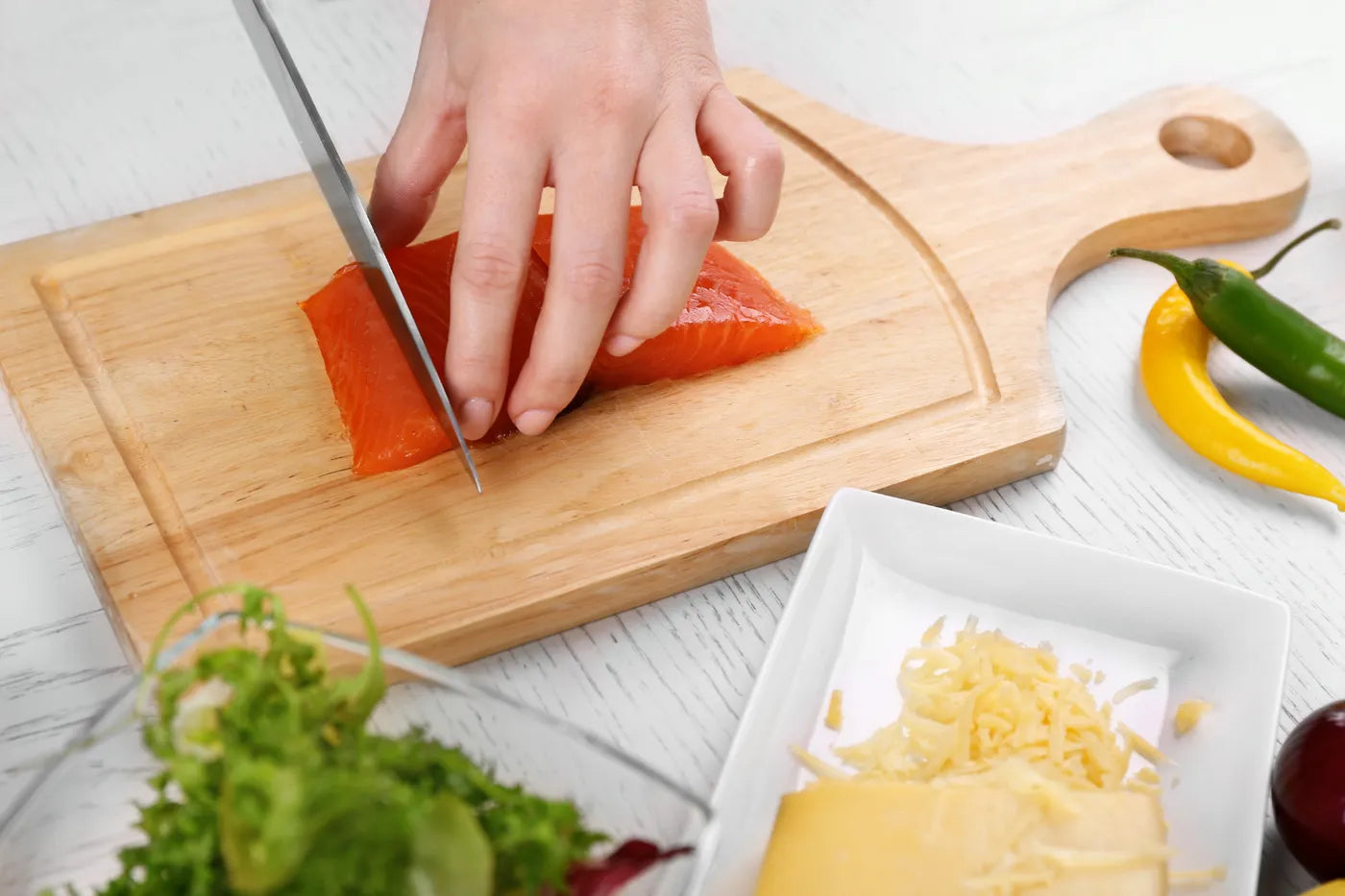
- Vegetable or beef carpaccio : thin and clean slices.
- Fresh herbs: finely chopped without turning black.
- Tomatoes or peaches: skin cut cleanly without crushing the flesh.
- Poultry : meat cut effortlessly without tearing.
Now you know how to sharpen a kitchen knife to a razor's edge. It's a simple maintenance step that prolongs the life of your blades and makes your cuts more precise.
Make it a ritual: a quick blast with a sharpening steel before cooking, and your knives will always be ready to use. Try it today; you'll feel the difference.
FAQ
What is a sharpening steel used for?
It straightens the edge of the knife without removing any material, perfect for sharpening a kitchen knife to a razor's edge.
What is the difference between sharpening and honing?
Sharpening straightens the edge, honing recreates a cutting edge. Both are useful for maintaining a kitchen knife as sharp as a razor.
What angle is best for sharpening correctly?
Approximately 20° for a European knife, 15° for a Japanese one, ideal for sharpening a kitchen knife to a razor's edge.
How often should you sharpen a knife?
Each week for daily use. The more regularly you sharpen, the more your kitchen knife will stay razor-sharp.
Can I sharpen all types of knives?
Yes, except for serrated knives. All the others are sharpened to a razor-sharp edge.


This site is protected by hCaptcha and the hCaptcha Privacy Policy and Terms of Service apply.