


How to restore an old knife in 5 simple steps
To restore an old, rusty or dull knife, follow a methodical 5-step process that brings the blade and handle back to life while preserving its authentic character.
Cleaning and deoxidation
Submerge only the blade in pure white vinegar for 4 to 24 hours, depending on the extent of the rust: the acetic acid dissolves the corrosion without attacking the steel. Then, scrub with fine steel wool (#0000) or a soft wire brush, using circular motions to remove any residue. Immediately neutralize with clean water and baking soda, rinse thoroughly, and dry completely with a microfiber cloth to prevent further oxidation.


Restoration of the handle
For a damaged wooden handle , clean it with warm soapy water without soaking it excessively, then gradually sand it with sandpaper (220 grit then 400 grit) in the direction of the grain to remove dirt and flaking varnish. Apply a thin coat of linseed or mineral oil, let it penetrate for 20 minutes, and then buff: this nourishes the wood, restores its shine, and improves the grip. If the handle is made of horn or bone, simply polish it without aggressive sanding.
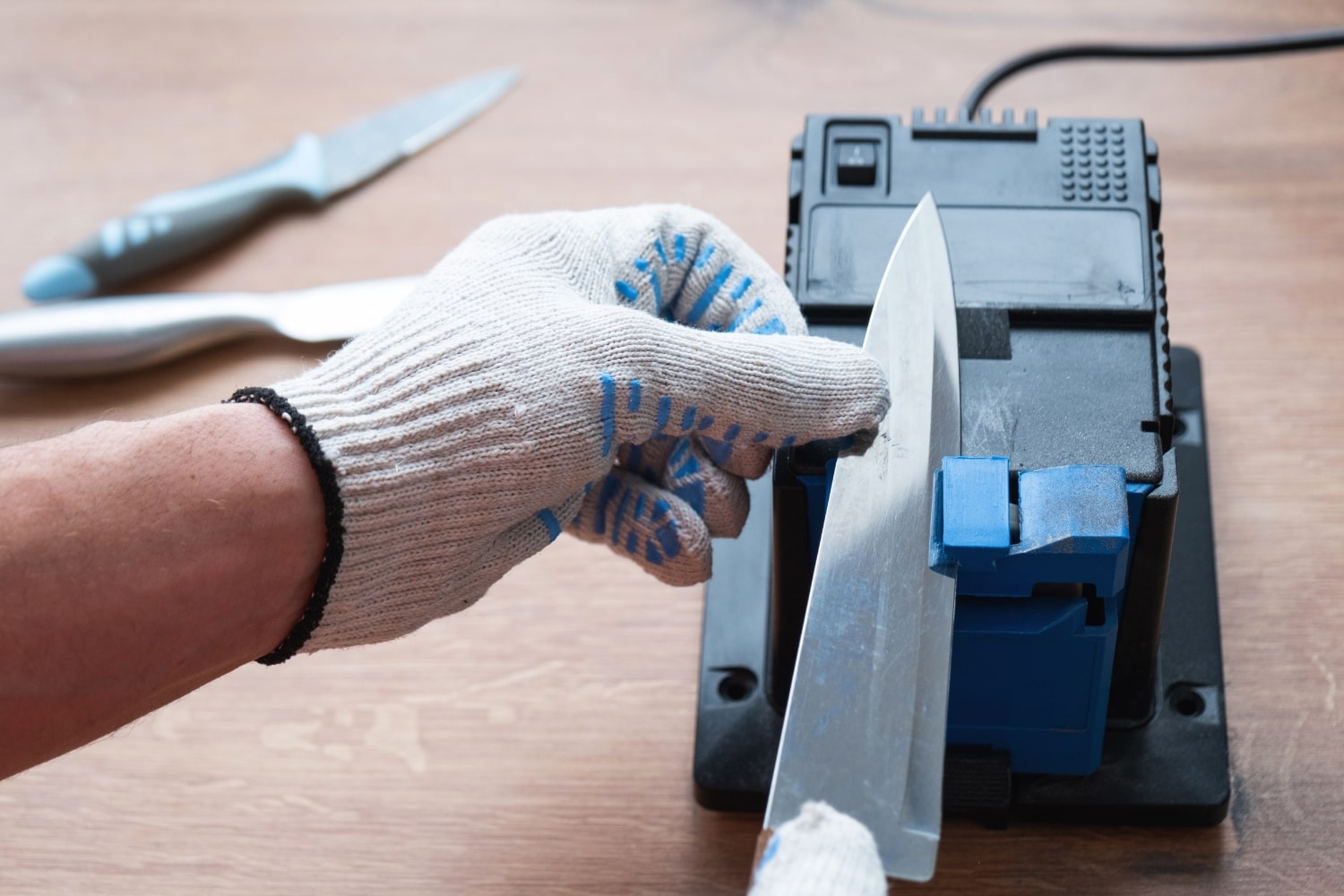
Blade sharpening
Soak waterstones (1000 grit for the main bevel, 3000 grit for polishing) for 10 minutes. Maintain a constant angle of 15-20° (use a guide or a banknote as a reference) and pass the stone 10-15 times per side in linear motions from heel to tip, with light pressure until a burr (thin burr) forms. Reverse the stone, refine on a fine grit, then remove the burr on oiled leather or cardboard. Test on paper or a tomato for a razor-sharp edge.
Polishing and finishing
Apply a metal polishing compound (such as Autosol) to a soft cloth and rub the blade in a circular motion for a satin shine, removing micro-scratches and dullness. Also polish the guard and bolsters, if present. Protect everything with a thin coat of neutral food-grade oil (mineral or camellia) to repel moisture, especially on carbon steels.
Reassembly and maintenance
If disassembled, carefully reassemble the parts, oiling the pivots for pocket knives . Store in a dry place, sharpen every 6-12 months, and clean after use. This DIY restoration, requiring only €20 worth of materials, transforms a heritage object into a durable and functional tool, respecting its history while optimizing its performance.



This site is protected by hCaptcha and the hCaptcha Privacy Policy and Terms of Service apply.