

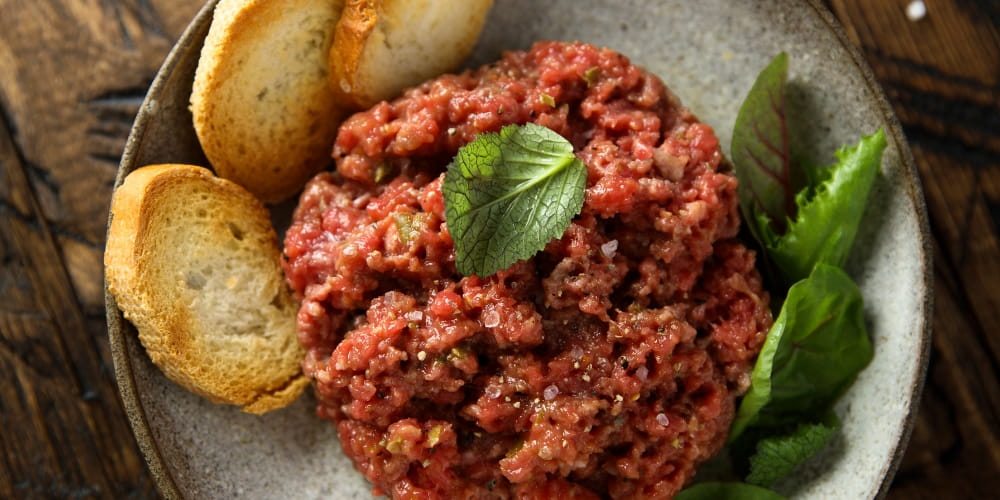
How to cut meat for beef tartare
Beef tartare, a rustic icon of French bistro cuisine, requires hand-cutting with a knife into even 2-5 mm cubes: thin slices (5-10 mm) perpendicular to the grain, then strips, then clean cubes – never use an electric meat grinder, which crushes and heats the meat. Freeze the fillet, rump steak, or flank steak for 15-30 minutes to firm it without freezing the center, facilitating precise cuts on a cold board (over ice if possible) for a firm texture and optimal hygiene. This method preserves the tender fibers, avoiding the mushy texture of a food processor, and releases pure flavors once seasoned (shallot, capers, mustard). Unlike the previous grilled preparations, it's raw: absolute freshness and sterility are paramount.
Why this manual and cold deep penetration technique?
For a first attempt, understand the physics of meat: an industrial grinder compresses and heats (friction >40°C), altering proteins and flavor through oxidation – a knife preserves freshness and a distinct crispness. To counteract fibers (visible striations), shorten muscles for a melt-in-your-mouth texture; 2-5 mm cubes ensure a homogeneous, lump-free bite. Partial freezing (semi-firm) firms the meat for a sharp edge and reduces bacteria. Constant cold (<4°C) prevents microbial growth – professional hygiene: clean hands/products, immediate consumption. Fillet steak excels in lean tenderness, while rump steak adds flavorful marbling.


Master the art of slicing step by step like a chef
Prepare 300-400g for 2 people: ultra-fresh butcher's fillet or rump steak. Wrap in cling film, freeze for 15-30 minutes (test: surface firm). Remove from freezer, ice the surface with a sharp chef's knife (ideally a santoku knife). Slice 0.5-1 cm perpendicular to the grain (using your palm as a guide). Stack the slices into 0.5 cm strips. Cut into 2-5 mm cubes (group them for efficiency). Optional: lightly chop to bind without crushing. Whisk together separate seasonings (egg yolk, Tabasco, parsley), and gently mix at the last minute. Spoon into a ramekin.
Expert tips and risks to neutralize
Pros: round walnut or pear-shaped walnut for a rustic touch; twist: fresh onion. Mistakes: meat grinder (bland paste), cutting without fibers (tough), heat (bacteria), over-cutting (lost juices). Safety: freezer (bonus anti-pathogen), but butcher's meat should be "tartare-ready." Do not refrigerate for more than 2 hours after mixing. Serve with homemade fries and salad.
This knife ritual elevates tartare into a raw sensory delight – a healthy boldness for curious French palates!

%20perpendicular%20to%20the%20grain,%20then%20strips,%20then%20clean%20cubes%20%E2%80%93%20ne...)
This site is protected by hCaptcha and the hCaptcha Privacy Policy and Terms of Service apply.