

French cutlery: traditions and know-how
French cutlery embodies artisanal expertise passed down through centuries. From Thiers to Laguiole, French knives blend excellence, tradition, and innovation. This comprehensive guide explores the origins, types, brands, and uses of this exceptional cutlery.
What is French cutlery?
French cutlery refers to all the skills and expertise involved in the manufacture of knives, whether handcrafted or industrially produced. It encompasses table knives, kitchen knives, folding knives, and regional knives, all produced in traditional workshops renowned worldwide.
Types included:
- Folding knives (Laguiole, Opinel)
- Table knives
- Kitchen knives
- Regional knives
This cutlery embodies a French art of living, combining precision, aesthetics and tradition.


What is the history of cutlery in France?
Cutlery making in France dates back to the Middle Ages, with workshops present as early as the 13th century. Thiers became a major center in the 17th century. The know-how was passed down through guilds, then through renowned artisan companies.
Historical landmarks:
| Era | Key facts |
|---|---|
| 13th century | First workshops in Thiers |
| 17th century | Corporate organization |
| 19th century | The Birth of Brands |
| Today | International recognition |
French cutlery is the product of a deeply rooted technical, cultural and regional heritage.
Which French regions are emblematic of cutlery making?
Three major regions dominate French cutlery: Auvergne (Thiers), Aveyron (Laguiole) and Savoy (Opinel). Other areas have local traditions: Nontron (Dordogne), Nogent (Haute-Marne), Corsica.
Key regions:
- Thiers (Puy-de-Dôme)
- Laguiole (Aveyron)
- Saint-Jean-de-Maurienne (Savoie)
- Nontron (Dordogne)
These terroirs have shaped unique knife styles, often linked to local uses.
Why is Thiers considered the capital of cutlery?
Thiers accounts for 70% of French knife production. A town with a strong industrial and artisanal past, it is home to hundreds of workshops, museums, schools, and renowned manufacturers. The craft has been passed down there for over 600 years.
Advantages of Thiers:
- Centuries-old history
- Complete knife-making ecosystem
- International Events (Coutellia)
- Artisan labels
Thiers is today a global pillar of quality cutlery, both traditional and contemporary.
What are the traditional styles of French knives?
Styles include regional folding knives, forged table knives , and classic models like the Laguiole or Opinel. Each style has a distinctive silhouette, handle, and blade.
Iconic styles:
| Style | Characteristic |
|---|---|
| Laguiole | Guilloché spring, bee |
| Opinel | Safety ring, thin blade |
| Nontron | Pyrographed boxwood handle |
| Corsicans | Curved blade, rustic design |
Each of these knives embodies a unique culture, use, and aesthetic.
What are the most well-known French folding knives?
Laguiole and Opinel knives are the two most famous folding models. Others include the Nontron, the Douk-Douk, the Pradel, and numerous regional handcrafted creations.
Folding knives:
- Laguiole (elegant, luxury)
- Opinel (rustic, practical)
- Nontron (Périgord tradition)
- Douk-Douk (industrial, exotic)
Each one serves a particular purpose: picnic, cooking, collection or everyday wear.
What is the difference between a Laguiole and an Opinel knife?
The Laguiole is a luxury knife, often ornate, with a guilloché spring and a forged blade. The Opinel is a simple, efficient knife with a safety ring. One is handcrafted, the other mass-produced.
Comparison:
| Criteria | Laguiole | Opinel |
|---|---|---|
| Origin | Aveyron | Savoy |
| System | Guilloché spring | Rotating ring |
| Price | Medium to high | Affordable |
| Style | Refined | Minimalist |
They symbolize two complementary facets of French cutlery.
What types of table knives come from French cutlery?
French cutlery offers forged table knives , Laguiole or Thiers sets, and high-end restaurant models. French design combines functionality and elegance.
Table knives:
- Micro-serrated or smooth blade
- Wooden, horn or stainless steel handle
- Regional design (Laguiole, Thiers)
These knives fit perfectly into both gastronomy and the art of French entertaining.
What is a traditional French kitchen knife?
A traditional French kitchen knife is forged, well-balanced, and has a wide or pointed blade. Common models include chef's knives, slicers , fillet knives, paring knives, and boning knives. Their design combines ergonomics and efficiency.
Types of knives:
| Name | Main use |
|---|---|
| Chef's knife | Versatile |
| Utility knife | Precision / vegetables |
| Sole fillet | Fish |
| Boning knife | Butcher's shop |
French cuisine demands cutlery that matches its technique and ingredients.
Are there specific regional knives in France?
Yes, each region has a typical knife, inspired by agricultural, pastoral or maritime needs. Examples: Corsican Vendetta , Basque Yatagan, Pyrenean Capucin, Norman Pradel.
Some examples:
- Vendetta (Corsica)
- Capucin (Pyrenees)
- Yatagan (Basque Country)
- Pradel (Normandy)
These knives tell the story of local history, landscapes and customs from centuries past.
How are French handcrafted knives made?
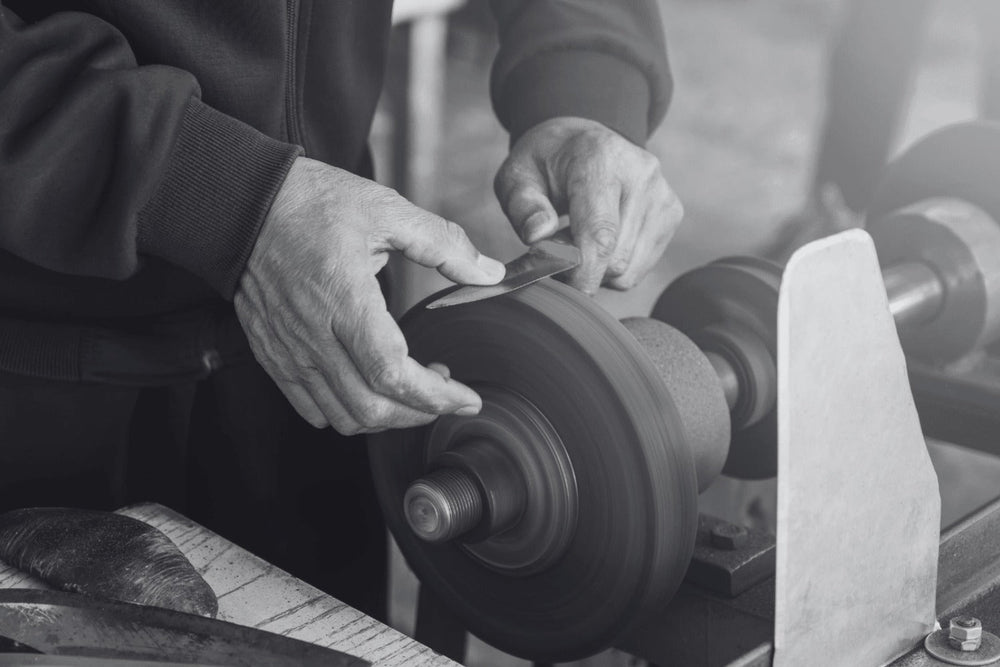
Handcrafted knives are made by hand: forging the blade, tempering, assembling the handle, fitting, and sharpening. Each piece is unique and requires several hours of expert work.
Key steps:
- Cutting or forging the blade
- Thermal treatment
- Assembly of the mitre and the handle
- Adjustment, sharpening, polishing
This process reflects the transmission of ancient techniques combined with a contemporary finish.
What steels are used in French cutlery?
The steels used are XC75 carbon steel, stainless steels (Sandvik 12C27, X50CrMoV15), Damascus steels, and sometimes high-end Swedish or Japanese steels. The choice depends on the intended use.
Types of steel:
| Steel | Main quality |
|---|---|
| XC75 | Raw edge, sharpenable |
| 12C27 Sandvik | Stainless steel, durable, stable |
| X50CrMoV15 | Stainless steel, balanced |
| Damascus | Aesthetically pleasing, high-end |
The steel defines the performance, durability, and cutting style of the knife.
What are the characteristics of French knife handles?
The handles are often made of precious wood ( cherry , olive, juniper), horn, bone, or composite materials. They are attached with rivets and may feature decorative inserts or inlays.
Common materials:
- Wood (boxwood, ebony, olive)
- Horn or ivory
- Resin, acrylic, G10
- Brushed aluminum or stainless steel
A French handle is also an aesthetic signature, between tradition and personalization.
What is the role of the forge in traditional cutlery making?
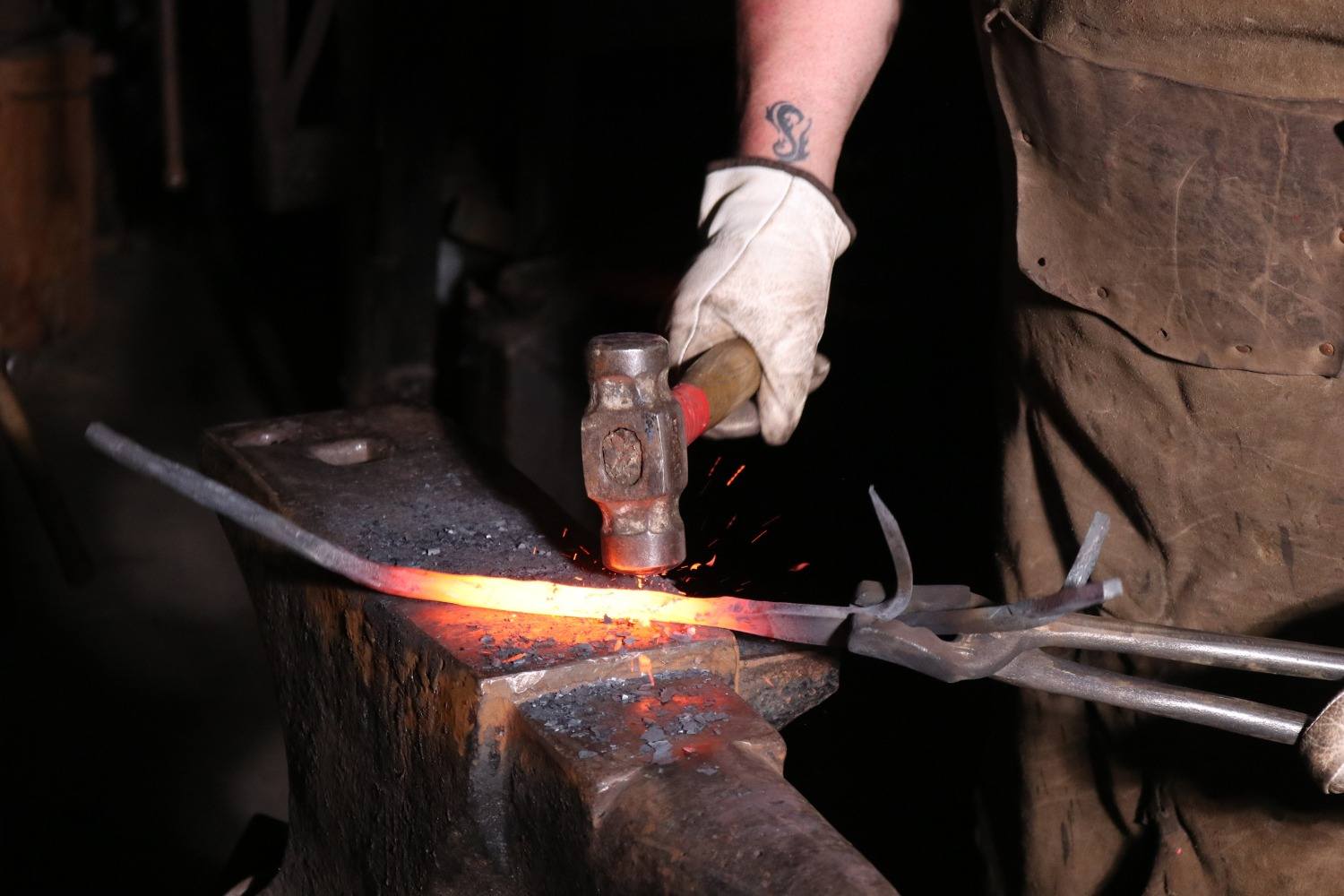
The forge gives the knife its shape, hardness, and character. It allows for precise tempering, a durable blade, and an exceptional edge. Hand forging is often a guarantee of high quality.
Advantages of the forge:
- Rockwell hardness controlled
- Custom blade
- Custom heat treatment
- Maximum longevity
A hand-forged knife bears the mark of the blacksmith and an ancestral gesture.
What is the difference between a craftsman and an industrialist in this sector?
The craftsman works by hand, in small batches, with unique finishes. The industrialist produces in series, with more regularity but less personalization. The two can coexist.
Comparison:
| Criteria | Artisan | Industrial |
|---|---|---|
| Production | Small series | Large series |
| Finishing | Unique, personalized | Standardized |
| Deadline | Longer | Short |
| Price | Higher (quality) | Affordable |
Collectors often seek out handcrafted pieces for their character and authenticity.
What are the iconic brands of French cutlery?
The best-known brands are Opinel, Laguiole en Aubrac, Fontenille Pataud, Perceval, Nontron, Au Sabot, Dozorme, TB Groupe and Thiers-Issard. Each offers a style, a use, and a price range.
Key brands:
- Opinel : everyday use, affordable
- Laguiole en Aubrac : handcrafted luxury
- Perceval : modern, high-end design
- Nontron : a Périgord tradition
These brands embody the excellence and diversity of cutlery made in France.
How to recognize a genuine French handcrafted knife
A genuine French handcrafted knife features precisely fitted rivets, a guilloché spring, a well-centered blade, and the cutler's signature. The manufacturing process is usually indicated as "handmade" or "artisanal forging."
Indicators of authenticity:
- Visible hand-finished details
- Name of the manufacturer or craftsman
- Clean and aligned assembly
- Marked "France", sometimes numbered
Counterfeits have crude finishes, a poorly fitted blade, or questionable materials.
What geographical indications protect French cutlery?
The cutlery of Thiers is protected by a recognized geographical indication (GI). The " Laguiole " cutlery is not yet protected despite ongoing efforts. These GIs guarantee origin and traditional craftsmanship.
Official IGs:
- Thiers Cutlery (since 2019)
- IG Laguiole project underway
- “Living Heritage Company” (EPV) labels
Geographical indications (GIs) promote territorial authenticity and prevent abuses of name or form.
Is there an official label for French cutlery?
Yes, the EPV (Entreprise du Patrimoine Vivant) label distinguishes workshops with rare expertise. Some artisans are also recognized as “Meilleur Ouvrier de France” (Best Craftsman of France) in cutlery.
Recognized labels:
- EPV (Ministry of the Economy)
- MOF (Best Craftsman of France)
- IG Thiers
- Guaranteed French Origin Label
These distinctions are a guarantee of quality, traceability and traditional know-how.
For what uses should I choose a French knife?
French knives cover all uses: cooking, picnics, serving, hunting, and collecting. Their sharpness and durability make them suitable for precision cooking or everyday use.
Popular uses:
- Professional kitchen
- Outdoor / EDC
- Table service
- Knife collection
A good French knife meets both a practical need and an aesthetic requirement.
How to care for a French handcrafted knife
Clean by hand with a damp cloth. Dry immediately. Oil the carbon steel blade and metal parts if necessary. Never use a dishwasher, especially for wooden or horn handles.
Interview :
- Gentle cleaning
- Immediate drying
- Regular sharpening
- Food-grade oil for carbon blades
Proper maintenance prolongs the life and beauty of your knife.
Where to buy an authentic French cutlery knife
Buy from artisans (online or in their workshops), in specialist shops, or directly from Thiers or Laguiole. Avoid dubious marketplaces and imported industrial copies.
Reliable channels:
- Official websites of brands like ETCH
- Renowned French cutlery makers
- Trade shows (e.g., Coutellia )
- Craft workshops
Choosing the short supply chain guarantees the origin and quality of your purchase.
What is the reputation of French cutlery worldwide?
French cutlery is renowned for its refinement, precision, and heritage. It is exported to over 50 countries. Chefs and collectors worldwide consider it a benchmark.
Perceived strengths:
- Elegant design
- Reliable and durable blade
- Traditional craftsmanship
- Constant innovation
It rivals Japanese or Italian cutlery, while asserting its unique identity.
Conclusion
French cutlery combines tradition, know-how and diversity. From Opinel to Laguiole, from kitchen knives to regional folding knives, each blade embodies a story, a region, a requirement.
You now know its origins, its brands , its materials and its uses.
Choosing a French knife means bringing the excellence of a living craft into your kitchen or your pocket.



This site is protected by hCaptcha and the hCaptcha Privacy Policy and Terms of Service apply.