


Chef's knife or Santoku knife: which one is right for you?
The chef's knife and the santoku are two essential all-purpose knives in the kitchen, but they differ in shape, technique of use and ideal applications, which influences the choice according to your cooking habits.
Shape and characteristics
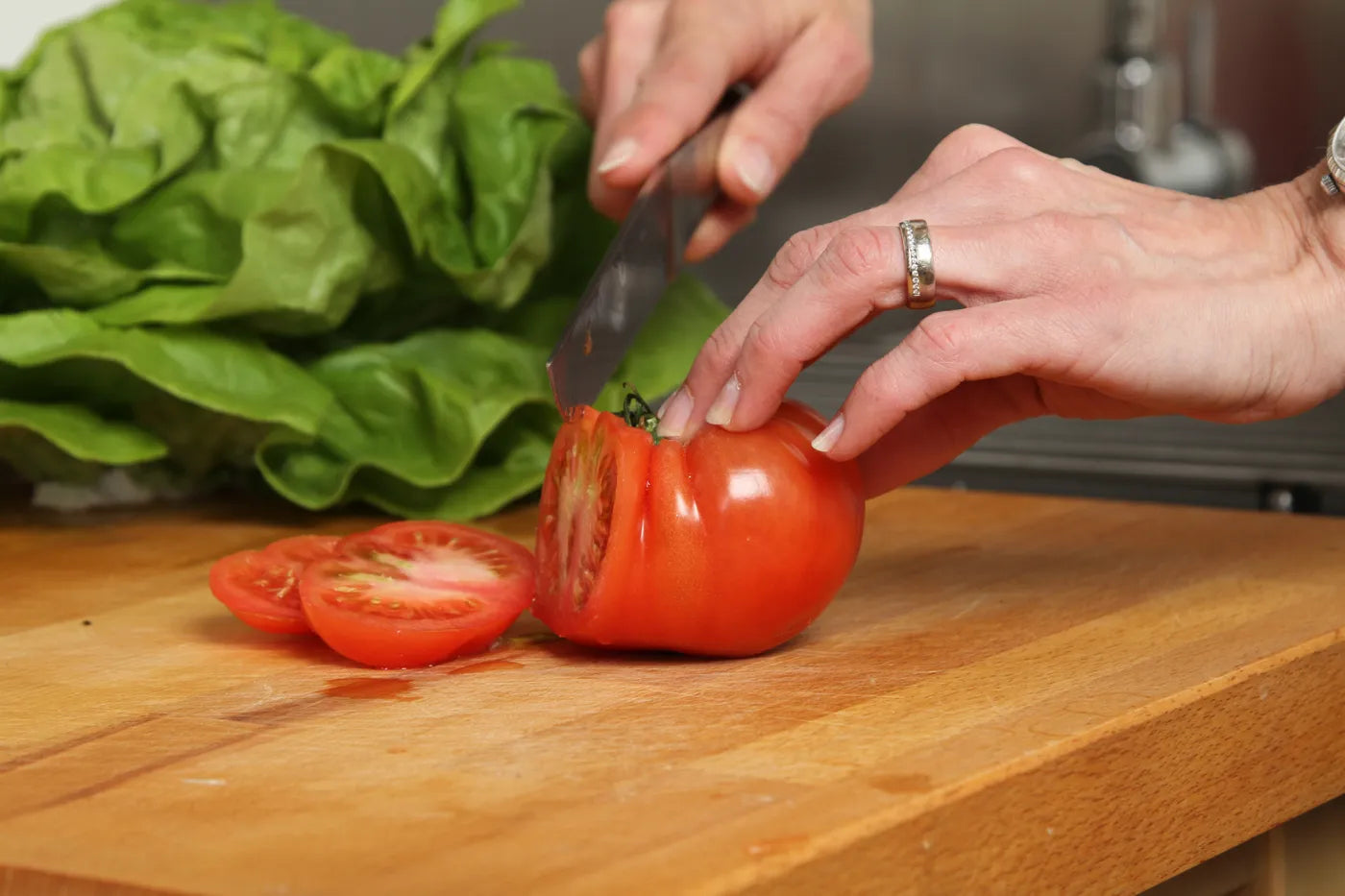
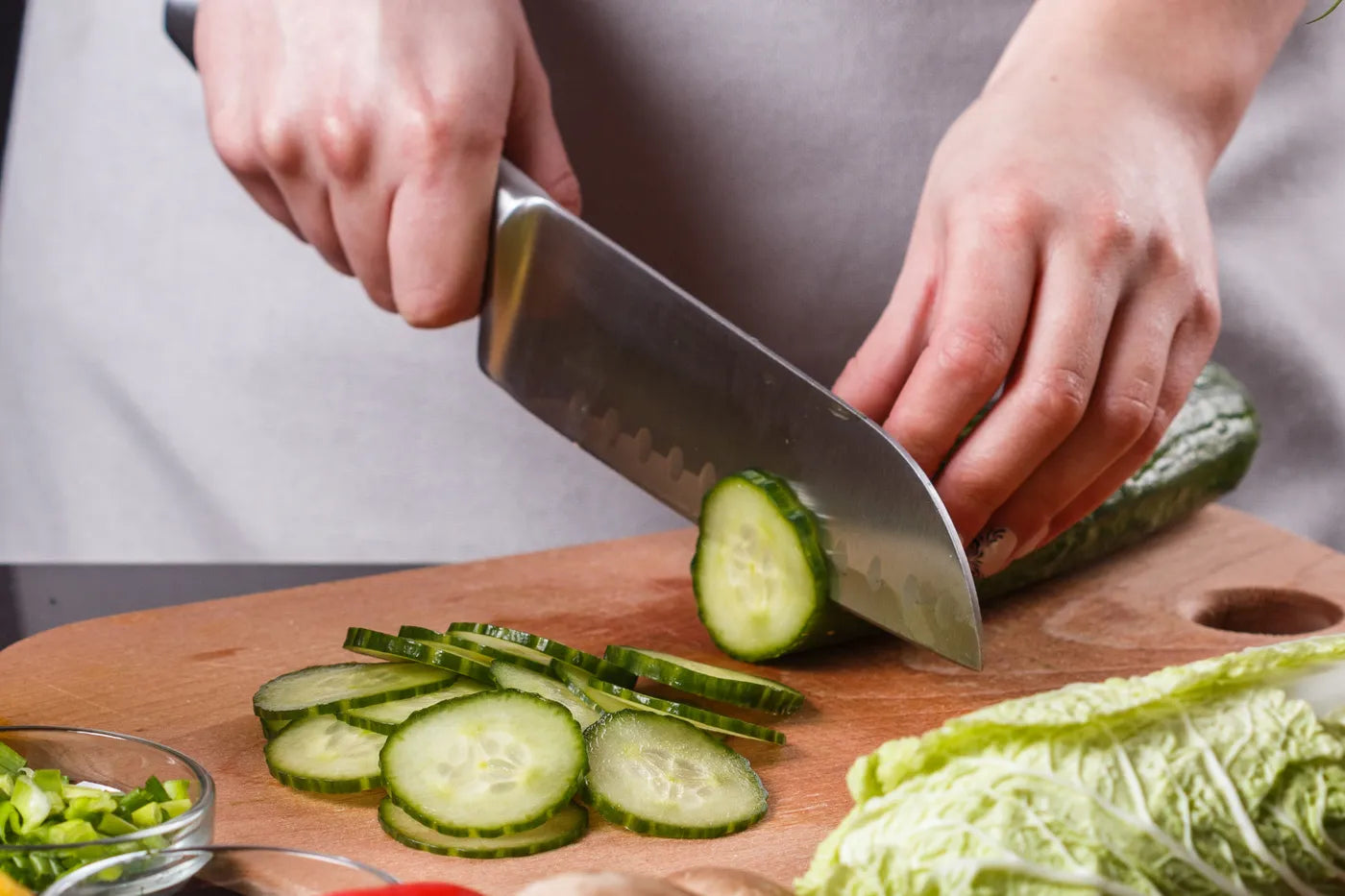
The chef's knife , of European origin (French or German), has a long blade, 18 to 30 cm, curved and tapering to a fine point, with a wide heel that facilitates a rocking motion: the tip remains fixed on the cutting board while the heel moves down to chop or slice. This allows for the efficient cutting of large quantities, such as meats or hard vegetables, in a smooth sweeping motion that distributes the effort across the entire blade. Conversely, the Japanese santoku ("three virtues" for slicing, mincing, and dicing) has a shorter blade (16-18 cm), almost straight with a rounded or flattened point, and a consistent width; its lighter weight (often made of hard steel like VG10) promotes a clean, vertical cut from top to bottom, parallel to the cutting board, preventing the crushing of delicate foods.
For a beginner, understand that the chef's curve allows for a natural "rocking chop," like gently rocking the blade, ideal for Western use where one often prepares stews requiring chunky pieces. The santoku, inspired by precise Asian techniques, excels at repeated push-cuts: the blade is lifted each time for surgical precision, without the risk of excessive friction. The double (symmetrical) bevel is common to both, but some santoku have an asymmetrical bevel for right-handed users, making the cut even smoother on herbs or fish.


Practical uses
Choose a chef's knife if you're cooking thick cuts of meat or European dishes: its length captures more food per pass, and its weight helps slice through cartilaginous bones or fibrous vegetables like carrots. For example, a balance knife excels at quickly dicing an onion without tiring you out. A santoku knife shines for delicate vegetables, fish, seafood, or herbs: its wide blade prevents food from sticking (thanks to dimples sometimes), and its maneuverability is ideal for Asian stir-fries where you're aiming for perfect julienne strips or uniform 1-2 mm slices.
In everyday use, try this: if your recipes involve a lot of coarse chopping (stews, hamburgers), the chef's knife is the better choice; for salads, homemade sushi, or delicate vegetables, the santoku knife reduces the risk of uneven chopping. Both are multi-purpose, but a novice chef gains confidence with the shorter, less intimidating santoku, while a pro appreciates the chef's longer knife's versatility for a whole menu.
Key comparison
| Criteria | Chef's knife | Santoku |
|---|---|---|
| Blade length | 18-30 cm | 16-18 cm |
| Blade shape | Curved, fine point | Straight, rounded tip |
| Movement | Rocking pendulum | Vertical (push-cut) |
| Ideal for | Meats, coarsely chopped | Vegetables, fine precision |
| Weight/ergonomics | Heavier, more robust | Lighter, more maneuverable |
Which one to choose?
Choose according to your style: a santoku knife for light and precise Asian cuisine (perfect for beginners, as it's more forgiving), or a chef's knife for all-around European versatility. Ideally, acquire both for their complementary qualities – good steel (Damascus or carbon) and regular sharpening (1000/3000 grit whetstone) maximize their lifespan. Aim for high-end brands for a good balance of quality and price, and practice on a wooden board to preserve the edge.


This site is protected by hCaptcha and the hCaptcha Privacy Policy and Terms of Service apply.