

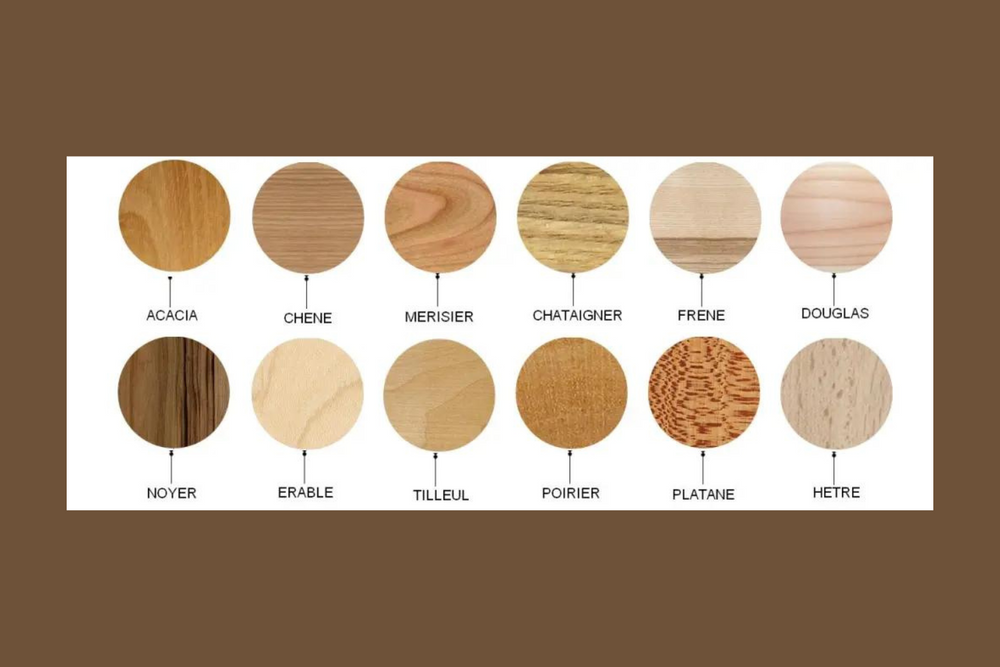
What is the best wood for a knife handle?
Far more than just a support for the blade, the handle is the true point of contact between you and your tool. It's what gives the knife its character, its balance, its comfort in the hand, and much of its beauty. The choice of wood for crafting this handle is therefore a crucial decision, one that will influence both the appearance and the longevity of your cutting companion.
Faced with the multitude of wood species available, it's natural to ask: which is the "best" wood? The truth is, there isn't one that's universally superior. The ideal wood will depend on how you intend to use your knife (cooking, hunting, collecting), the aesthetic you're looking for, and the ease of use you desire. This guide will therefore provide you with all the selection criteria and present a selection of the most renowned wood species to help you make an informed choice, ensuring your handle is as durable as it is beautiful.
The 4 essential criteria for choosing the perfect wood
Before delving into the beauty of different wood species, it's essential to understand the properties that make a particular wood suitable for cutlery. Keeping these four criteria in mind will allow you to assess any wood.
Stability: the number one criterion against humidity and variations
This is undoubtedly the most important technical criterion. A knife handle will inevitably be exposed to variations in temperature and humidity, especially during washing. Unstable wood could swell, shrink, warp, or even crack over time, compromising the integrity of your handle. Therefore, it's essential to choose naturally dense and stable woods.
- Stabilized wood: the ideal solution? To overcome this problem, a modern technique involves "stabilizing" wood. The process consists of impregnating the wood with resin under vacuum, which makes it completely waterproof and inert to humidity variations. This is a perfect solution for using beautiful but naturally fragile woods, such as burls.
Hardness and density: for a handle that lasts
A knife handle must be able to withstand the minor impacts of daily use, scratches, and the significant pressure exerted by the rivets during assembly. A dense, hard wood will therefore ensure longevity. For those in the know, the Janka hardness scale is a good reference for objectively comparing the resistance of different wood species.
Aesthetics: the beauty of the grain, color, and patterns
This is the most personal criterion, the one that appeals to your tastes. The visual richness of wood is infinite. You might appreciate a very pronounced grain, a deep color, or particular patterns known as "figures." Among the most sought-after are burl (an interweaving of fibers creating mesmerizing patterns) and wavy wood (which gives the impression of 3D waves under the light).
Ease of use (workability)
Finally, if you're making the handle yourself, this is an important factor to consider. Some very hard or dense woods, like ebony, can be difficult to saw, drill, and sand. They can also wear out your tools more quickly. A wood like walnut, on the other hand, is a real pleasure to work with. Therefore, you should adapt your choice to your tools and your skill level.


Our selection of the best woods for knife handles
Now that you know the selection criteria, we can explore together some of the most prized and renowned woods in the world of cutlery. We have classified them into major categories for clarity.
European classics: reliable and timeless
- Walnut: Highly prized by both beginners and experts, walnut offers an elegant grain, warm colors ranging from light to dark brown, and is very easy to work with. It's a safe and always stylish choice.
- Olive: Famous for its spectacular grain, made up of yellow lines and dark brown swirls. It is a dense, hard wood and naturally rich in oil, which gives it good resistance to humidity.
- Boxwood: A historic wood, extremely dense and hard, recognizable by its pale yellow color and its grain so fine as to be almost invisible. Its strength has made it a preferred choice for the handles of traditional tools and knives.
- Cherry wood : With its magnificent pinkish-brown color, cherry wood is famous for the rich mahogany patina it acquires over time and with exposure to light. Its fine grain and exceptional workability make it a classic choice for cabinetmaking, perfect for elegant knives.
Exotic woods: spectacular colors and patterns
- Ebony: Deep and intensely black, ebony is a very luxurious wood, extremely dense and hard. Its polish is incomparable. However, it requires high-quality tools as it can be brittle.
- Rosewood: This is a large family of woods with rich hues, ranging from pink to purple to dark brown. They are generally dense, stable, and polish beautifully. (Note that many rosewood species are protected under the CITES convention; carefully check their origin.)
- Bocote: Originating in Central America, this wood offers a visual spectacle with its highly contrasting grain of black stripes on a yellow-brown background. It is dense and fairly easy to work.
- Cocobolo: Another rosewood with vibrant colors, ranging from orange to bright red. It is very hard, very dense, and naturally oily. Be aware that its sanding dust is known to be a potent allergen.
"Figured" woods: for exceptional handles
- Burl: This is an outgrowth on the trunk where the grain is irregular, creating unique and complex patterns. Burls from amboyna, walnut, or thuya are highly prized. For use in knife making, a burl must be stabilized.
- Spalted Wood: This is wood (often maple or birch) that has begun to be colonized by fungi. This process, if stopped in time, creates fine, graphic black lines on the wood. It too must be stabilized to become solid and usable.
Comparison chart: find the wood that suits you
To help you synthesize all this information and make your choice, here is a summary table of the characteristics of the most popular wood species.
| Name of the Wood | Hardness/Density | Stability (Natural) | Aesthetic | Difficulty of Work |
| Walnut | Average | Good | Classic, elegant | Easy |
| Olive | High | Good | Unique and contrasting veining | Average |
| Boxwood | Very high | Very good | understated, very fine grain | Difficult |
| Cherry tree | Average | Good | Rich patina, warm color | Easy |
| Ebony | Very high | Very good | Deep black, luxurious | Very difficult |
| Bocote | High | Good | Exotic, zebra-striped | Average |
| Magnifying glass (stabilized) | Variable | Excellent | Unique, spectacular designs | Average |
| Spilled (stabilized) wood | Variable | Excellent | Graphic, modern | Average |
The finishing touch: how to protect and enhance your wooden handle
Once your handle is fully shaped and sanded, a good finish is essential to protect it durably and to reveal the full depth of its grain.
- Penetrating oils: Oils like linseed oil or tung oil are excellent. They penetrate the wood deeply to nourish it and protect it from internal moisture.
- Waxes: A beeswax or carnauba wax finish gives a very soft feel, a satin appearance and good surface protection against small stains.
- Varnishes: Less used in traditional cutlery because they can give a "plastic" feel, varnishes nevertheless create the most resistant and waterproof protective film.
Conclusion: the best wood is the one you choose with full knowledge of the facts.
Ultimately, as you've probably gathered, choosing the ideal wood for your neck is a personal decision. It must take into account objective technical criteria such as stability and hardness, but also, and perhaps more importantly, subjective criteria like the beauty of the grain and the pleasure you'll derive from working with and admiring it.
There's no wrong choice among the woods renowned for knife making. The "best" wood will be the one whose appearance speaks to you, the one whose properties match how you intend to use your knife. Don't hesitate to choose a wood that tells a story, because that's how you'll make your knife a truly unique and personal object.


This site is protected by hCaptcha and the hCaptcha Privacy Policy and Terms of Service apply.