

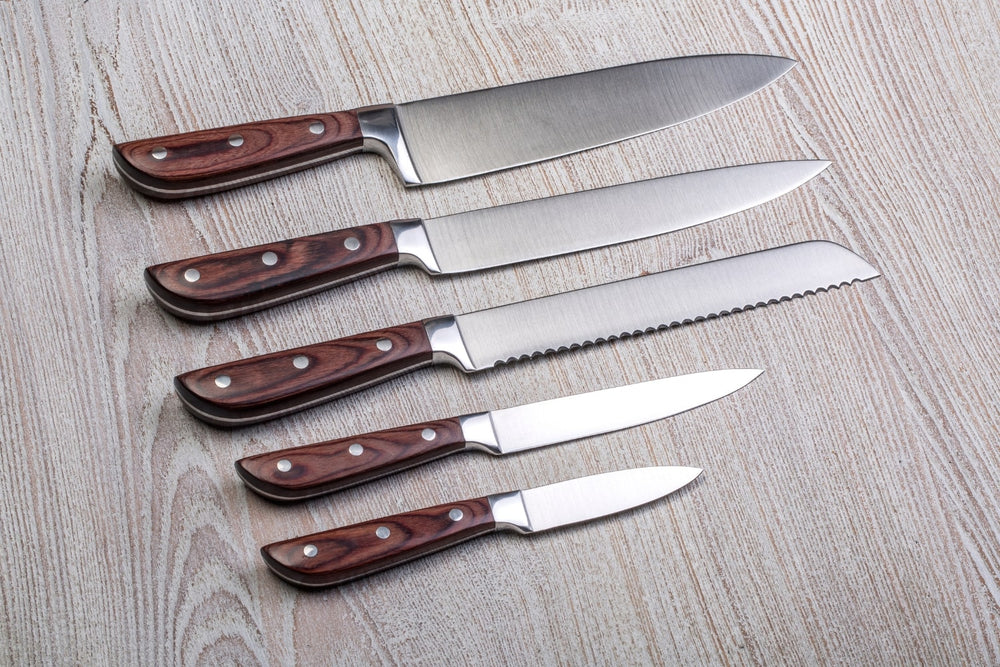
X50CrMoV15 steel: reviews, composition and comparison
If you own a kitchen knife from a reputable German brand, there's a very good chance its blade is made of X50CrMoV15 steel. This steel, with its rather unpoetic name, is the true unsung hero of our kitchens. It may not have the exotic allure of Japanese steels, but it has been a cornerstone of quality European cutlery for decades. So, why such success? And is it still a viable choice compared to more modern steels?
This article aims to decode this complex name for you. We will then objectively analyze its performance, compare it to its main competitors, and finally explain why it is, and will undoubtedly remain, an essential standard in the world of cooking.
X50CrMoV15: Decoding the name of the steel used by German commanders
To fully understand this steel, you just need to learn to read its name, because it is actually its own technical data sheet, a German engineering standard.
The origin: an industry standard "Made in Germany"
First of all, you should know that this is the most commonly used grade of stainless steel by major cutlers in Solingen, Germany, such as Wüsthof and Zwilling JA Henckels. It is also found in other renowned European brands, such as Victorinox in Switzerland, making it a true benchmark on the continent.
What does this strange name mean? The chemical formula deciphered.
Each part of this name has a specific meaning:
- X : Indicates that it is stainless steel, i.e., a highly alloyed steel.
- 50 : Represents the carbon content, i.e. 0.50%. It is the carbon that gives steel its hardness and its ability to hold an edge.
- Cr15 : Indicates a content of approximately 15% Chromium, the key element that gives it its excellent resistance to corrosion and rust.
- MoV : Indicates the presence of Molybdenum and Vanadium. These two elements, added in smaller quantities, improve the steel's resistance to wear and refine its internal structure.


The performance of the X50CrMoV15: the triumph of reliability over exoticism
X50CrMoV15 steel was not designed to break records in any single category, but rather to offer the best possible balance for intensive use in the kitchen. Its strength lies in its high reliability.
Key strength #1: Unwavering tenacity
Its greatest quality is undoubtedly its strength . It's not a brittle steel. If you hit a hard bone or drop your knife, the edge will tend to bend or roll slightly rather than chip. This is a huge advantage in terms of safety and ease of repair for everyday use.
Key advantage #2: unbeatable ease of maintenance
This is the other pillar of his success.
- Rustproof: It is extremely resistant to rust and stains, even if you forget to wipe it immediately after cutting a lemon.
- Ease of sharpening: With a moderate hardness (generally between 56 and 58 HRC), it is very easy and quick to sharpen. You don't need to be an expert to restore its excellent edge. Furthermore, it responds admirably well to daily honing.
The acknowledged weakness: moderate edge retention
This is the downside of its ease of maintenance. X50CrMoV15 won't retain its razor-sharp edge as long as harder steels. Therefore, it requires more frequent honing of the steel to maintain peak performance.
The X50CrMoV15 compared to other kitchen steels
To properly assess this steel, it is essential to compare it to other steels on the market. This allows us to understand its true place in the world of cutlery.
X50CrMoV15 vs. "generic" steels (type 3Cr13, 5Cr15)
Compared to the entry-level steels found in cheap knives, X50CrMoV15 represents a huge leap in quality. Its composition is much richer and more controlled, resulting in significantly superior hardness and edge retention.
X50CrMoV15 vs. Nitrox or 14C28N (modern nitrogen-treated steels)
This is where we see the evolution of technology. Steels like French Nitrox or Swedish 14C28N represent the new generation of stainless steel. Thanks to the addition of nitrogen, they offer better edge retention and even greater corrosion resistance, while remaining very easy to sharpen. They are therefore generally more efficient. On the other hand, X50CrMoV15 retains a slight advantage in terms of toughness (impact resistance).
X50CrMoV15 vs. Japanese steels (type VG-10)
Here, we see a true clash of philosophies. Japanese steel like VG-10 is treated to be very hard (often exceeding 60 HRC). This provides exceptional edge retention, but it is consequently more fragile (more brittle) and takes longer to sharpen. X50CrMoV15, on the other hand, makes the opposite choice: it sacrifices some edge retention in favor of immense strength and ease of maintenance.
Comparative table: the philosophy of steels
| Steel | Philosophy | Sharpening Outfit | Tenacity (Anti-breakage) | Ease of Maintenance |
| Generic steel | Economy | Weak | Average | Very easy |
| X50CrMoV15 | Reliability & Robustness | Average | Excellent | Excellent |
| Nitrox / 14C28N | Modern balance | Very good | Very good | Very easy |
| VG-10 | Cutting performance | Excellent | Average | Average |
Is the X50CrMoV15 a good choice for you?
After this comprehensive analysis, let's see if this classic steel matches your user profile and your expectations in the kitchen.
Yes, absolutely, if you are:
- The amateur or family cook: You are looking for reliable knives that never rust, forgive minor usage errors, and do not require specialist maintenance.
- The catering professional: You need "workhorses," knives capable of enduring intense service, resisting shocks, and being revived in seconds with a sharpening steel between tasks.
- The user who hates complicated maintenance: You want a knife that is always ready for action without any questions, and that resharpens without the slightest effort.
No, probably not, if you are:
- The lover of extreme "razor" sharpness: If your pleasure lies in obtaining a blade that can cut a hair in two and maintaining it through meticulous sharpening, you will be more satisfied with a harder and thinner Japanese steel.
How to get the most out of your X50CrMoV15 knife?
The secret to fully enjoying the qualities of this steel lies not so much in occasional sharpening, but in very regular honing.
The crucial importance of the sharpening steel
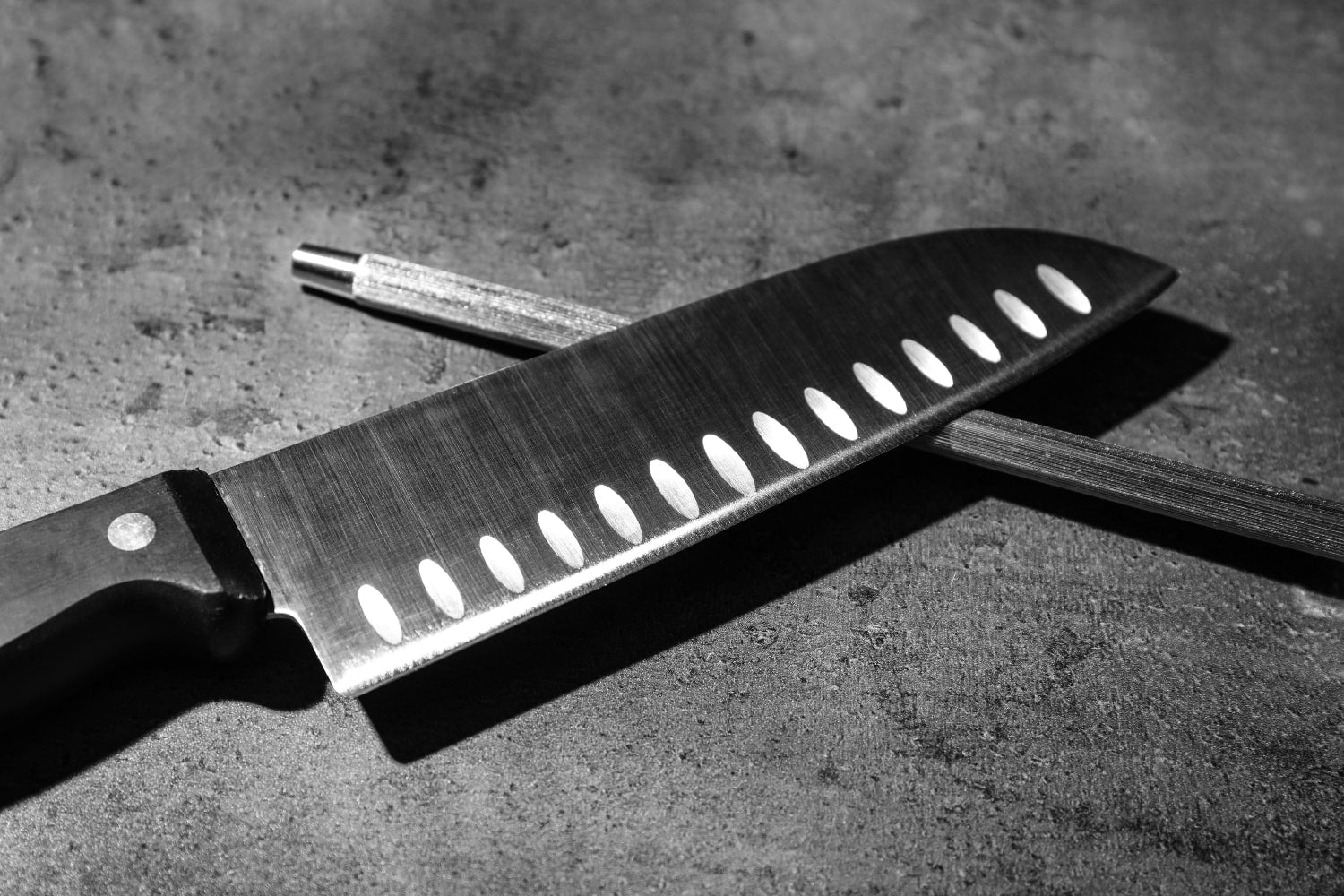
This steel is literally designed to be used in tandem with a sharpening steel. Its very tough edge tends to bend slightly with use. Regularly passing it over the steel (ideally before each major cutting session) will straighten it and restore its full sharpness. This simple habit will allow you to maintain excellent cutting performance for a very long time and significantly postpone the need for a proper sharpening.
Quick and easy sharpening
When honing with a steel is no longer enough, don't complicate things. Any sharpening method will give excellent results on this steel: a water stone, a quality manual sharpener, or even an electric one. It's very easy to work with.
Conclusion: Why X50CrMoV15 is and will remain a standard
In conclusion, it's clear that X50CrMoV15 isn't a "super steel" designed for pure performance and record-breaking cutting speeds. It's primarily a "super standard" designed for reliability and real-world use. It's the result of engineering that prioritizes robustness, forgiving handling, and ease of use for the user.
Choosing a knife made of X50CrMoV15 steel is therefore never a mistake. It's a sensible choice, a reliable option that has proven itself in millions of professional and home kitchens worldwide. It's simply the guarantee of having a faithful and trouble-free cutting companion for many years to come.



This site is protected by hCaptcha and the hCaptcha Privacy Policy and Terms of Service apply.