

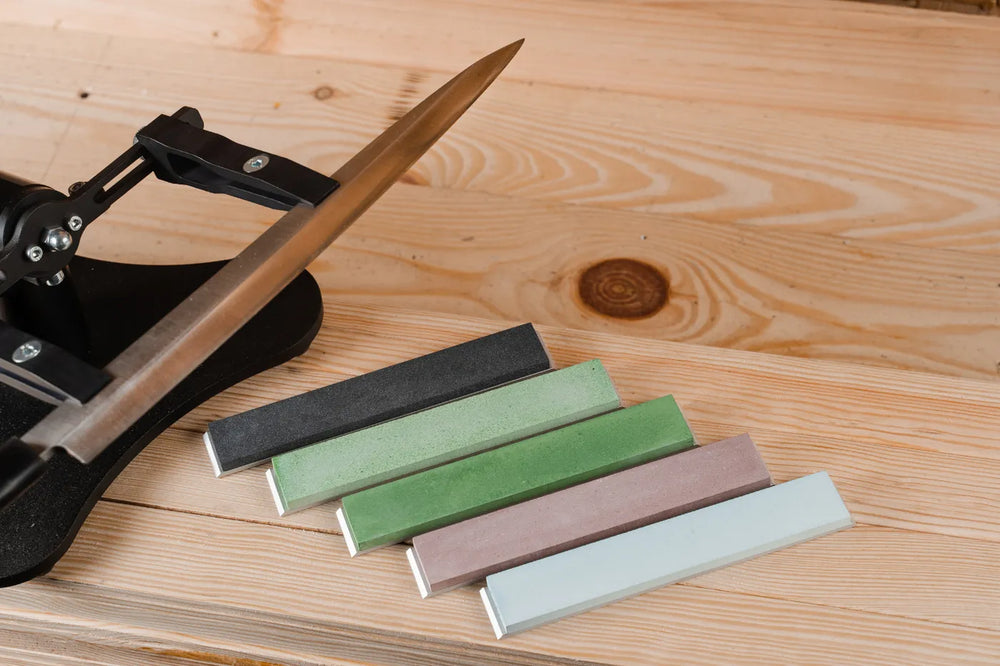
Knife sharpening stones: the ultimate guide 2026
A sharp knife is essential in the kitchen. It ensures your safety , increases your efficiency , and makes cooking much more enjoyable. Forget about knives that slip or crush your food. You deserve a perfect edge!
Why choose a sharpening stone? It's the method that offers the most precise sharpening, gives you total control , and significantly extends the life of your knives. This guide is for you, whether you're a curious beginner or an experienced cook looking to refine your techniques. We'll cover everything you need to know.
Understanding whetstones
Let's explore the world of sharpening stones together. A sharpening stone is an abrasive tool that allows you to remove small amounts of metal from your knife blade, in order to create a sharp edge.
Types of stones
Each type of stone has its own specific characteristics.
- Waterstones : These are very popular. Soak them in water before use. They provide a fine edge and prevent the blade from overheating. However, they require some maintenance and soaking time.
- Oilstones : These stones are durable and require less maintenance than waterstones. You use oil as a lubricant. They can be a bit messy and generally offer a less refined finish than waterstones.
- Diamond stones : Highly effective and durable, diamond stones sharpen quickly and can be used dry or wet. They are versatile. Note that they are often more expensive and the sharpening experience is different.
- Ceramic stones : These are perfect for a very fine finish and require little maintenance. However, they are more fragile than other types of stone.
The particle size (grit)
The grain size indicates the fineness of the stone. The higher the number, the finer the stone.
- Coarse (200-800) : Use these stones for very dull, damaged knives or to repair an edge.
- Medium (1000-3000 grit) : This is your stone of choice for regular sharpening. It restores a good edge to your knives.
- Fine (4000-8000+) : These stones are ideal for polishing and finishing. They will give you a razor-sharp edge.
- How to choose? You'll need at least one medium and one fine stone for most uses. If your knives are badly damaged, start with a coarse stone.
Essential accessories
Prepare your sharpening station.
- A stone support is essential to prevent it from slipping.
- A grinding stone (Nagura type) is crucial to maintaining the surface of your stone flat.
- Have some rags and a basin of water ready.
- Angle guides are optional, but useful for beginners.


How to choose the right sharpening stone: grits, sizes and comparisons
Choosing the right stone is the first step towards successful sharpening.
Grains: the winning duo
You have seen the different particle sizes. To begin, we recommend having two main grains :
- A stone with a medium grit (around 1000) for general sharpening and regular resharpening.
- A fine-grit stone (around 4000 or 6000 grit) is used for finishing and polishing the edge. If your knives are very damaged, add a very coarse-grit stone (200-400 grit).
Formats and sizes
The stones come in different sizes.
- A standard size (approximately 18-20 cm long) is sufficient for most kitchen knives.
- Make sure the stone is wide enough to comfortably rest the blade of your knife on it.
Quick comparisons
| Stone type | Benefits | Disadvantages | Ideal for… |
| Water | Very fine sharpening, no overheating | Requires soaking and maintenance (flattening). | Japanese knives, razor-sharp edge |
| Oil | Durable, less maintenance | Less refined, more messy | Regular use, robustness |
| Diamond | Fast, very durable, versatile | High cost, different feel | All knives, even very damaged ones |
| Ceramic | Refined, low maintenance | More fragile, less versatile | Ultra-thin finish |
Export to Sheets
Your choice will depend on your preferences, the type of knives you own, and your budget.
Preparation and safety
Proper preparation is the key to successful and safe sharpening.
Prepare your sharpening stone
- If you are using water stones , soak them completely. The soaking time varies depending on the stone, but they must stop bubbling. This is essential for their effectiveness.
- For other types of stones, simple cleaning is sufficient.
Prepare your knife
Make sure your knife is clean before you begin.
Your workspace
Set up on a stable and well-lit surface. Keep your space clean and organized.
Safety first
Sharpening requires concentration.
- Position your fingers correctly, away from the wire.
- Be aware of the blade at all times.
- Avoid distractions. Your concentration protects you.
Sharpening techniques: instructions and tips for a perfect edge
Understanding these principles will help you master sharpening.
Understanding the sharpening angle
The angle is crucial. It refers to the inclination of the blade relative to the stone.
- For most kitchen knives, aim for an angle of 15 to 20 degrees per side.
- How do you find the right angle? Place the back of the blade on the stone, then gradually lift the back until the edge touches the stone. A simple technique is to place your fingernail on the stone and press the blade against it. Angle guides can also help.
- Maintain this angle throughout the entire movement.
The basic movement
The fluidity of movement is important.
- Position your hands firmly on the back of the blade.
- Use a smooth back-and-forth motion. Slide the blade across the stone from tip to heel, then back again.
- Apply light and consistent pressure . Uniformity is essential.
Sharpening on both sides
Alternate sides of the blade. Work one side until you feel the burr, then switch to the other.
Identify the “burr”
The burr is a small metal burr that forms on the opposite side of the blade you are sharpening.
- How to feel it? Gently run your finger (or better yet, your thumb) along the side of the blade opposite the stone. You will feel a slight roughness.
- Its presence indicates that you have worked the entire edge of the blade.
Remove the burr
Once the burr is present on both sides, it must be removed. Reduce the pressure and make a few very light passes. This will polish the edge and make it clean.
Step-by-step sharpening process
Follow these steps for effective sharpening.
Roughing (coarse stone)
- Use this stone if your knife is very dull or if the edge is damaged.
- It is used to reshape the basic geometry of the cutting edge.
- Work until you feel a pronounced burr on each side.
The main sharpening (medium grit stone)
- This is the step where you restore the edge to your knife.
- Maintain your angle and work each side alternately.
- When you feel the burr appear on the other side, switch sides. Make the same number of passes on each side.
The finish (fine-grained stone)
- This stone allows you to refine and polish the edge of your knife.
- Reduce the pressure on the stone. The movements should be lighter and longer.
- Your goal is to achieve a razor-sharp edge .
Final polishing (optional – very fine grit stone)
- For an absolutely perfect, mirror-like edge, use an even finer stone.
- Make very light movements, with minimal pressure.
Applications of sharpening stones depending on your cutting tools
Stones are not just for kitchen knives.
Chef's knives
They are usually sharpened at an angle of 15 to 20 degrees per side. This is the basic tool for which the techniques detailed above work perfectly.
Santoku knives
Often they benefit from a slightly more acute angle, around 12 to 15 degrees, which gives them a very fine cutting edge.
Paring knives
Their small size requires more precision in handling. Maintain a constant angle despite the small blade.
Bread/serrated knives
Sharpening stones are not suitable for serrated knives. They require specific tools (such as conical sharpening steels or specialized sharpeners for each tooth) or the intervention of a professional.
Japanese and European knives
- Japanese knives often have sharper angles (10-15 degrees) and are sometimes sharpened on only one side ( single bevel knives).
- European knives are generally double-beveled and have angles of 18-20 degrees. Adapt your technique accordingly.
Other tools
You can also sharpen other tools on a stone:
- Scissors : Sharpen each blade individually, respecting its original bevel.
- Axes and cleavers : Use coarse-grained stones and adjust the angle to the robustness required for these tools.
- Wood carving tools : Fine stones are excellent for these tools which require an extremely precise cutting edge.
Sharpening stone maintenance and knife durability
Taking care of your tools prolongs their life.
Stone cleaning
- Clean your stones after each use. Scrub them to remove mud and metal particles.
Stone leveling (flattening)
- Over time, your stones will become hollow. You must flatten them regularly.
- Use a grinding stone , a diamond plate, or sandpaper on a flat surface.
- This step is crucial for effective and uniform sharpening.
Stone storage
- Allow your stones to dry completely before storing them.
- Keep them in a dry place and away from impacts.
General maintenance of your knives
- Wash your knives by hand immediately after use. Dishwashers damage them.
- Use wooden or plastic cutting boards , never glass or marble.
- Store your knives properly, in a block, on a magnetic bar or with blade protectors.
- Use a sharpening steel regularly, between sessions on the stone, to maintain the edge.
Troubleshooting and common mistakes
Don't panic if it doesn't work the first time.
- My knife still won't cut! Check your angle, make sure you can feel the burr, and that your stone isn't too dirty or worn.
- I damaged the blade. This is often due to excessive pressure or an unstable angle. Be gentler and focus on maintaining a consistent angle.
- My stones are hollowing out too quickly. This could indicate excessive pressure or movement concentrated on a small area.
- I'm afraid of damaging my knife. That's normal! Start with a less expensive knife to practice. Practice makes perfect.
- When should you call in a professional? If you have very expensive knives, damaged knives, or if you don't feel comfortable sharpening them yourself, a professional sharpener can help you.
Where to buy your sharpening stone? Top brands and best retailers
Now that you know everything, where can you find your precious stone?
Top recommended brands
Several brands are renowned for the quality of their stones:
- King : Excellent Japanese water stones, very popular for their good value for money. Ideal for beginners.
- Shapton : Offers high-performance water stones that absorb less water and are very efficient.
- Naniwa : Another renowned Japanese brand, with water stones known for their pleasant feel and effectiveness.
- DMT : Specializing in diamond stones, known for their durability and speed of sharpening.
- Spyderco : Offers excellent ceramic stones for finishing.
Best retailers
You can find sharpening stones in several places:
- Specialty cutlery shops : This is often the best place to get personalized advice and handle the stones.
- High-end kitchenware stores : Many offer a selection of good stones.
- Specialized online stores : Sites like "Dictum", "Couteauxduchef", "Knivesandtools" (for Europe) or Amazon (be careful with resellers) offer a very wide selection. Always read the reviews!
- Well-stocked drugstores or hardware stores : You can sometimes find basic stones to start with there.
Don't hesitate to ask for advice and compare prices before you buy. Investing in quality real estate is a long-term investment.
You now have all the tools you need to sharpen your knives. Sharpening with a whetstone is a skill that improves with practice . Be patient with yourself.
The benefits are immense: safer , more efficient , and above all, more enjoyable cooking. You'll rediscover your knives!
Don't hesitate to watch videos, read other resources, and join online communities to deepen your knowledge. The knife enthusiast community is large and welcoming.
Ready to sharpen your first knife?



A- Le temps d’immersion des pierres d’affutage depend du type de pierre donc attention au recommendations trop generales…
B- Le grain le plus fin utilise pour l’affutage depend de l’utilisation finale du couteau.
Je vous conseillerai de telecharger le catalogue Naniwa en anglais sur leur site “naniwa-abravise”.
Au centre du catalogue il y a un synoptique “Recommended Finishing” qui est simple et tres bien fait qui aidera les cuisiniers a comprendre jusqu’a quel point pousser l’affutage.
C- L’entretien des pierres y compris les pierres diamantees est essentiel. Il faut:
1- aplanir les pierres d’autant plus que leur agglomerant est tendre ce qui se fait avec des pierres en carbure de silicium de couleur gris foncé: Ce sont les “Flattening Stones”.
2- Rendre les pierres plus coupantes en eliminant la couche surperficielle d’agglomerant et casser ou detacher les particules abrasives usées: Ce sont les “Dressing Stones” (pierre Nagura). Les pierres diamantees sont livrees avec leurs propres dressing stones, voir doc Naniwa.
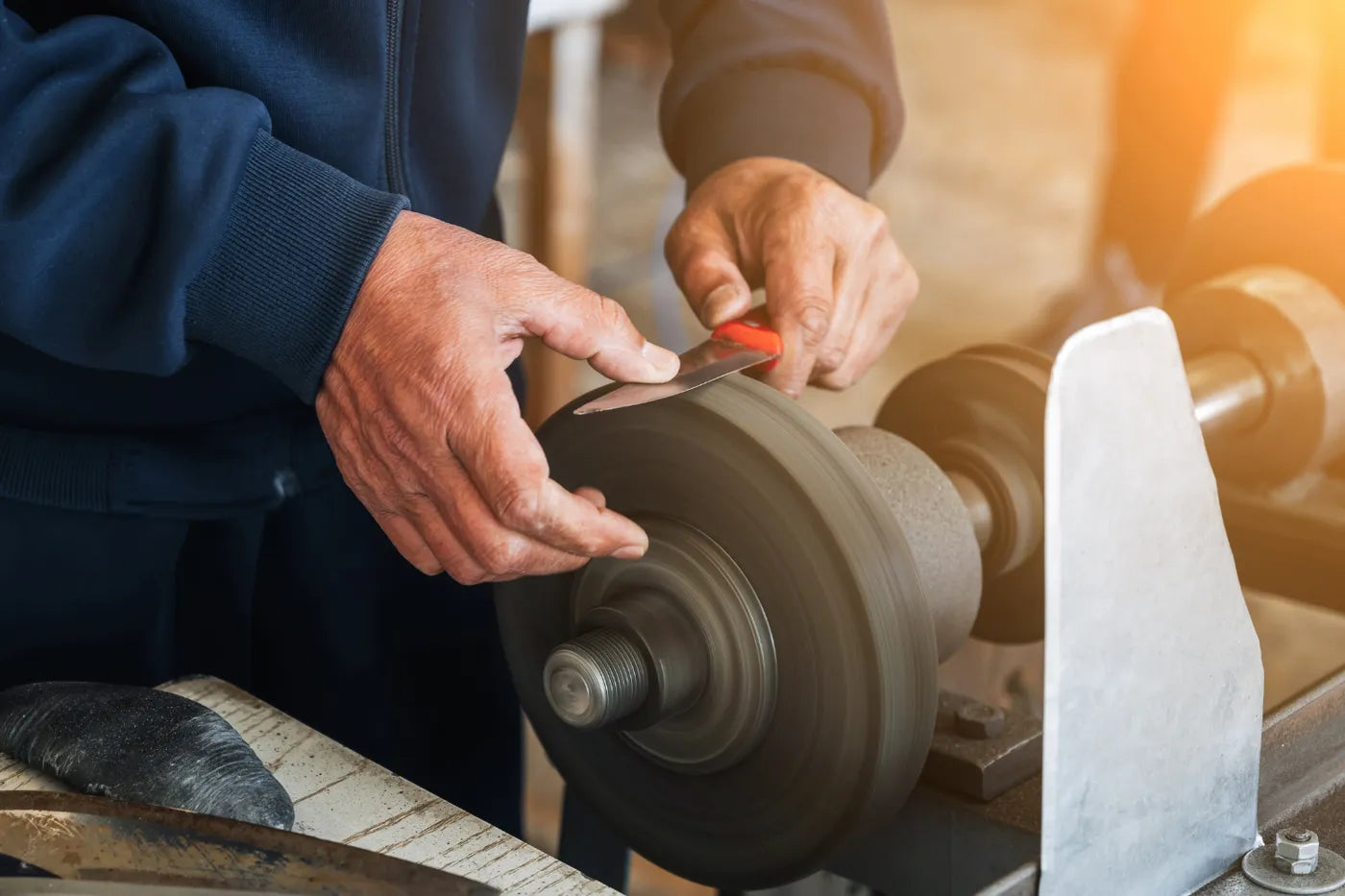
D- Les machines d’affutage a sec sont assez agressives et enlevent beaucoup de matiere au couteau. Resultats::
1- Les couteaux s’usent vite par l’affutage.
2- les tranchants deviennent trop epais ce qui diminue l’efficacite de coupe et necessitera de desepaissir le couteau en reprenant l’emouture, operation reserve au pro de la coutelerie.
PS: Je tiens a ma vie privee donc mes conseils sont pour vous, bref je ne veux pas que mon nom soit mentionné ou publié. J’aiguisse les couteaux regulierement pour amis et relations (gracieusement). Ce que je sais je l’appris dans qq livres en anglais et mis en pratique a la maison…
Gilles Basset
This site is protected by hCaptcha and the hCaptcha Privacy Policy and Terms of Service apply.