

Knife care: 10 steps to a perfect edge
Maintaining a knife is essential to ensure a clean cut and prolong its lifespan. A sharp knife is not only more efficient but also safer. Conversely, a dull blade requires more force, increases the risk of accidents, and reduces cutting precision. Yet, even the best knives will wear down over time if they are not properly cared for.
Want to know how to keep your blades in perfect condition? Discover these 10 essential tips for optimal maintenance.
Sharpening

Sharpening a knife is essential to maintain its effectiveness. A blade that loses its edge no longer cuts properly and becomes dangerous. Use a sharpening stone with an appropriate grit: a coarse grit (200-800) to restore a damaged blade and a fine grit (1000-6000) for precise sharpening. Angle the blade at 15-20 degrees and make smooth, even strokes with light pressure. Between sharpenings, a honing steel helps maintain the edge without excessively wearing down the blade.


Sharpening

Sharpening restores the blade to its optimal alignment without necessarily removing any material. Use a steel or ceramic honing steel and run the blade up and down, maintaining a constant angle. Ten strokes are sufficient to maintain a sharp edge. Sharpen regularly to prevent your knife from becoming completely dull.
Cleaning

Knife blades can darken over time due to oxidation or food residue. Improper cleaning can damage the blade's surface. To safely remove these stains, use a mixture of baking soda and warm water. Apply this paste with a soft cloth and rub gently. White vinegar is also effective against stubborn deposits. After cleaning , thoroughly dry your knife to prevent stains from reappearing.
Rust removal

Even with proper care, a knife can still rust , especially if it's made of carbon steel. Fortunately, there are natural solutions to remove it. Soak the blade in lemon juice for a few minutes, then scrub it with an abrasive sponge. A paste of baking soda and water is also very effective. Once the rust is gone, apply a thin coat of cooking oil to protect the blade from moisture.
Polishing

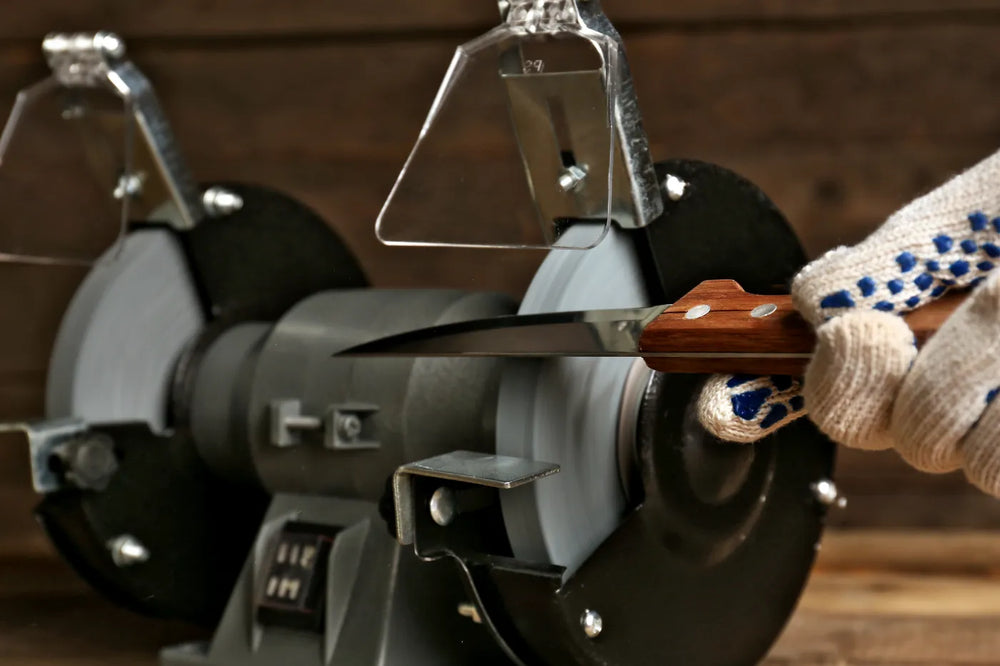
Proper polishing restores a blade's original appearance and improves its cutting quality. Use a polishing compound applied with a microfiber cloth. For a more professional result, a polishing disc mounted on a drill or grinder is ideal. After polishing, thoroughly clean the blade to remove all product residue.
Disinfection

A clean knife isn't enough; it must also be disinfected , especially if used in the kitchen. Use white vinegar or a solution of hot water and antibacterial soap. For more thorough disinfection, wipe the blade with a cloth soaked in 70% alcohol. Finally, always dry your knife immediately after cleaning to prevent the growth of bacteria.
Protection

Knife maintenance isn't just about sharpening. To preserve a blade, you also need to protect it from wear and corrosion. Avoid cutting on hard surfaces like glass or ceramic. Regularly apply a thin coat of cooking oil (such as camellia oil) to protect the blade from moisture. Finally, never put your knife in the dishwasher, as harsh detergents and excessive heat can damage it.
Storage

Proper storage not only preserves a knife's sharpness but also prevents accidents. Use a wooden block, a magnetic wall strip, or individual blade guards to prevent knives from touching each other. If you must store them in a drawer, choose a dedicated organizer that will prevent the blades from knocking against one another.
Storage

Proper knife storage plays a key role in their long-term preservation. If you own carbon steel knives, store them in a dry place with a silica gel packet or a lightly oiled cloth. Avoid overly humid areas, such as near the sink or dishwasher. Good storage ensures a blade that is always ready for use and a knife that lasts longer.
Repair

Even a damaged knife can be restored with the right techniques. If the blade has chips or a broken tip, use a whetstone or file to create a smooth edge. For a cracked handle, apply a water-resistant epoxy resin. If the damage is too extensive, take your knife to a professional for a complete repair.
Maintaining a knife doesn't necessarily require a lot of effort, but it does require precise and regular actions. Proper sharpening, careful cleaning, appropriate storage, and protection against wear will extend the life of your knives and ensure optimal cutting performance.
By following these tips, you'll keep your blades sharp and effective for a long time. Take care of your knives, and they'll reward you a hundredfold!
FAQs
How to care for knives?
Maintaining knives involves cleaning them immediately after use, drying them thoroughly, sharpening them regularly, and storing them in a dry place. Avoid the dishwasher, use a suitable cutting board, and apply a thin layer of protective oil to the blade to prevent corrosion.
How can I maintain the blade of my knife?
Maintaining your knife blade involves cleaning it with warm water and soap, drying it immediately, and sharpening it regularly. To prevent oxidation, apply food-grade oil and store the knife in a dry place, away from moisture.
What type of oil should I use to protect a knife blade?
The ideal oil for protecting a knife blade is camellia oil, food-grade mineral oil, or linseed oil. These oils form a barrier against moisture and prevent rust without altering the properties of the steel.
Why grease a knife?
Greasing a knife protects the blade against oxidation and corrosion by forming a hydrophobic barrier. This also reduces friction, preserves the edge, and extends the knife's lifespan, especially for carbon steel blades.



This site is protected by hCaptcha and the hCaptcha Privacy Policy and Terms of Service apply.