

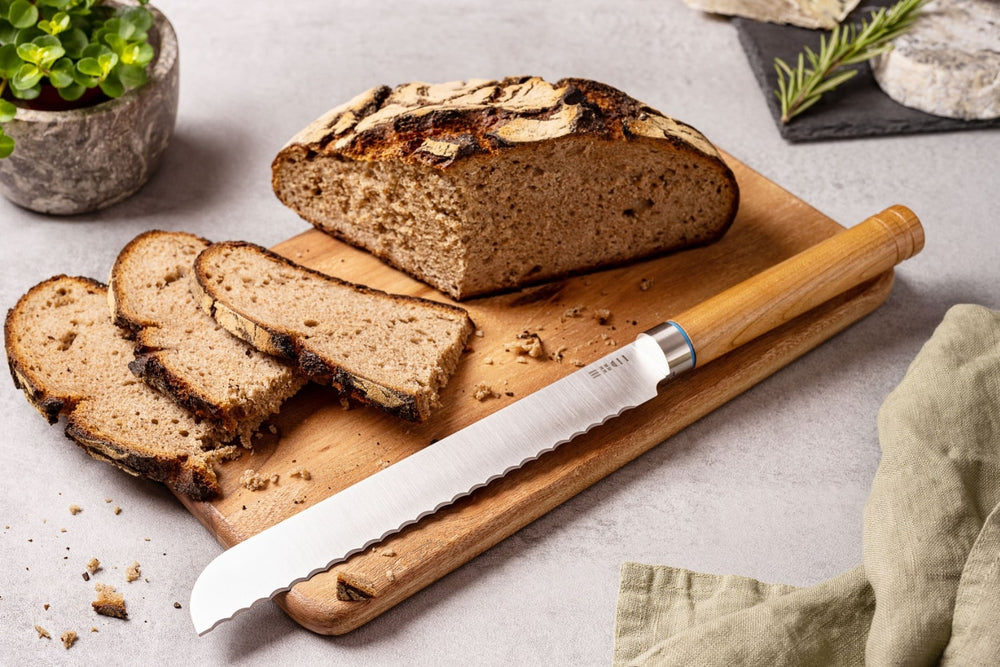
How to sharpen a serrated bread knife
Sharpening a serrated bread knife is more delicate than sharpening a smooth blade, as you must target only the hollows of the teeth without damaging the flat parts, using appropriate tools such as a round or conical ceramic sharpening rod. This technique restores the edge without altering the serrated shape that allows you to slice through hard crust without crushing the crumb, and it requires patience to treat each tooth individually.
Tools needed
Opt for a tapered ceramic whetstone , ideal because its variable diameter adapts to different groove sizes; avoid flat stones or non-specific electric sharpeners that risk rounding the teeth. A very fine stone (3000+ grit) or a leather strop is then used to remove any burrs on the flat side, ensuring a clean finish.


Identify the side to sharpen
Examine the blade: most bread knives are beveled on one side only (the visible concave side), while the other is flat. Only work the beveled side to maintain the balance and asymmetry designed for efficient sawing. This structure maintains a shallow angle (15-20°) which enhances performance once sharpened.
Step-by-step technique
- Positioning: Place the blade flat on a stable surface.
- Adjustment: Insert the rod into the first groove, choosing the correct diameter to perfectly fit the curve.
- Movement: Make 3 to 6 light forward strokes, away from the wire, without pressing hard to avoid deforming the steel.
- Repetition: Repeat the operation evenly for each tooth, from the handle to the tip, maintaining a regular movement.
- Finishing: Finally, run the flat side over a fine stone or rod to shave off any burrs that have formed, in one smooth motion.
Inspection and maintenance
Test the edge on paper or a tomato: it should cut cleanly without tearing. Sharpen every 12 to 24 months depending on use. Always wash by hand and dry immediately to prevent rust, as the teeth easily retain moisture. This method will extend the life of your knife, which is why professionals prefer manual sharpening to automation.



This site is protected by hCaptcha and the hCaptcha Privacy Policy and Terms of Service apply.