

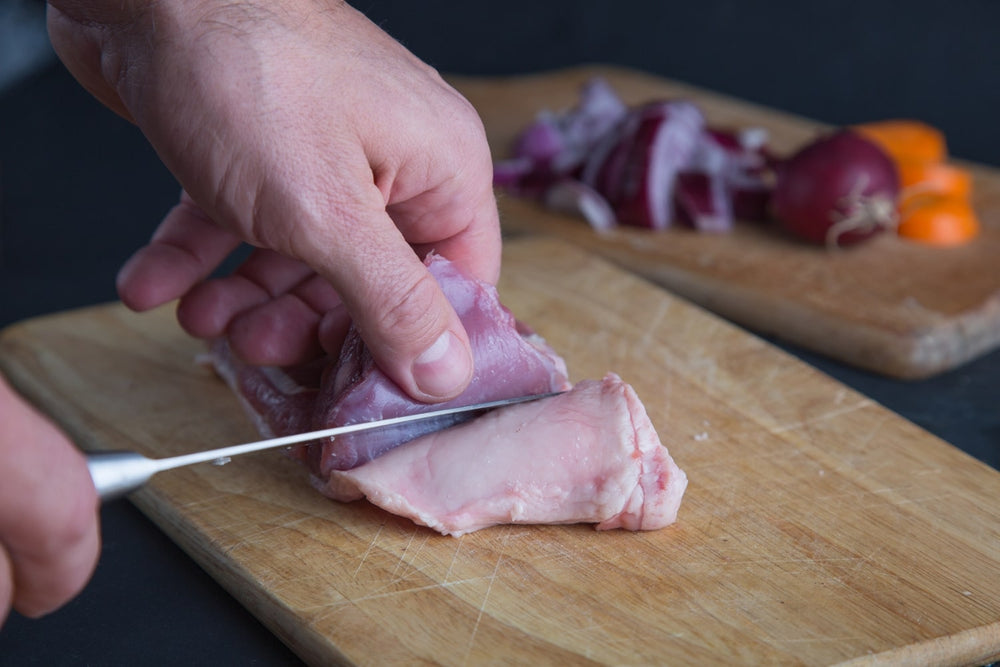
How to butcher a whole raw fattened duck at home
Carving a fattened duck is entering into an ancient gesture where the blade meets the flesh, where a raw bird is transformed into pieces ready to reveal their flavors.
Learning to butcher a whole raw fattened duck at home is more than just a technique. It's a way to prepare a prized product according to time-honored methods. You'll get breasts, legs, wings, a liver, and a carcass for stock. Nothing is wasted. Everything is transformed.
→ To succeed in this culinary ritual, you must first choose the right tools.
Essential equipment
A good tool makes all the difference: the cut is cleaner, the movements are safer, and the experience is more pleasant from the very first incision.
- Sharp chef's knife
- Boning knife (optional but precise)
- Solid board
- Clean dishcloths
- Storage bags or boxes
→ Once you are properly equipped, it's time to prepare the animal and your workspace.


Preparation before cutting
Like a musician tuning his instrument, the cook prepares his space: calm, clean, orderly, so that every gesture unfolds smoothly.
- Take the duck out of the refrigerator.
- Let it rest for 10 minutes.
- Dry it thoroughly.
- Position him chest-up on the board.
→ When the duck is ready and relaxed, we can begin the step-by-step carving.
Cutting steps
Carving a fattened duck is a series of precise, rhythmic movements, where each joint reveals a culinary promise.
1. Remove the thighs
- Make an incision between the thigh and chest.
- Pull gently, cut the joint.
- You get a whole leg for confit or roasting.
2. Detach the wings
- Fold the wing.
- Cut at the joint.
- Reserve for grilling or frying.
3. Remove the duck breasts
- Draw a line along the wishbone.
- Slide the blade against the bone.
- Gently peel it off: the duck breast will come free with its fat.
4. Remove the liver and offal
- Open the cavity.
- Remove the liver, heart and gizzard.
- Reserve for cooking or preserving.
5. Use the carcass
- Break or saw through the carcass.
- Use it for a rich and fragrant broth.
Preserving the pieces
Proper storage prolongs enjoyment and ensures food safety without losing any of the meat's qualities.
- Duck breasts: refrigerate for 2–3 days, freezing possible.
- Thighs: to be salted for confit or frozen.
- Liver: consume quickly.
- Carcass: freeze in pieces for future broths.
→ Well-preserved pieces open the door to a multitude of recipes and gourmet uses.
Recipes and uses
Each part of the duck has its role to play in the kitchen, and each brings a texture and intensity that enriches your dishes.
- Duck breast: pan-fried pink or dried.
- Thighs: traditional confit.
- Wings: oven-grilled.
- Liver: pan-fried, delicate.
- Carcass: pot-au-feu, brown stock, soup.
→ After imagining your dishes, it remains to learn the lesson from this culinary experience.
Conclusion
Carving a fattened duck is a return to the art of cooking, a time of patience and respect, where each piece tells a story and has its purpose. Carving a whole raw fattened duck at home is simple and rewarding. With a sharp knife and precise movements, you enhance each cut, gain independence, and appreciate the unique richness of this bird.
FAQ – Frequently Asked Questions
How do you cut up a raw fattened duck for the first time?
Use a sharp knife, start by removing the thighs and then the wings, before lifting the duck breasts and extracting the offal.
What is the difference between carving up a fattened duck and a regular duck?
Fattened duck is larger and richer in fat. Its butchering follows the same techniques, but requires a precise blade and a little more patience.
How long can raw duck pieces be kept in the refrigerator?
Duck breasts and thighs can be kept for 2 to 3 days. The liver should be cooked quickly, while the carcass can be frozen in portions.
Can you freeze a cut-up fattened duck?
Yes, by separating each piece in airtight packaging. This preserves the texture and quality for several months.
What are some quick recipes using a cut-up duck?
Grilled duck breast, confit leg, roasted wings, pan-fried liver, carcass broth: each part finds its place in the kitchen, from festive dishes to everyday recipes.


This site is protected by hCaptcha and the hCaptcha Privacy Policy and Terms of Service apply.