

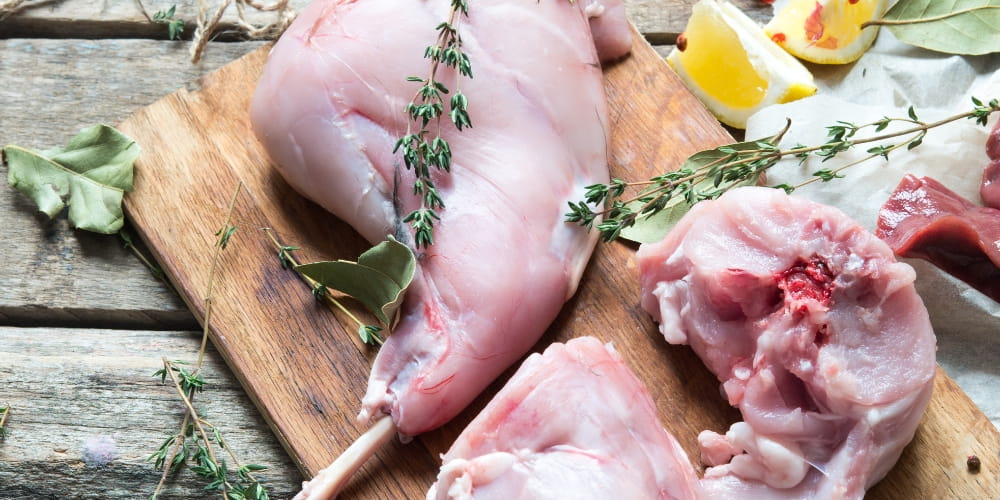
How to cut a rabbit into pieces
Cutting up a rabbit requires careful preparation and the right tools to avoid splintering bones and ensure even cooking. This traditional technique separates the rabbit into classic portions such as legs, saddle, and shanks, ideal for stews or grilling. It is suitable for a whole, fresh, gutted rabbit of average size (approximately 1.5-2 kg).
Materials needed
Use a sharp 25-30 cm knife for a smooth, rocking motion, a wide, stable board, meat scissors for the rib cage, and possibly a small knife for finishing touches. Avoid using a meat grinder, which will shatter bones into dangerous shards. Work on a clean surface, and rinse the rabbit thoroughly under cold water before starting to remove any residue and offal.


Initial preparation
Start by removing the offal: open the abdomen, extract the liver (attached to the rib cage by carefully cutting the veins), kidneys (near the saddle), lungs, heart, and intestines. Cut the head at the neck between the vertebrae, near the front legs to minimize the bones. Rinse all the internal parts under running water. This step ensures hygiene and prevents bitter tastes during cooking.
Separate the body in two
Place the rabbit on its back and cut it in half at the waist: separate the "breast" (rib cage with leg pads/front legs) from the "saddle" (back loin + hind legs). Make a clean cut between two vertebrae, following the joints for a smooth separation without tearing the meat. The saddle is the meatiest and most tender part, while the breast is often used for broths.
Baron's Cut
On the baron, separate the saddle (dorsal loin) from the legs: make an incision between the vertebrae at the base of the legs, following the pelvic joint. Cut the legs in half lengthwise if it's a large rabbit, following the bones and joints. The saddle can be sliced into thin cutlets (1.5 cm) for grilling or into 2-3 pieces for sauces; partially bone it for stuffing if desired. Always cut at the joint to preserve tenderness.
Cutting open the chest
For the breast, either cut it in half lengthwise (each half includes a leg). Or, detach the legs (front legs) by following the ribs and spine with a knife, then cut them apart. Use scissors to open the rib cage, remove cartilage and small bones; reserve for stock as there is little meat. Feel the flesh to remove any invisible bone fragments, then rinse again.
Tips for success
After butchering, check the meat for any remaining bones, especially in young rabbits. Choose a rabbit that is neither too young (tender meat) nor too old (tough meat). A whole rabbit typically yields 8-12 pieces: 2 legs, 2 saddles, 4 shanks, and 4 shoulders. Freeze any unused portions. These cuts cook differently: legs can be simmered for a long time (stews), while the saddle can be quickly pan-fried.



This site is protected by hCaptcha and the hCaptcha Privacy Policy and Terms of Service apply.