

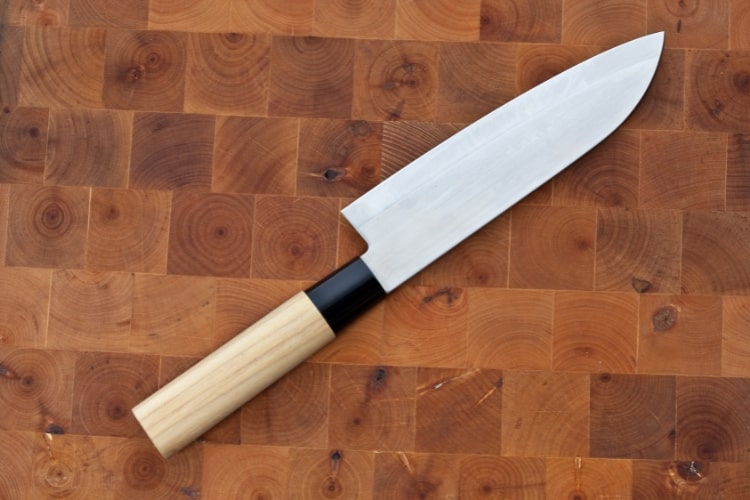
The different parts of a kitchen knife
The parts of a kitchen knife are divided into several elements: the blade, including the edge, the spine, the point, the belly and the heel; the handle, made up of scales, rivets, stop and heel; the tang, which connects the blade and the handle; and finally accessories such as the bolster and the collar which enhance balance and safety.
The kitchen knife is the central tool for every cook, whether a passionate amateur or a seasoned professional. Behind its apparent simplicity lies a precise design, where each part plays a specific role in efficiency, safety, and ease of use. In this article, we will explore the different parts of a knife to better understand their function and importance.
The blade: the heart of the tool
The blade is the most visible and functional part of the knife. It consists of several zones:
- The edge (or cutting edge) : this is the cutting part. Its sharpness determines the fineness and precision of the cut.
- The back of the blade : the part opposite the edge, thicker, which provides rigidity and is sometimes used to crush or guide the hand.
- The point : used for incising, piercing or making precise cuts.
- The belly : rounded portion of the wire, ideal for chopping with a rocking motion.
- The blade heel : the rear end, close to the handle, which is used for stronger cuts or for scraping certain ingredients.
The performance of the blade also depends on the quality of the steels used: stainless steels, carbon or specific alloys, each providing a balance between hardness, flexibility and corrosion resistance.


The handle: comfort and control
The handle ensures a secure grip and transmits power. Its ergonomics directly influence precision and safety:
- Platelets : parts fixed around the silk.
- Rivets : metal fasteners that hold the plates together.
- Stop (or guard) : area between blade and handle that prevents fingers from slipping on the edge.
- Heel grip : end of the handle, sometimes widened to stabilize the hand and improve balance.
The choice of handle materials is essential: fine woods, modern composites, plastic, resin, or even metal. Each material influences the knife's durability, comfort, and aesthetics.
Silk: the hidden structure
The tang is the part of the blade that extends into the handle. It influences the strength and longevity of the knife.
- Full tang : runs the entire length of the handle, offering strength and balance.
- Partial tang : shorter, it makes the knife lighter but less strong.
- Hidden tang : invisible, inserted into a molded handle, often used on modern knives.
Additional elements
Some knives feature additional details that enhance their functionality:
- The bolster : a metallic thickening at the junction between the blade and the handle, which adds weight, protects the fingers and balances the knife.
- The collar (or sleeve heel) : rear end, sometimes playing an aesthetic or balancing role.
A kitchen knife is much more than just a cutting tool. Every part – from the tip to the heel – contributes to its efficiency and ergonomics. By understanding the different parts of a knife , the types of steel used in the blade, and the materials of the handle, you can better choose the tool best suited to your needs, use it optimally, and extend its lifespan.


This site is protected by hCaptcha and the hCaptcha Privacy Policy and Terms of Service apply.